
Renault 4CV R1060
The tiny 4CV put four doors, four seats and a rear-mounted engine into a car that helped France get moving again after the Second World War.
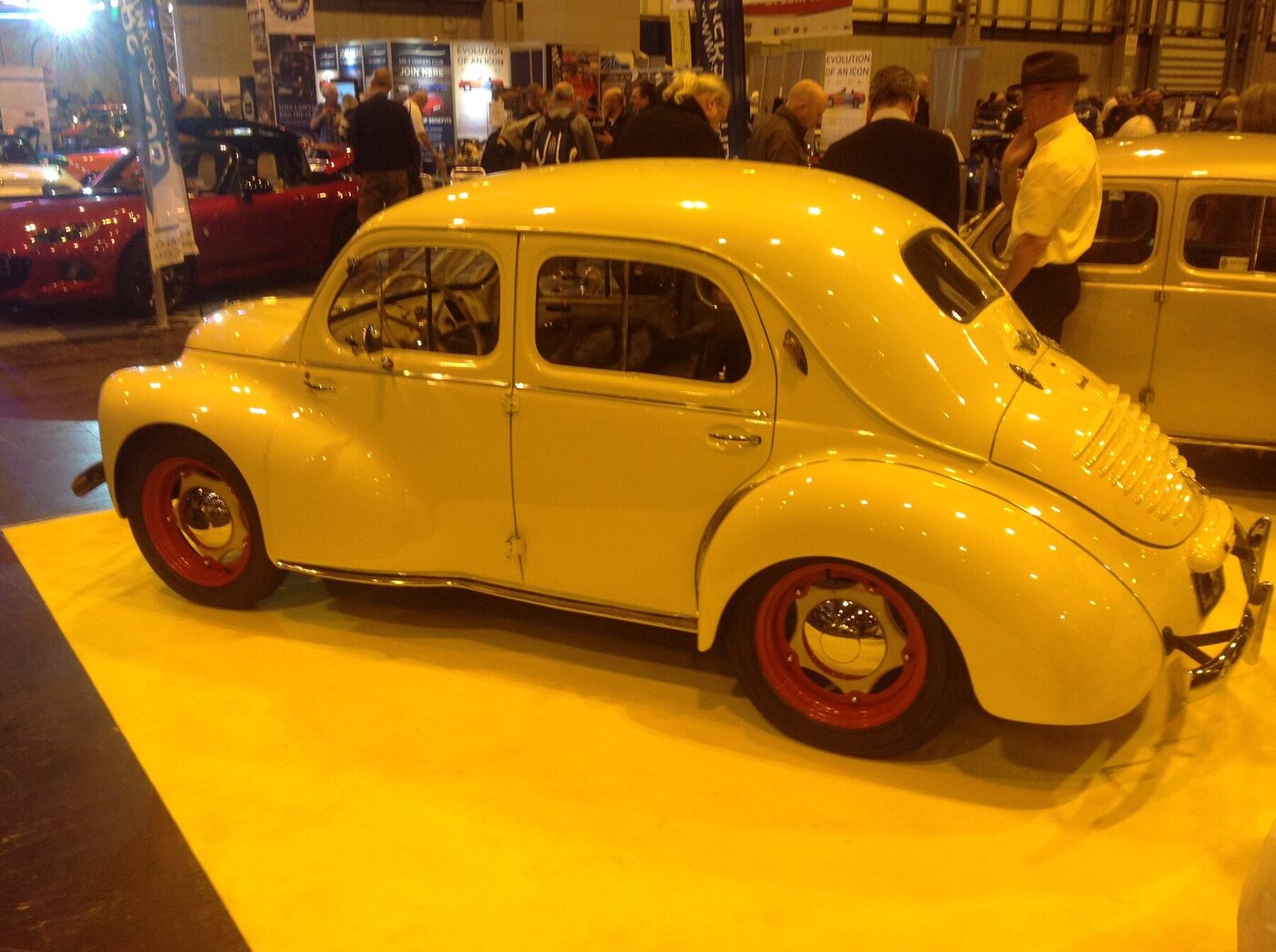
1948 Renault 4CV · andreboeni (Andrew Bone) · CC BY 2.0
Research pending
A matching completed auction sale has not been verified for this exact year, body, trim, engine, transmission and market.
Joyride shows this gap instead of substituting an asking price, unsold bid or mismatched special vehicle.
More than a set of wheels.
Renault developed the 4CV in secret during the war, showed it in Paris in October 1946 and began sales in 1947. This page follows an early 1948 R1060 with the original 760 cc engine and six-slat front 'moustache', not the later 747 cc versions or sporting 1063.
Look a little closer.
Early yellow 4CVs were nicknamed 'slabs of butter'; Renault says the colour came from paint stocks recovered after the war, not from a styling plan.
Photos show an example of the model or generation. The pictured vehicle’s year, equipment, or modifications can differ from the specification described here.
A recovery car built in enormous numbers
The 4CV became a symbol of France's return to peacetime mobility. Renault built 1,105,547 examples from 1947 to 1961, making it the first French car to pass one million units.
Source: The Originals Renault Museum · 4CV ↗Small outside, useful inside
Renault advertised '4 doors, 4 seats, 4 CV'. The rear engine cleared the passenger floor, while a monocoque body avoided a separate heavy frame. The earliest cars can be spotted by their six-slat nose; later versions used three slats.
Source: Renault Group · 80 years of the Renault 4CV ↗Where these facts come from
- The Originals Renault Museum · 4CV
- Renault Group · 80 years of the Renault 4CV
- Renault Germany press archive · The ancestor of the small car
Selected facts checked for this edition. Some source pages link to broader model families. Last reviewed September 30, 2026.