
Renault Avantime 3.0 V6 24V
Renault and Matra crossed a grand coupe with a tall people carrier, then gave the result giant double-hinged doors and a glass roof.
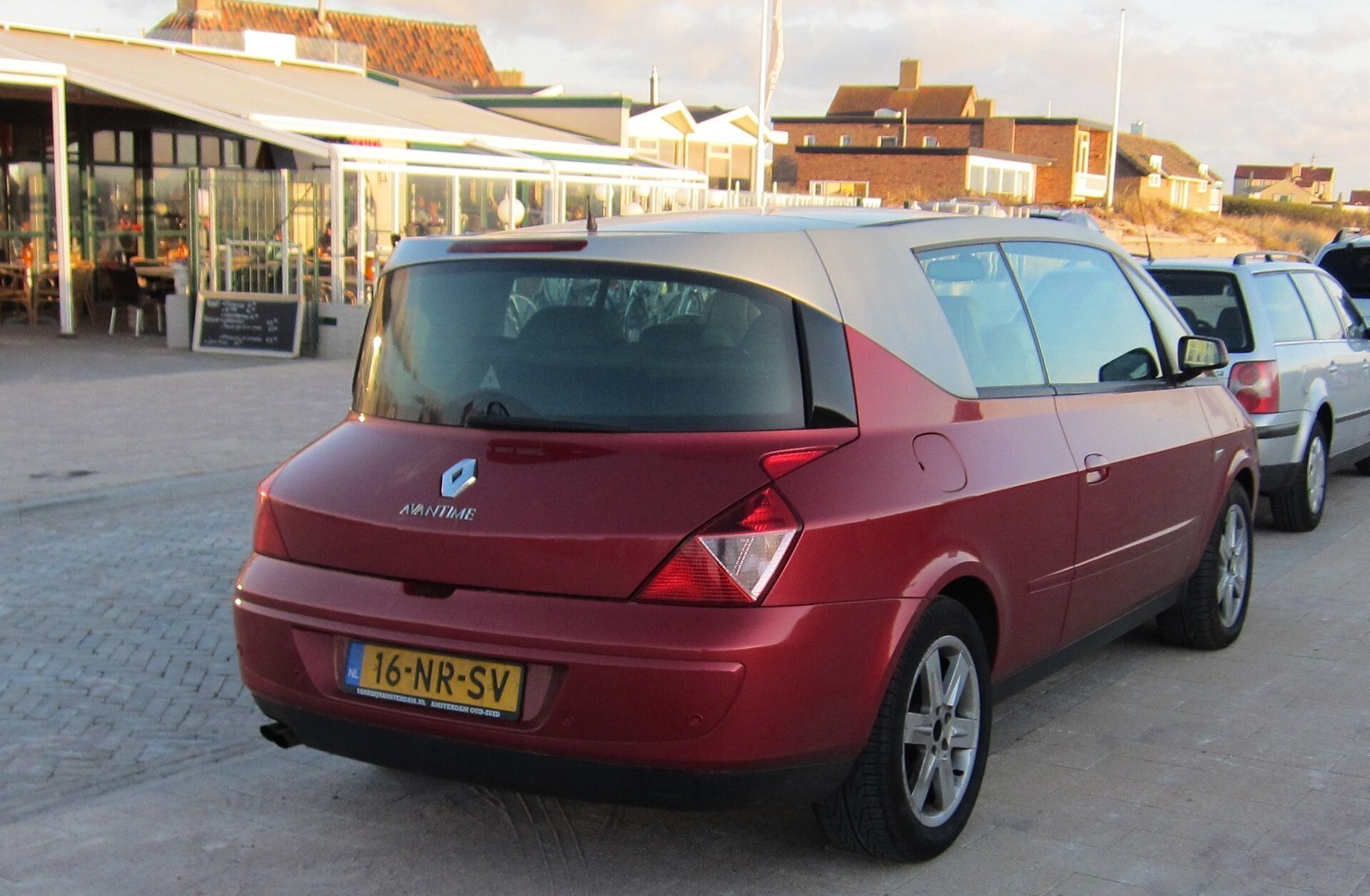
2001 France Renault Avantime 3.0 V6 profile cover · Rutger van der Maar · CC BY 2.0
Research pending
A matching completed auction sale has not been verified for this exact year, body, trim, engine, transmission and market.
Joyride shows this gap instead of substituting an asking price, unsold bid or mismatched special vehicle.
More than a set of wheels.
Thierry Metroz designed the Avantime at Renault, and Matra built it at Romorantin. A concept appeared at Geneva in 1999; production began in 2001. The road car shared around half its parts with the Espace platform but removed the central pillars and used only two enormous side doors. The 3.0 V6 was the launch flagship, sending 207 PS through a six-speed manual to the front wheels.
Look a little closer.
Its 1.40-meter doors used two pivots, so they opened outward and forward without needing more parking space than ordinary doors.
Photos show an example of the model or generation. The pictured vehicle’s year, equipment, or modifications can differ from the specification described here.
The disappearing wall
With the side windows down and no central B-pillar between them, the Avantime created one long opening on each side. That airy effect worked with the glazed roof and elevated seats to make a coupe feel almost like a moving lounge. The unusual double-pivot hinges kept those very long doors usable in normal parking spaces.
Source: Renault The Originals · Avantime ↗A joint project with its own factory logic
Renault and Matra split investment and commercial risk. Matra used an Espace III-derived platform but wrapped it in a steel structure, aluminium roof rails and lightweight composite exterior panels. The result was not simply a shortened Espace; project D66 took 36 months and was assembled at Romorantin.
Source: Renault Germany Press · Avantime features ↗Where these facts come from
Selected facts checked for this edition. Some source pages link to broader model families. Last reviewed October 2, 2026.