
Renault Espace 2000 TSE
Seven separate seats, a flat floor and a body shaped like one roomy cabin made the first Espace feel less like a bus and more like a living room that could drive.
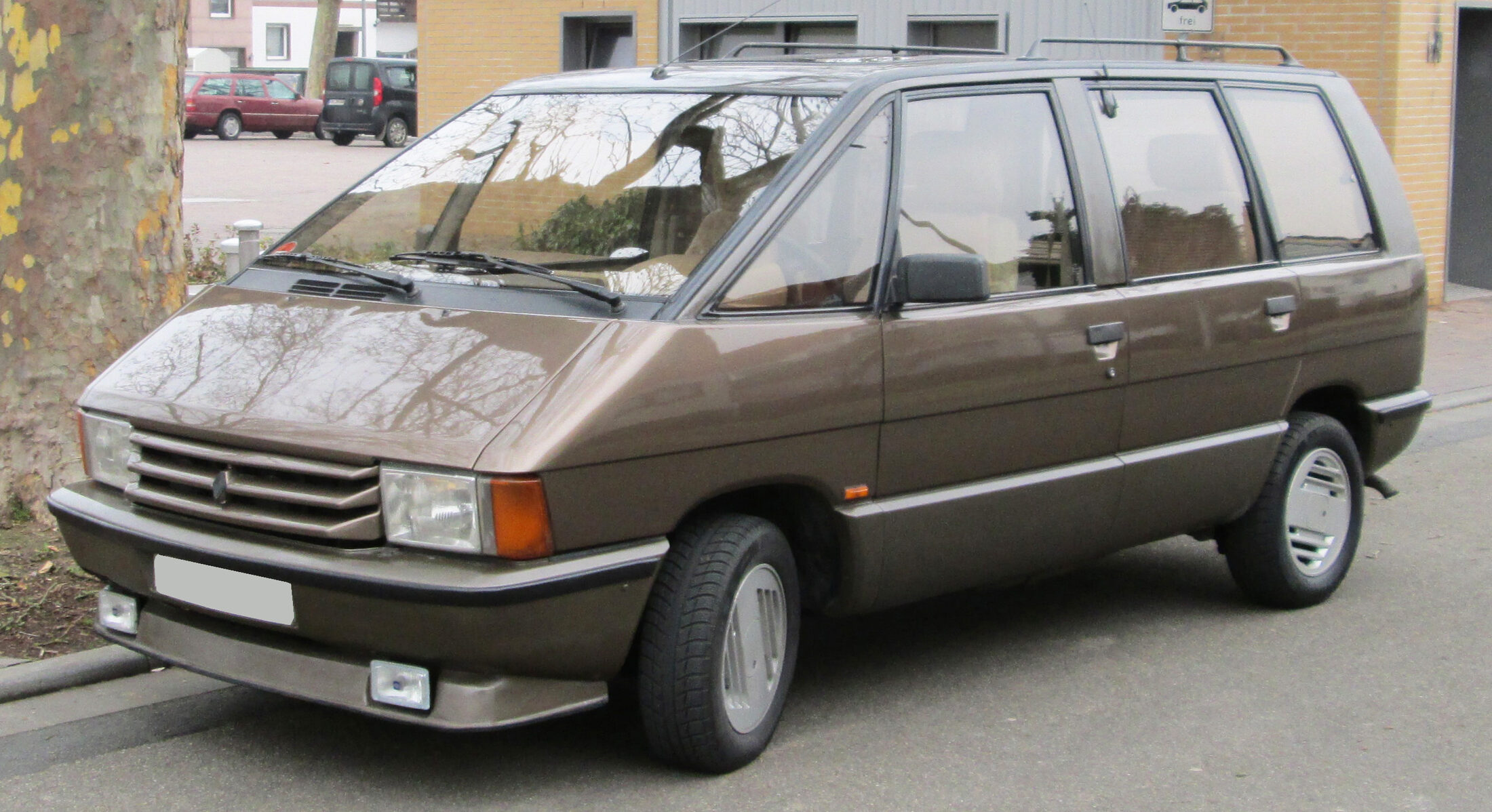
Renault Espace1 1984 front 20140122.jpg · Rudolf Stricker · Attribution-only
Research pending
A matching completed auction sale has not been verified for this exact year, body, trim, engine, transmission and market.
Joyride shows this gap instead of substituting an asking price, unsold bid or mismatched special vehicle.
More than a set of wheels.
Matra's Philippe Guédon brought home an idea for a garage-sized family van, and Renault chief Bernard Hanon approved the project in 1982. Renault supplied mechanical parts and dealerships while Matra handled product and manufacturing development. The Espace reached the French market in June 1984. Only nine orders arrived in its first month, but buyers learned how useful its removable, foldable and rotating seats could be. First-generation production eventually reached 191,674 vehicles.
Look a little closer.
At a rest stop, the front seats could rotate and the middle seat could become a table, turning the cabin into a little lounge while the vehicle was safely parked.
Photos show an example of the model or generation. The pictured vehicle’s year, equipment, or modifications can differ from the specification described here.
Renault sold it; Matra made it
The Espace was a genuine partnership. Renault supplied the powertrain, other mechanical components and the sales network, while Matra developed the product for manufacture and built it at Romorantin. Under the plastic outer panels sat a load-bearing galvanized-steel structure, a construction method that resisted corrosion and shrugged off small parking knocks differently from a conventional all-steel body.
Source: Renault Media · Espace: 30 years of innovation ↗Modularity was the breakthrough
Each rear passenger had an individual seat rather than a fixed bench. Seats could be folded, removed or used as a table, and the TSE added rotating front seats. The Espace was just 4.25 meters long yet Renault described room for seven adults. This was not simply a tall estate car; the cabin was designed from the beginning as reconfigurable space.
Source: Renault The Originals Museum · Espace TSE ↗Where these facts come from
- Renault The Originals Museum · Espace TSE
- Renault Media · Espace: 30 years of innovation
- Renault Group · 30 years of Espace
- Losange Magazine · Renault Espace 1984 technical record
Selected facts checked for this edition. Some source pages link to broader model families. Last reviewed October 1, 2026.