Rover 3500 (SD1)
Rover wrapped a light alloy V8 and a huge hatchback in a dramatic five-door shape built to replace two different British Leyland saloon families.
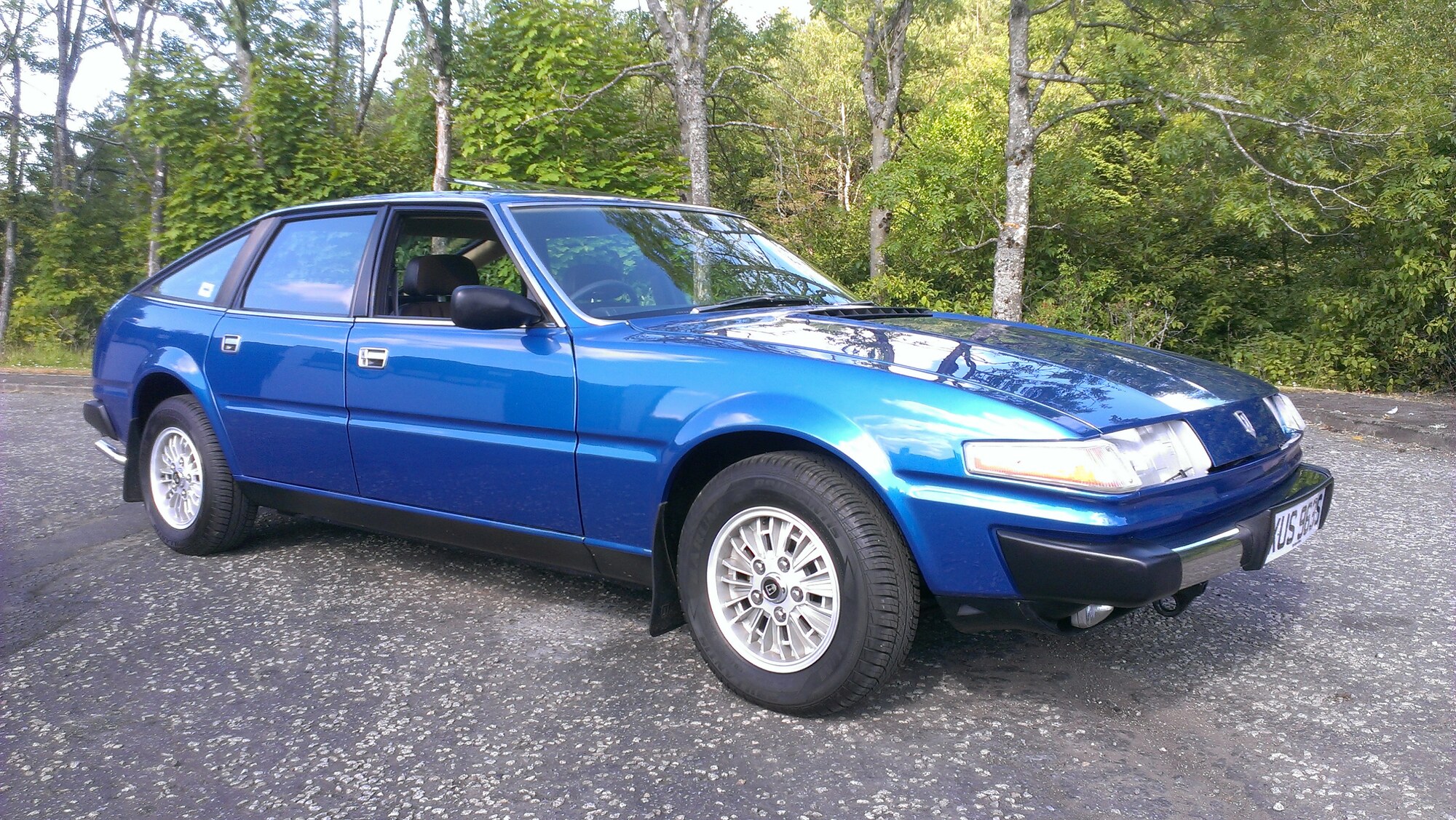
1976 UK Rover SD1 3500 (representative 1977 Series 1 car) · Primetable · CC BY-SA 4.0
Research pending
A matching completed auction sale has not been verified for this exact year, body, trim, engine, transmission and market.
Joyride shows this gap instead of substituting an asking price, unsold bid or mismatched special vehicle.
More than a set of wheels.
British Leyland unveiled the Rover 3500 on 30 June 1976. Although enthusiasts now call the whole family SD1, the launch badge simply said Rover 3500; SD1 was the internal Specialist Division project code. David Bache's fastback body replaced both Rover P6 and Triumph 2000/2500 territory with one simpler structure. The familiar all-alloy V8 gained revised breathing and electronic ignition, while MacPherson struts, a live rear axle and front discs were easier to build and service than the P6's unusual suspension. The bold result won the 1977 European Car of the Year award.
Look a little closer.
The name enthusiasts use most—SD1—never appeared as the launch model badge; buyers saw 'Rover 3500'.
Photos show an example of the model or generation. The pictured vehicle’s year, equipment, or modifications can differ from the specification described here.
Simpler engineering was a deliberate design goal
The preceding P6 used a de Dion rear axle and an unusual bell-crank front suspension. SD1 replaced them with MacPherson struts and a carefully located live rear axle using trailing arms and a Watt linkage. The result was cheaper and easier to service, while self-levelling rear dampers helped the large hatchback carry a load.
Source: Motor Sport · The new Rover 3500, July 1976 ↗The hatch was part of the executive-car argument
Rover gave the 3500 the visual sweep of a sporting fastback but also a full fifth door. That let it offer executive-car seating with a much larger opening for luggage. The symmetric dashboard also made left- and right-hand-drive production easier, an important detail for a car expected to earn export sales.
Source: British Leyland · April 1976 Rover 3500 launch brochure ↗Where these facts come from
- British Leyland · Rover 3500 launch brochure 3207/A
- Motor Sport · The new Rover 3500, July 1976
- Rover Passion · 1976 3500 specifications
- Rimmer Bros · SD1 history PDF
Selected facts checked for this edition. Some source pages link to broader model families. Last reviewed October 2, 2026.