
SEAT 600 N
Tiny outside but big in Spain's story, the first SEAT 600 gave four people doors, windows, heat and the freedom to travel together.
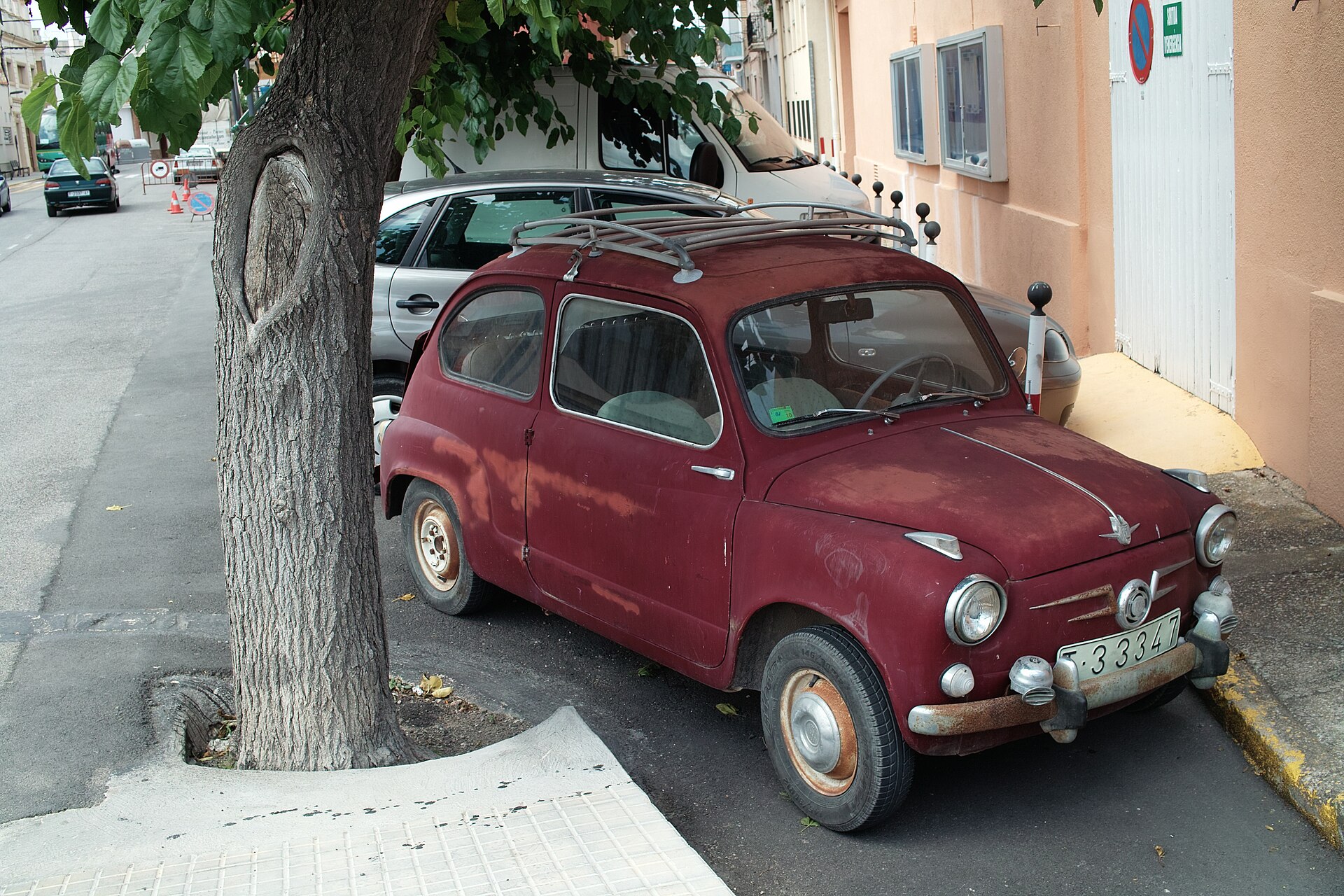
SEAT 600 N · Nicolas Vigier · CC BY 2.0
Research pending
A matching completed auction sale has not been verified for this exact year, body, trim, engine, transmission and market.
Joyride shows this gap instead of substituting an asking price, unsold bid or mismatched special vehicle.
More than a set of wheels.
SEAT launched the 600 in May 1957 as its second model after the 1400. It was built under Fiat licence at Barcelona's Zona Franca plant and is now called 600 N—'normal'—to separate it from later versions. Demand was so strong that SEAT says a two-year waiting list existed before production began. In a country where a motorcycle and sidecar had often served as family transport, a four-seat, water-cooled little car became a symbol of personal mobility.
Look a little closer.
The original 633 cc engine is the only SEAT 600 engine whose size really matches the rounded model name.
Photos show an example of the model or generation. The pictured vehicle’s year, equipment, or modifications can differ from the specification described here.
Why 'N' was not on the original sales pitch
The launch car was simply the SEAT 600. Historians now use 600 N so it is easy to distinguish from the D, E and L that followed. On the N, indicators sit above the front wings and the doors hinge at the rear—two useful visual clues that later changed.
Source: SEAT Históricos · 600 N ↗A small car with a very large social role
SEAT describes the 600's unveiling as a social phenomenon. Its significance was not top speed but access: a middle-class family could aspire to enclosed four-seat transport with glass windows and heating. Production grew six-fold in 1958, showing how rapidly that idea took hold.
Source: SEAT Históricos · 600 N history ↗Where these facts come from
- SEAT Históricos · 600 N history and technical specifications
- Automobile-Catalog · 1957 SEAT 600 cross-check
Selected facts checked for this edition. Some source pages link to broader model families. Last reviewed 2026-10-02.