
Tatra 57
The little Tatra carried its engine, gearbox and driveshaft along one strong central tube, with independently moving rear half-axles at the end.
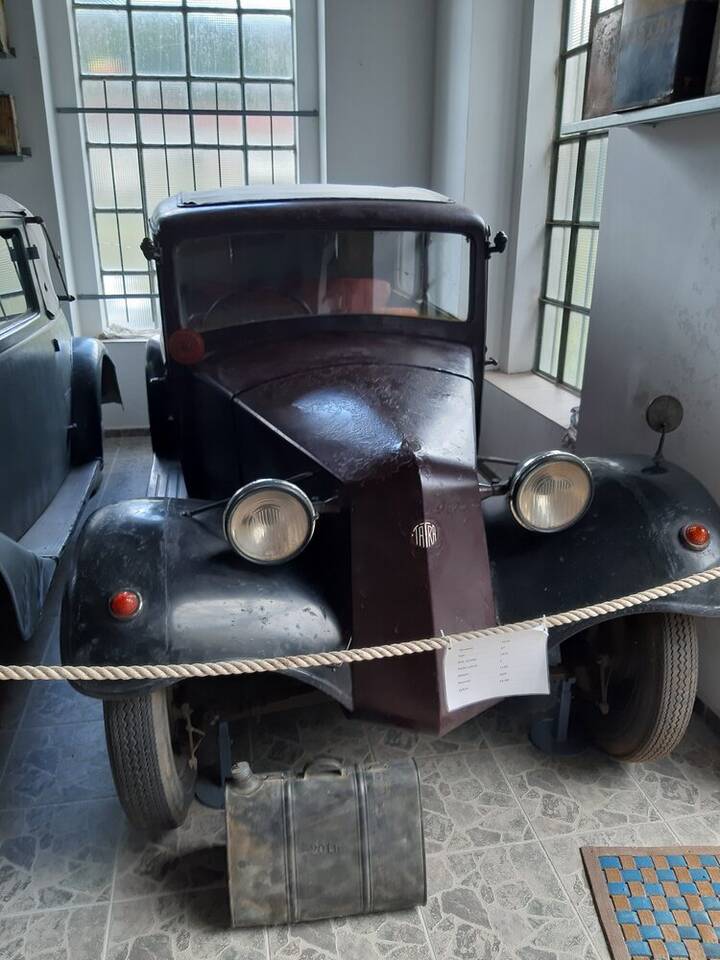
1931 Tatra 57 · Addvisor · CC BY-SA 4.0
Research pending
A matching completed auction sale has not been verified for this exact year, body, trim, engine, transmission and market.
Joyride shows this gap instead of substituting an asking price, unsold bid or mismatched special vehicle.
More than a set of wheels.
Tatra introduced the 57 during the deep economic crisis and still sold more than 1,000 in its first year. Its air-cooled boxer engine, backbone tube and swing-axle rear suspension made it mechanically unusual but easy to maintain. This page describes the regular 1,155 cc production car, not the tiny group of earliest prospectus cars that used a roughly one-litre, 17 hp engine.
Look a little closer.
Czech drivers nicknamed it Hadimrška, a name remembered almost as fondly as the official model number.
Photos show an example of the model or generation. The pictured vehicle’s year, equipment, or modifications can differ from the specification described here.
A small car built around Tatra's backbone
The central tube carries the driveline and joins the front engine and gearbox to the rear differential. That compact spine made the structure stiff while the independent swing half-axles helped the light car follow rough roads.
Source: Tatra Portal · Tatra 57 vehicle description ↗The first brochure creates a real variant trap
Tatra Portal records an earliest prospectus with a 65 mm bore, roughly 0.99 litres and 17 hp. Few appear to have been made. The established series specification used here has a 70 mm bore, 1,155 cc and 13.2 kW, so the two sets of figures are not mixed.
Source: Tatra Portal · first-series distinctions ↗Where these facts come from
Selected facts checked for this edition. Some source pages link to broader model families. Last reviewed September 30, 2026.