
Toyota Harrier 3.0 FOUR
The first Harrier mixed the quiet ride and cabin of a luxury sedan with the height and usefulness of an SUV—helping define the modern crossover.
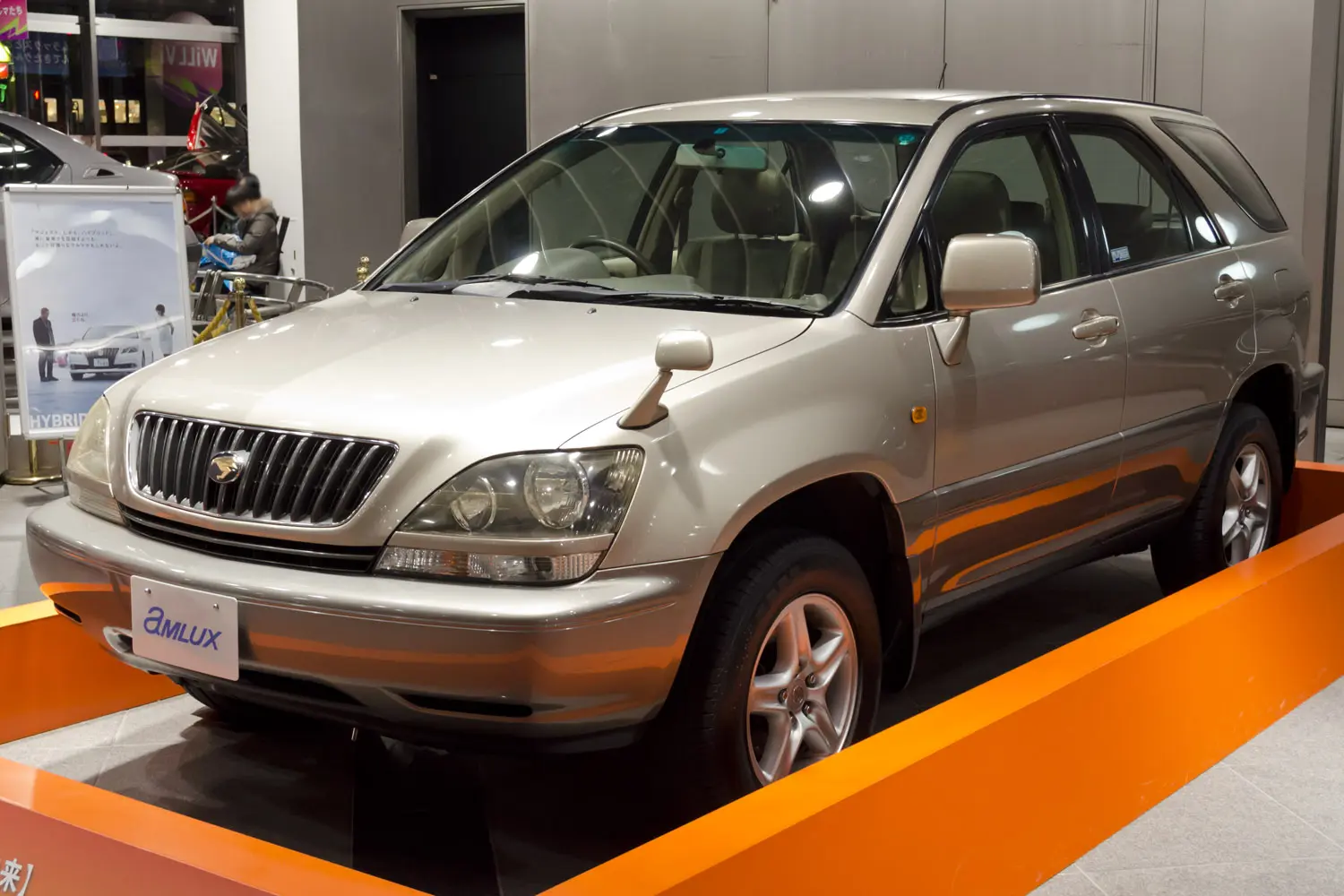
1997 first-generation Toyota Harrier · Mytho88 · CC BY-SA 3.0
Research pending
A matching completed auction sale has not been verified for this exact year, body, trim, engine, transmission and market.
Joyride shows this gap instead of substituting an asking price, unsold bid or mismatched special vehicle.
More than a set of wheels.
Toyota launched the Harrier in Japan on December 25, 1997. It used a reinforced passenger-car platform derived from the sixth-generation Camry rather than a separate truck frame. This page follows the Japanese 3.0 FOUR launch grade; the closely related Lexus RX 300 arrived in North America in 1998.
Look a little closer.
Harrier is the name of a long-winged bird of prey, which explains the bird emblem worn by early Japanese-market cars.
Photos show an example of the model or generation. The pictured vehicle’s year, equipment, or modifications can differ from the specification described here.
An SUV built from passenger-car ideas
Toyota reinforced the Camry-based platform, gave it 185 mm of ground clearance and kept independent suspension at all four wheels. The result aimed for sedan-like quietness and handling without giving up rough-road ability or a flexible cargo area.
Source: Toyota 75 Years · first-generation Harrier ↗The cabin was designed to transform
The 60:40 rear seat halves could slide independently through 120 mm, recline or fold to make a flat luggage deck. Moving the gear selector to the lower dashboard also opened a walk-through path between the front seats.
Source: Toyota · 1997 Harrier launch release ↗Where these facts come from
Selected facts checked for this edition. Some source pages link to broader model families. Last reviewed September 30, 2026.