
Toyota Prius NHW10
Before hybrids became ordinary, the first Prius taught an engine, motor, battery and planetary gears to share the work automatically—and reached Japanese dealers just before the 21st century.
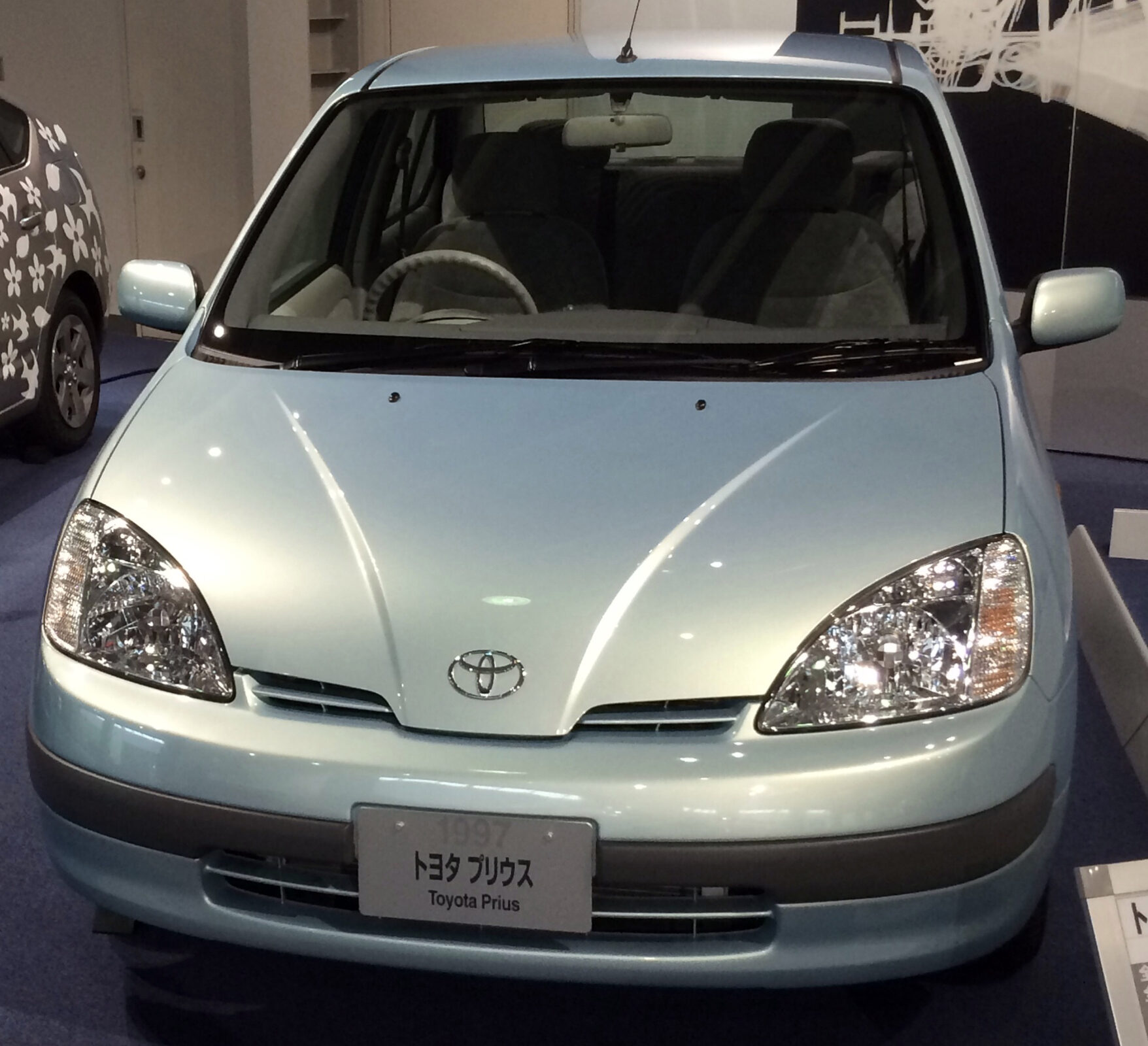
1997 Toyota Prius NHW10 at the Toyota Automobile Museum.jpg · Ghostofakina · CC BY-SA 4.0
Research pending
A matching completed auction sale has not been verified for this exact year, body, trim, engine, transmission and market.
Joyride shows this gap instead of substituting an asking price, unsold bid or mismatched special vehicle.
More than a set of wheels.
Toyota announced the production Prius on October 14, 1997 and put it on sale nationwide in Japan on December 10. Engineers had taken a largely unproven hybrid idea to mass production in about two years after formal development began. The first Toyota Hybrid System blended a specially efficient 1.5-liter gasoline engine with an electric motor, recovered braking energy and shut the engine off at stops. Toyota called it the world's first production car powered by a hybrid system; exports did not begin until 2000, so the 1997 NHW10 is a Japanese-market car.
Look a little closer.
The center screen showed energy moving between the engine, motor, battery and wheels—something now familiar, but startlingly futuristic in a 1997 family sedan.
Photos show an example of the model or generation. The pictured vehicle’s year, equipment, or modifications can differ from the specification described here.
The planetary gear set was the traffic director
Toyota's power-split device used a planetary gear set to divide engine power between the road and a generator, while the electric motor could add drive or recover energy. That arrangement let the engine spend more time in efficient operating zones and gave the driver smooth, electronically controlled continuously variable behavior without a belt CVT.
Source: Toyota · NHW10 vehicle-lineage specifications ↗Efficiency was designed into the whole car
The hybrid hardware was only part of the plan. Toyota gave the Prius a 0.30 drag coefficient, low-rolling-resistance 165/65R15 tires, electric power steering that consumed energy only when steering, a flat underfloor and a compact body with a long wheelbase. Its 28 km/L claim belongs specifically to Japan's period 10–15 test mode, not modern EPA or WLTP testing.
Source: Toyota launch release · Revolutionary Prius ↗Where these facts come from
- Toyota launch release · Revolutionary Prius
- Toyota · NHW10 vehicle-lineage specifications
- Toyota · Development of Prius and hybrid strategy
- SAE Japan · Prius selected in 330 landmarks
Selected facts checked for this edition. Some source pages link to broader model families. Last reviewed October 1, 2026.