
Volkswagen Transporter T1
Volkswagen moved the Beetle's air-cooled engine to the back of a boxy work van, creating a compact cargo carrier that soon learned to be a family bus too.
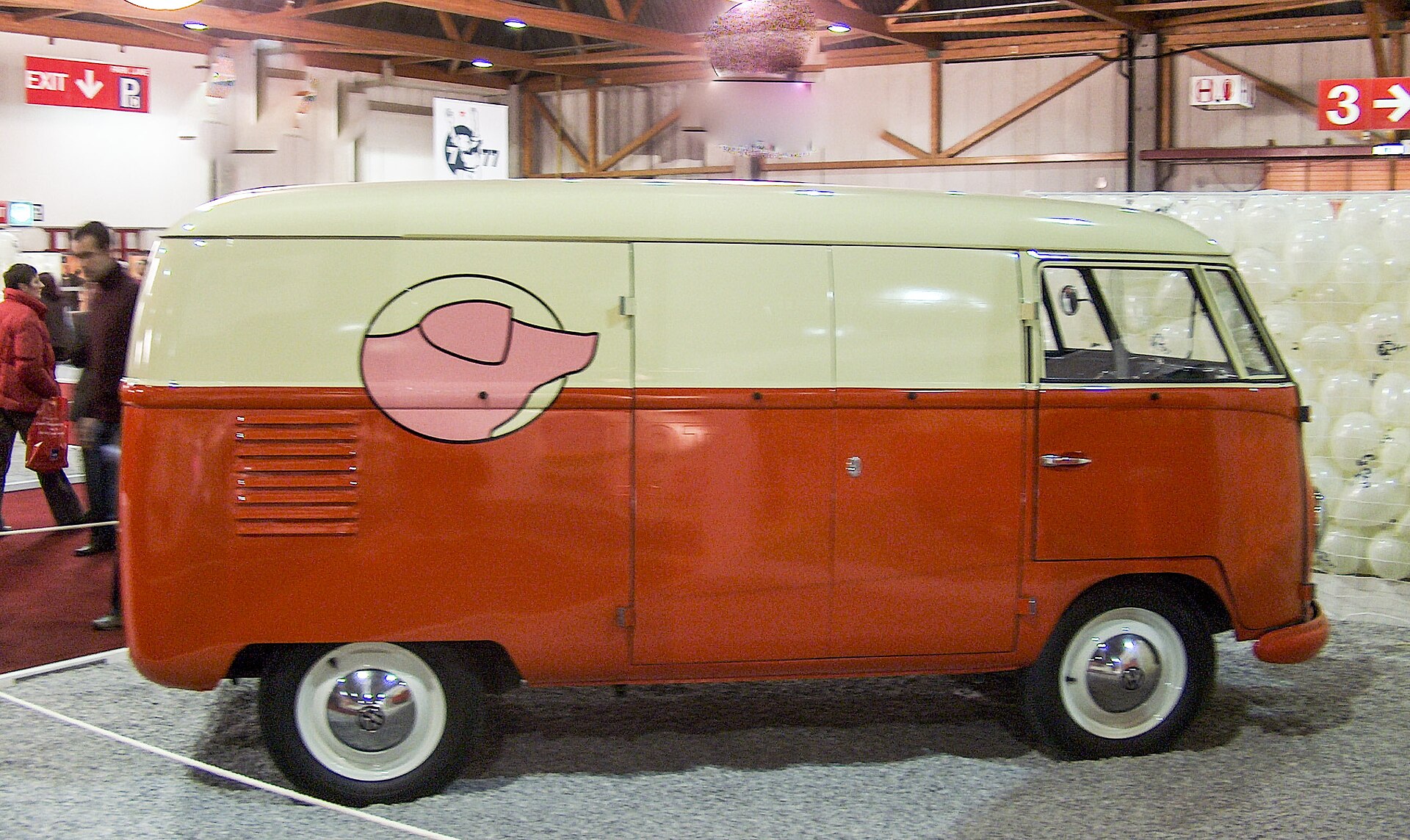
1950 Volkswagen Transporter T1 museum display · Walter Vermeir · CC BY-SA 2.0 Belgium
Research pending
A matching completed auction sale has not been verified for this exact year, body, trim, engine, transmission and market.
Joyride shows this gap instead of substituting an asking price, unsold bid or mismatched special vehicle.
More than a set of wheels.
Volkswagen developed the transporter from 1948 as the Type 29, showed it to journalists in November 1949 and started series production at Wolfsburg on March 8, 1950. The Type 2 borrowed its air-cooled rear engine from the Volkswagen saloon but used a reinforced chassis for cargo. The official chronicle records 8,001 delivered in 1950. Passenger and leisure roles followed in 1951 with the Samba minibus and camper box, so this profile stays with the first three-quarter-ton commercial van.
Look a little closer.
The first Transporter's internal development name was Type 29, while buyers knew the production family as Type 2 because the Beetle was Volkswagen's Type 1.
Photos show an example of the model or generation. The pictured vehicle’s year, equipment, or modifications can differ from the specification described here.
A Beetle idea strengthened for work
Sharing the air-cooled rear-engine concept reduced development risk, but a loaded van asks far more of its structure than a saloon. Volkswagen therefore reinforced the chassis rather than treating the Transporter as a Beetle with a bigger body.
Source: Volkswagen Group Chronicle · 1950–1960 ↗Work van first, culture symbol later
The launch vehicle was a three-quarter-ton box van. The Samba and camper role arrived in 1951, and the flower-power image much later. Separating those stages keeps the 1950 machine's working purpose clear.
Source: Volkswagen Van Heritage ↗Where these facts come from
- Volkswagen Group Chronicle · 1950–1960
- Volkswagen Van Heritage
- Volkswagen Group · History of Volkswagen Commercial Vehicles
Selected facts checked for this edition. Some source pages link to broader model families. Last reviewed 2026-10-02T10:12:59Z.