
Volkswagen XL1
The XL1 chased extreme efficiency with a carbon-fibre body, a tiny diesel-electric powertrain and a shape that slipped through the air with very little drag.
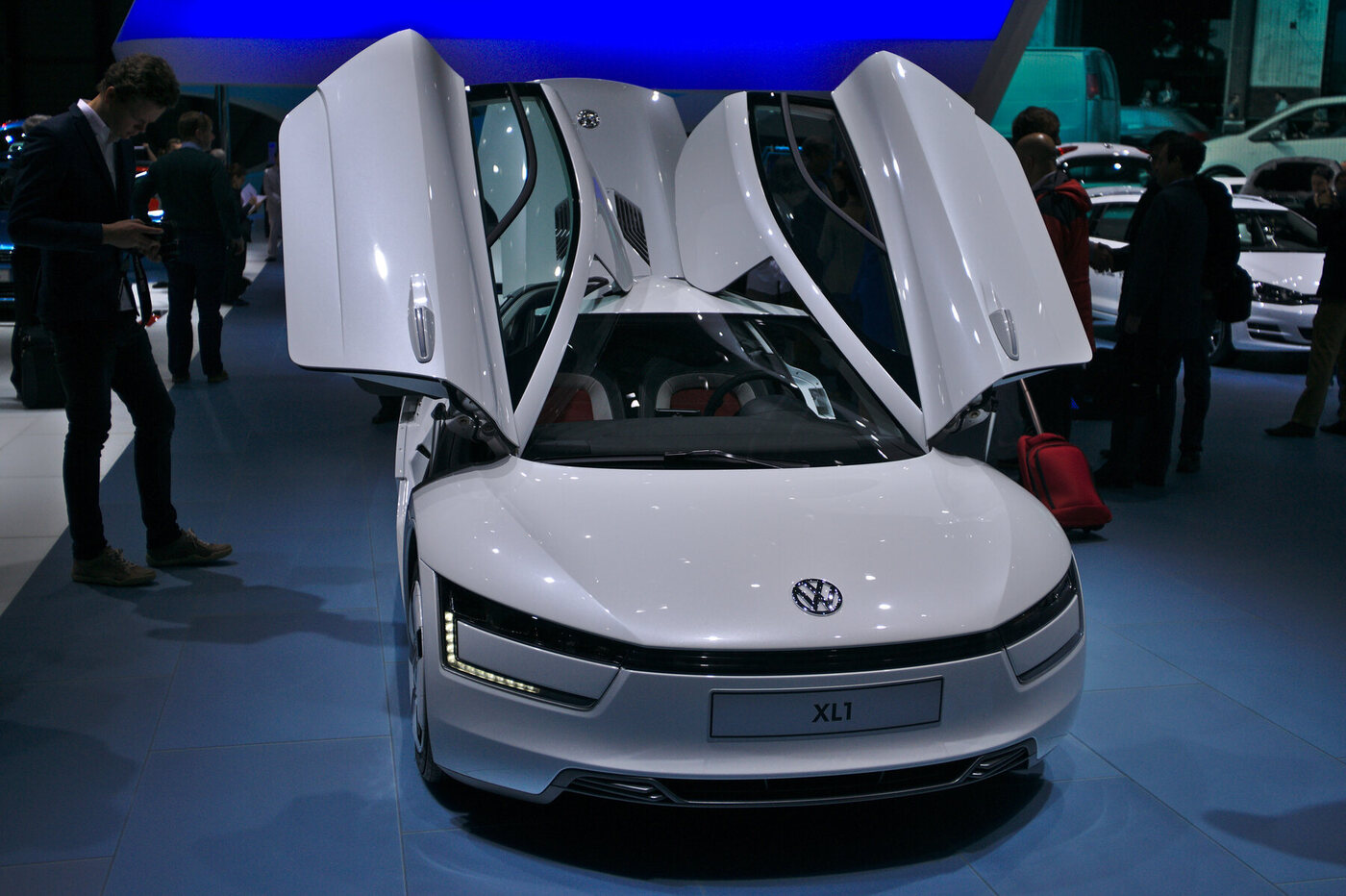
Volkswagen XL1 at the 2014 Geneva Motor Show · Clement Bucco-Lechat · CC BY-SA 3.0
Research pending
A matching completed auction sale has not been verified for this exact year, body, trim, engine, transmission and market.
Joyride shows this gap instead of substituting an asking price, unsold bid or mismatched special vehicle.
More than a set of wheels.
Volkswagen turned its long-running 'one-litre car' experiments into a limited-production two-seater for 2014. This page covers the production XL1, factory code 6Z, not the narrower tandem-seat prototypes shown in 2002 and 2009.
Look a little closer.
At a steady 100 km/h on level ground, Volkswagen said the XL1 needed only 6.2 kW—about as much power as a few household kettles.
Photos show an example of the model or generation. The pictured vehicle’s year, equipment, or modifications can differ from the specification described here.
Lightness everywhere, not just in the body
The 795 kg XL1 used a carbon-fibre-reinforced plastic monocoque and outer panels, magnesium wheels, ceramic brake discs and carefully chosen lightweight metals. Even the side mirrors became tiny cameras to reduce drag.
Source: Volkswagen Newsroom · The XL1 — The Car ↗A tiny battery that could still handle a town trip
The front-mounted 5.5 kWh lithium-ion battery supplied a 20 kW motor. Volkswagen quoted up to 50 km of electric-only travel, while the combined official fuel figure was 0.9 L/100 km under the test method used at launch.
Source: Volkswagen Newsroom · XL1 vehicle data ↗Where these facts come from
Selected facts checked for this edition. Some source pages link to broader model families. Last reviewed September 30, 2026.