
Volvo 1800ES
A long roof and a glass rear hatch turned Volvo’s graceful sports car into a compact luggage carrier.
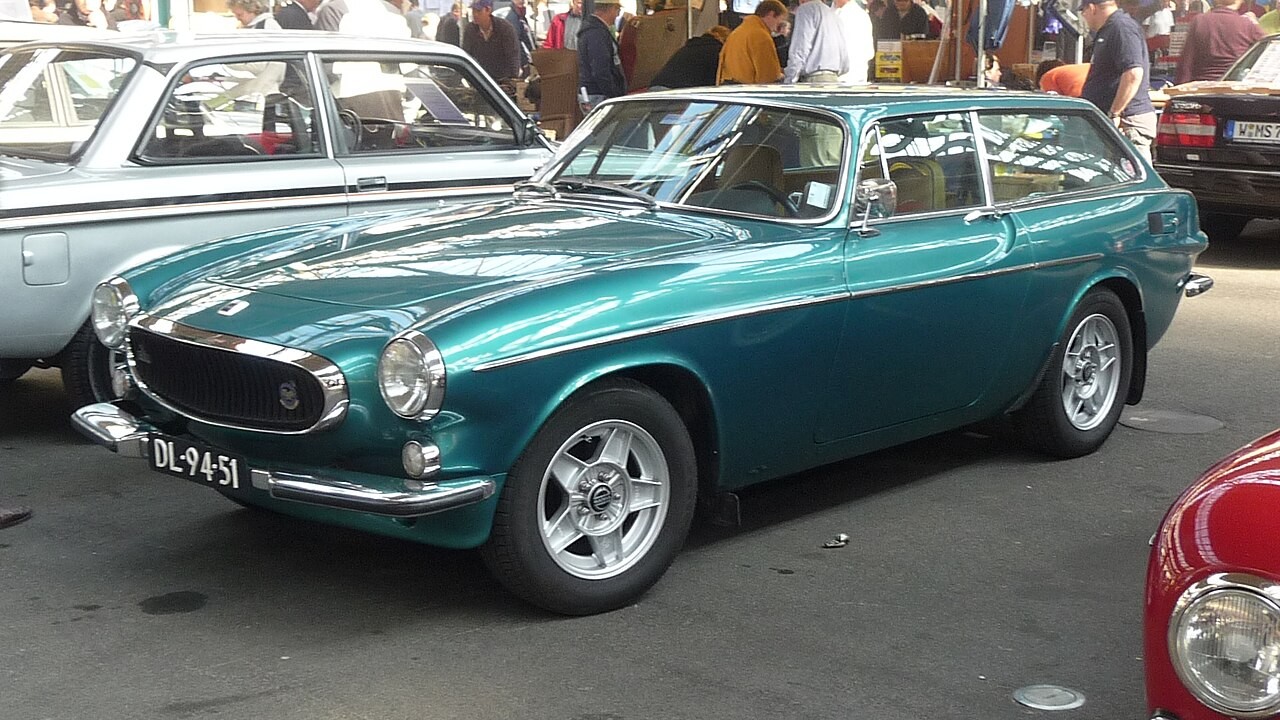
1972 Volvo 1800 ES (9066479754).jpg · Niels de Wit from Lunteren, The Netherlands · CC BY 2.0
Research pending
A matching completed auction sale has not been verified for this exact year, body, trim, engine, transmission and market.
Joyride shows this gap instead of substituting an asking price, unsold bid or mismatched special vehicle.
More than a set of wheels.
Volvo presented the ES in autumn 1971. It kept the 1800 family’s basic mechanical package but gained a completely different rear body. The original coupé and ES overlapped during 1972; the ES alone continued in 1973, the family’s final production year.
Look a little closer.
The rear hatch is a large piece of frameless glass, a theme Volvo later revisited on the C30.
Photos show an example of the model or generation. The pictured vehicle’s year, equipment, or modifications can differ from the specification described here.
Room behind the sporting shape
The longer, flatter roof and large side windows changed the car’s proportions and increased its luggage space. Volvo described this as a sporting wagon rather than simply a coupé with a different boot. Its glass hatch made the extra load area especially easy to recognise.
Source: Volvo · Model Retrospective: 1800ES ↗A short two-model-year life
Although the ES debuted in 1971, Volvo lists only 1972 and 1973 model years. Its basic engineering remained closely related to the existing 1800. Increasing safety requirements, especially in America, made a further redesign too costly, so the family ended after 1973.
Source: Volvo Heritage · 1800ES ↗Where these facts come from
- Volvo Heritage · 1800ES
- Volvo · Model Retrospective: 1800ES
- Volvo service bulletin · Changes for 1972 models, dated August 1971
Selected facts checked for this edition. Some source pages link to broader model families. Last reviewed 2026-10-02.