
Willys-Overland Jeepster VJ-2
The Jeepster mixed Jeep-family mechanical parts with a low, open touring body. Despite the Jeep name and rugged looks, the VJ-2 was a rear-wheel-drive road car, not a four-wheel-drive trail Jeep.
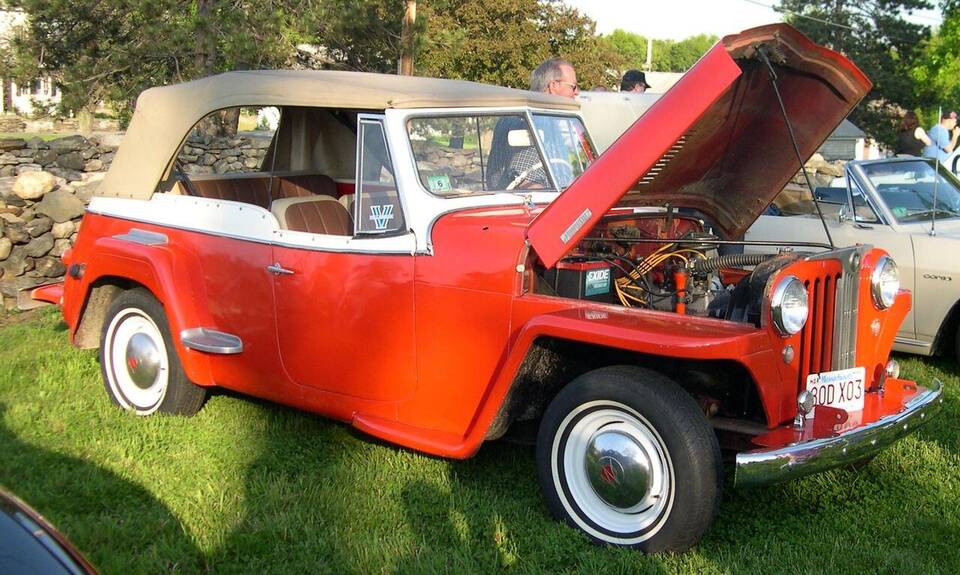
1948 Willys Jeepster.jpg · Stephen Foskett · CC BY-SA 3.0
Research pending
A matching completed auction sale has not been verified for this exact year, body, trim, engine, transmission and market.
Joyride shows this gap instead of substituting an asking price, unsold bid or mismatched special vehicle.
More than a set of wheels.
Industrial designer Brooks Stevens shaped the Jeepster as an affordable American sports-style car. The 1948 VJ-2 had five-passenger seating, a folding top and removable plastic side curtains instead of roll-up windows. Willys used the familiar 134.2-cubic-inch Go-Devil four-cylinder at launch, then expanded the wider Jeepster line with six-cylinder choices later. Its cheerful idea was clever, but a roughly $1,900 price limited sales.
Look a little closer.
Jeep's own history calls the Jeepster the last U.S.-built phaeton-style open-bodied vehicle.
Photos show an example of the model or generation. The pictured vehicle’s year, equipment, or modifications can differ from the specification described here.
Sunshine car, not trail Jeep
The Jeepster borrowed the Jeep name and some familiar components, but every factory Jeepster was rear-wheel drive. Its folding roof and side curtains made it an open leisure car, while the lack of a driven front axle meant it was not meant to crawl over terrain like the military-derived Jeep Universal.
Source: Jeep official history — The 1940s ↗A family of proven parts
The 1948 display specification pairs a 63 hp, 134.2-cubic-inch L-head four with a three-speed manual and rear-wheel drive. Using an existing Willys engine lowered the engineering risk; the distinctive part was the passenger-car body and social purpose wrapped around those proven pieces.
Source: Camp Jeep vehicle display — 1948 Willys Jeepster ↗Where these facts come from
- Jeep official history — The 1940s
- Camp Jeep vehicle display — 1948 Willys Jeepster
- Hagerty Valuation Tools — 1948 Willys Jeepster
Selected facts checked for this edition. Some source pages link to broader model families. Last reviewed October 1, 2026.