
Fiat 3½ HP
Fiat's first car still looked like a tiny horse carriage, but a compact petrol engine beneath its seat pointed toward the motor age.
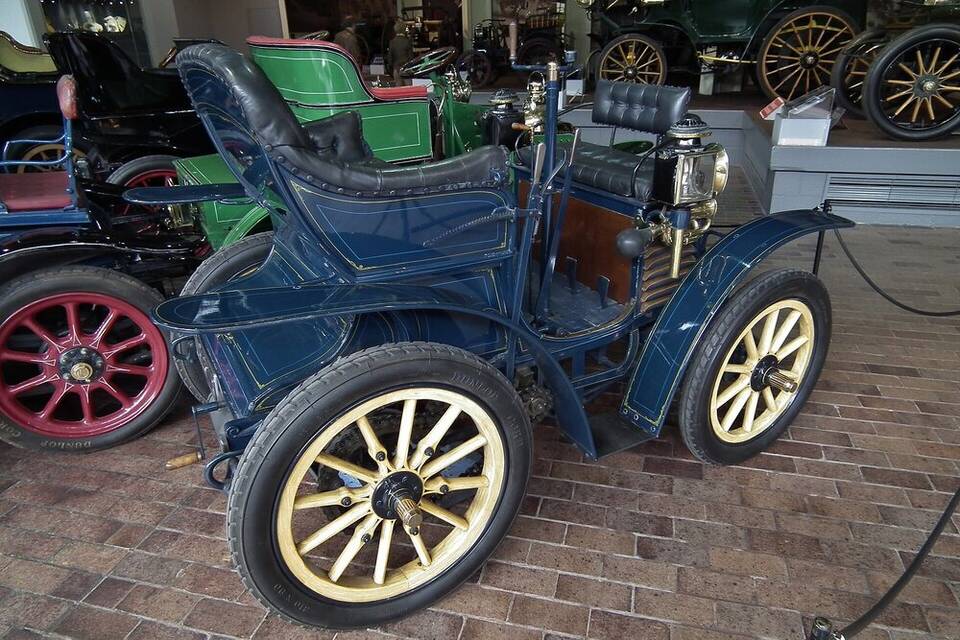
1899 Fiat 3½hp (5947862997).jpg · sv1ambo · CC BY 2.0
Research pending
A matching completed auction sale has not been verified for this exact year, body, trim, engine, transmission and market.
Joyride shows this gap instead of substituting an asking price, unsold bid or mismatched special vehicle.
More than a set of wheels.
Fiat was founded in Turin on 11 July 1899, and its first car arrived before the year was over. Engineer Aristide Faccioli designed the chassis and rear engine, while Turin coachbuilder Marcello Alessio supplied the open Duc body. The passengers sat vis-à-vis—facing one another—and the driver steered and controlled the car with levers. Fiat built only 26 examples in 1899–1900; four are documented as survivors in major collections.
Look a little closer.
The oldest Fiat in Britain can travel roughly 15 kilometres on a litre of fuel, according to the official London-to-Brighton account.
Photos show an example of the model or generation. The pictured vehicle’s year, equipment, or modifications can differ from the specification described here.
A bridge between carriage and car
The tall wooden-rim wheels, double leaf springs, leather seats and rain awning came from carriage practice. Yet the rear petrol engine, overhead valves and geared transmission already contained the basic ingredients of the twentieth-century automobile. The design therefore records a real engineering transition, not just an old-fashioned shape.
Source: Stellantis Heritage · FIAT 3½ HP ↗Why two official engine sizes appear
Stellantis Heritage's model panel lists 679 cm³, while Fiat's account of the Beaulieu museum survivor says 697 cc. The difference may reflect records or an individual car, but the sources do not explain it. This profile keeps both numbers attached to their sources instead of inventing a correction.
Source: Stellantis Media · 1899 Fiat 3½ hp at London to Brighton ↗Where these facts come from
Selected facts checked for this edition. Some source pages link to broader model families. Last reviewed October 1, 2026.