
Lancia Lambda First Series
A boat-inspired body helped this low Italian tourer rethink how a car could be built.
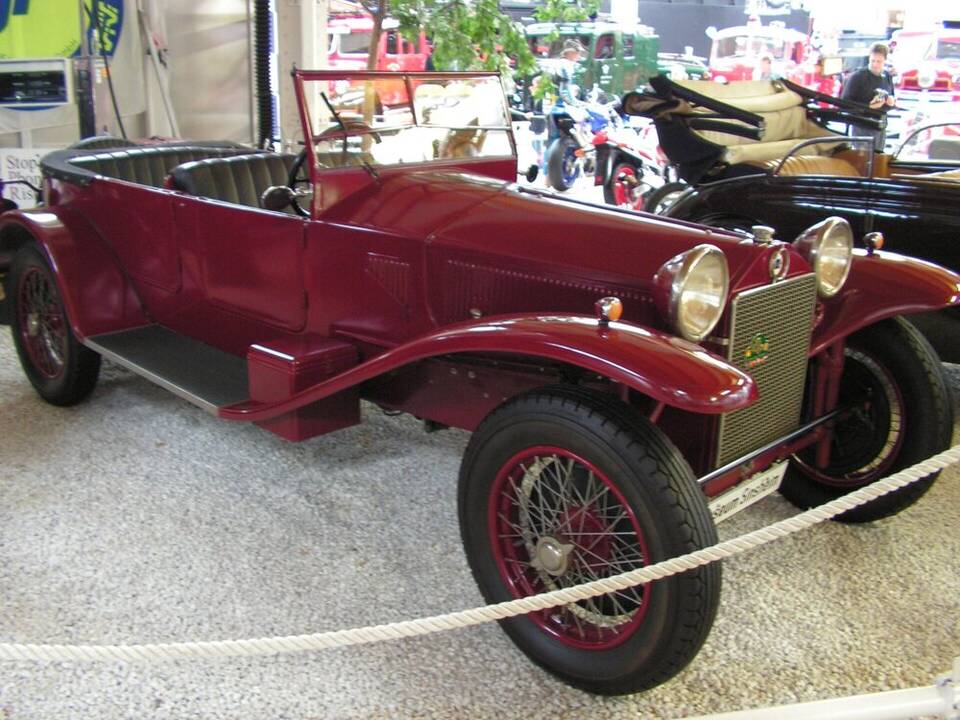
1922 Lancia Lambda First Series Torpedo · Snowdog · Public domain (PD-self)
Research pending
A matching completed auction sale has not been verified for this exact year, body, trim, engine, transmission and market.
Joyride shows this gap instead of substituting an asking price, unsold bid or mismatched special vehicle.
More than a set of wheels.
Vincenzo Lancia and designer Battista Falchetto made the Lambda’s body carry its load like a boat hull. Presented in Paris in October 1922, the first-series Torpedo also had independent front suspension.
Look a little closer.
Lancia personally tested the prototype on the climb toward Moncenisio in 1921.
Photos show an example of the model or generation. The pictured vehicle’s year, equipment, or modifications can differ from the specification described here.
A hull on wheels
The luggage compartment, firewall and seat-supporting bulkhead stiffened the body like ribs inside a boat. The structure also helped the car sit lower.
Source: Stellantis Heritage · Lancia Lambda first series ↗A compact V
Lancia’s engine history explains why the narrow V mattered: a single head and an overhead camshaft combined compact dimensions with reduced weight. Later Lancia models continued exploring unusual V-engine arrangements.
Source: Lancia · 100 years of innovative engine design ↗Where these facts come from
Selected facts checked for this edition. Some source pages link to broader model families. Last reviewed September 30, 2026.