
Alfa Romeo 6C 1750 Super Sport
A small supercharged six helped this light Alfa race hard—and this exact survivor still wears its rare original-style coachwork.
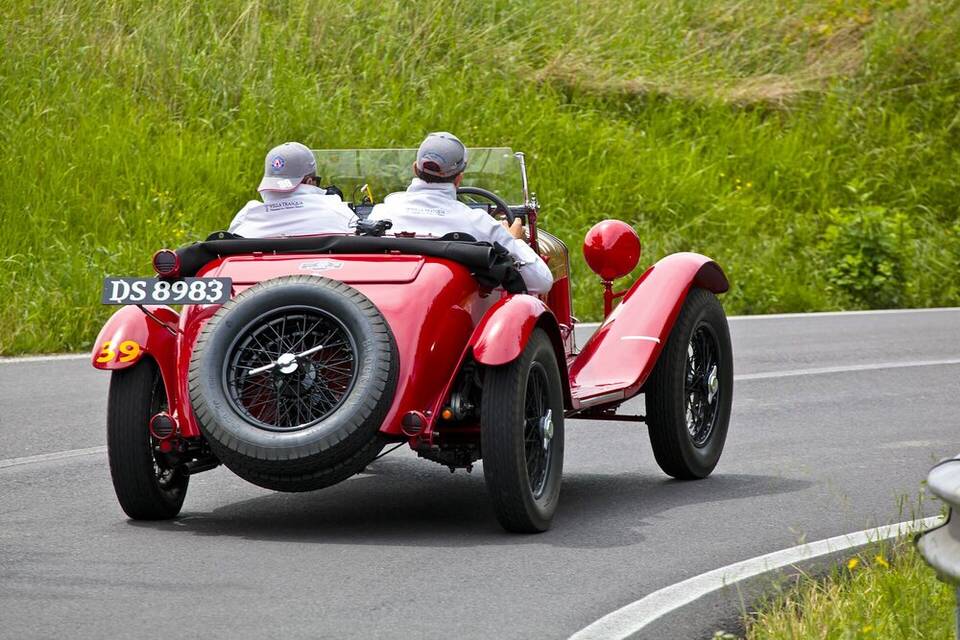
39 - ALFA ROMEO 6C 1750 SUPER SPORT ZAGATO 1929 (41272530545).jpg · Franco Vannini · CC BY 2.0
Research pending
A matching completed auction sale has not been verified for this exact year, body, trim, engine, transmission and market.
Joyride shows this gap instead of substituting an asking price, unsold bid or mismatched special vehicle.
More than a set of wheels.
Vittorio Jano’s 6C family grew from 1.5 to 1.75 litres for 1929. The Super Sport combined twin overhead camshafts, a short chassis and, in its most powerful form, a Roots-type supercharger. Chassis 312910 in Philadelphia’s Simeone Museum is rated at 85 hp, is one of three cars built with its body style and took part in pre-war Automobile Racing Club of America events.
Look a little closer.
“6C” simply means six cylinders; “1750” points to the engine’s approximate displacement in cubic centimetres.
Photos show an example of the model or generation. The pictured vehicle’s year, equipment, or modifications can differ from the specification described here.
Super Sport, not every 6C 1750
The 6C 1750 family included slower Turismo and Sport cars as well as Super Sport and later Gran Sport versions. The Simeone car’s 85 hp record identifies the supercharged Super Sport tune; naturally aspirated 1929 Super Sports were lower-powered. This profile does not borrow later Gran Sport or Testa Fissa figures.
Source: Simeone Museum · 1929 Alfa Romeo 6C 1750 SS ↗A survivor with its own American racing history
The museum describes chassis 312910 as original, unrestored and one of only three cars with this body style. It later raced in pre-war ARCA events in the United States. Those are claims about this exact car; famous 1929 Mille Miglia and Spa victories belong to the model family, not automatically to this chassis.
Source: Simeone Museum · chassis 312910 provenance ↗Reading the related Gran Sport cockpit
The new driver-eye photograph shows five round dials and the stripped, open cockpit of a related 1930 Gran Sport. It helps explain the 6C 1750 family's driver-focused layout, but it cannot establish the exact gauge faces, switch positions, trim or body structure of unrestored 1929 chassis 312910. That exact James Young-bodied cabin remains a visible research gap.
Source: Wikimedia Commons · Alfa-Romeo 6C-1750-GS Internal ↗What survived on chassis 312910
The museum traces this exact car from Colonel Samuel Bird and pre-war ARCA competition to his son Robert, then to the Simeone collection in 1980. It reports original paint and mostly original upholstery, with replaced seat bottoms and only mechanical fettling. That preservation record makes the exact cabin unusually valuable evidence—but it also means a related Gran Sport cockpit must stay visibly separate until reusable photographs of 312910 itself are cleared.
Source: Simeone Museum · exact chassis 312910 ownership and preservation ↗The body is British, not an Italian catalogue shell
The museum says Alfa sent only a few cars—perhaps three—to its British concessionaire, Alfa Stiles Limited, for racing three-seat bodies by James Young Limited. Chassis 312910 is therefore not a generic 6C 1750 spider: its coachbuilder, seating layout and exact surviving body must stay attached to the chassis identity when cabin or exterior evidence is reviewed.
Source: Simeone Museum · James Young three-seat body history ↗Where these facts come from
- Simeone Foundation Automotive Museum · 1929 Alfa Romeo 6C 1750 SS
- RM Sotheby’s · 1929 Alfa Romeo 6C 1750 Super Sport specification overview
- Alfa Romeo / Stellantis Heritage · 1929 6C 1750 Super Sport technical specification
Selected facts checked for this edition. Some source pages link to broader model families. Last reviewed October 3, 2026.