
Volvo PV36 Carioca
Rounded corners and tucked-in headlights made this Volvo look as if it had arrived from tomorrow.
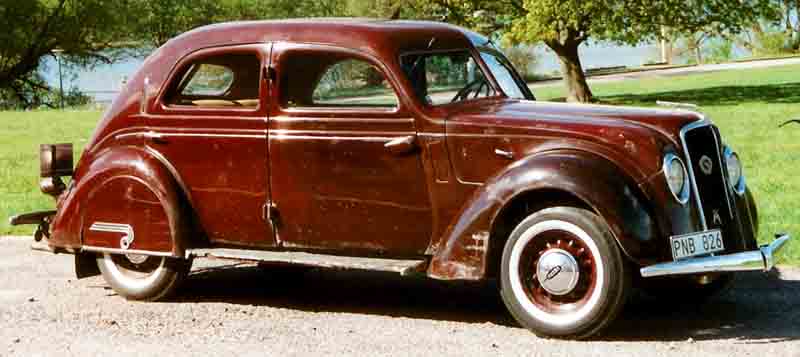
1935 Volvo PV36 Carioca · Lars-Göran Lindgren Sweden · CC BY-SA 3.0
Research pending
A matching completed auction sale has not been verified for this exact year, body, trim, engine, transmission and market.
Joyride shows this gap instead of substituting an asking price, unsold bid or mismatched special vehicle.
More than a set of wheels.
In 1935 Volvo tried the new fashion for flowing, streamlined shapes. The PV36 carried six people and hid its headlights in the front bodywork. It was expensive, and its appearance surprised buyers who expected a traditional Volvo. Its familiar name, Carioca, was a nickname rather than the factory model designation.
Look a little closer.
Volvo says Swedish police bought eighteen PV36 patrol cars.
Photos show an example of the model or generation. The pictured vehicle’s year, equipment, or modifications can differ from the specification described here.
Front wheels that could move separately
Wishbones and coil springs let each front wheel rise over a bump independently. The PV36’s engineering changed how it rode, as well as how it looked.
Source: Volvo Cars · PV36 model overview ↗A boot you could reach from outside
The PV36 introduced a built-in luggage compartment to Volvo. Its external opening made loading bags easier, while the spare wheel sat outside in its own steel cover. The design was ambitious, but its introductory Swedish price of 8,500 kronor limited its audience.
Source: Volvo Car USA · PV36 celebrates its 75th anniversary ↗Where these facts come from
Selected facts checked for this edition. Some source pages link to broader model families. Last reviewed September 30, 2026.