
Volvo ÖV4
The open four-cylinder car that rolled out of Volvo's new Gothenburg factory and started a century-long story.
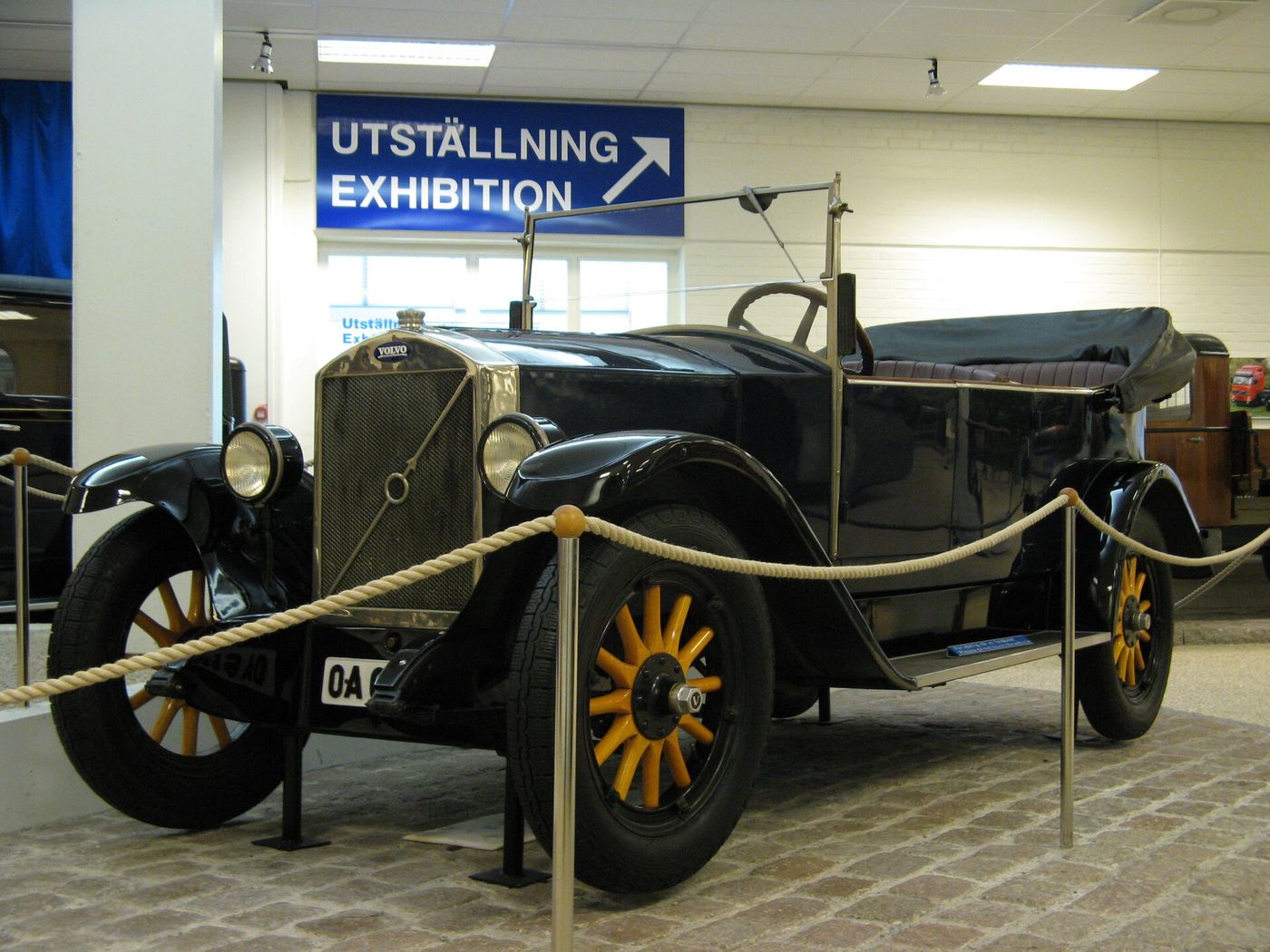
1927 Volvo ÖV4 in the Volvo Museum · Kotasik · CC BY-SA 3.0
Research pending
A matching completed auction sale has not been verified for this exact year, body, trim, engine, transmission and market.
Joyride shows this gap instead of substituting an asking price, unsold bid or mismatched special vehicle.
More than a set of wheels.
On 14 April 1927, Volvo's first series-produced car left the Lundby factory. Its name was a compact description: ÖV meant öppen vagn, or open car, and 4 meant four cylinders. The dark-blue body used sheet metal over an ash-and-beech frame. This profile follows that original Swedish open tourer, before four-wheel brakes became an option in 1928.
Look a little closer.
People often call every ÖV4 Jakob, but Jakob was first the nickname of a pre-series car completed on Jakob's name day.
Photos show an example of the model or generation. The pictured vehicle’s year, equipment, or modifications can differ from the specification described here.
A body made from wood and steel
The outer sheet metal did not do all the work. Volvo says the body was built on an ash-and-beech frame, a reminder that early car construction borrowed ideas from carriage building.
Source: Volvo Cars · ÖV4 heritage model ↗Stopping changed after launch
The original 1927 specification used mechanically operated brakes on the rear wheels. Four-wheel braking became optional in 1928, so the safer later setup should not be silently folded into this first-year profile.
Source: Volvo Owners Club · ÖV4 technical history ↗Where these facts come from
- Volvo Cars · ÖV4 heritage model
- Volvo Cars Global Media · ÖV4 heritage data
- Volvo Owners Club · ÖV4 technical history
Selected facts checked for this edition. Some source pages link to broader model families. Last reviewed September 29, 2026.