Jaguar XK120 Open Two-Seater
Jaguar built the XK120 to show off a new engine, then discovered that people wanted the sleek show car itself.
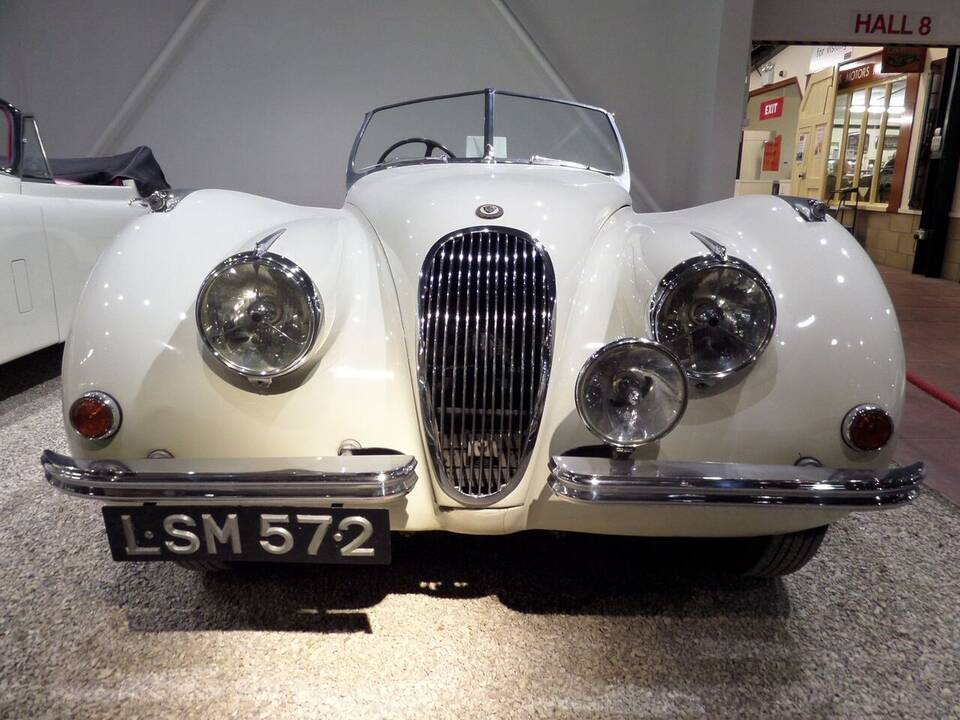
Jaguar XK120 Roadster 1949-50 (13544213403).jpg · Andrew Bone from Weymouth, England · CC BY 2.0
Research pending
A matching completed auction sale has not been verified for this exact year, body, trim, engine, transmission and market.
Joyride shows this gap instead of substituting an asking price, unsold bid or mismatched special vehicle.
More than a set of wheels.
Jaguar unveiled the open two-seat XK120 at the first post-war London Motor Show at Earls Court in October 1948. William Lyons' low sports car was conceived as a limited-production showcase for Jaguar's new XK engine before that engine entered the Mark VII saloon. Demand upset that plan: hand-built aluminium bodies gave way to steel tooling in 1950, and open, fixed-head and drophead versions eventually formed a real model range. The XK120 also changed Jaguar's international standing, especially in the United States, and took the marque from a dramatic motor-show debut toward post-war competition success.
Look a little closer.
The name advertised the target: 120 meant 120 miles per hour, and Jaguar says the car could go faster with its windscreen removed.
Photos show an example of the model or generation. The pictured vehicle’s year, equipment, or modifications can differ from the specification described here.
A rolling display stand became the product
The XK120 was meant to introduce the XK engine before Jaguar produced it in volume for the Mark VII saloon. Putting the new twin-cam six into a short, striking sports car made the engineering easy to see and exciting to imagine. The public response turned a limited showcase into a six-year production family, which is why the 1948 show identity and the later production specification must be related but not treated as one surviving chassis record.
Source: Jaguar Daimler Heritage Trust · XK120 Open Two-Seater ↗Why the body material changed
The earliest bodies were formed in aluminium, a practical choice for a small hand-built run. Once orders made larger-scale manufacture worthwhile, Jaguar invested in steel tooling in 1950. The steel car was not a different generation; it was the production answer to unexpectedly high demand. Jaguar Heritage estimates that about 200 aluminium-bodied cars preceded the change.
Source: Jaguar Daimler Heritage Trust · XK120 Open Two-Seater ↗Where these facts come from
- Jaguar Daimler Heritage Trust · XK120 Open Two-Seater
- Jaguar · Racing DNA
- Jaguar Daimler Heritage Trust · Swallow centenary facts
Selected facts checked for this edition. Some source pages link to broader model families. Last reviewed October 1, 2026.