
Toyopet Master RR
Toyota designed the Master as a sturdy working sedan for taxi duty, using a beam front axle and a simple three-speed gearbox when rough roads and hard daily use mattered more than a soft ride.
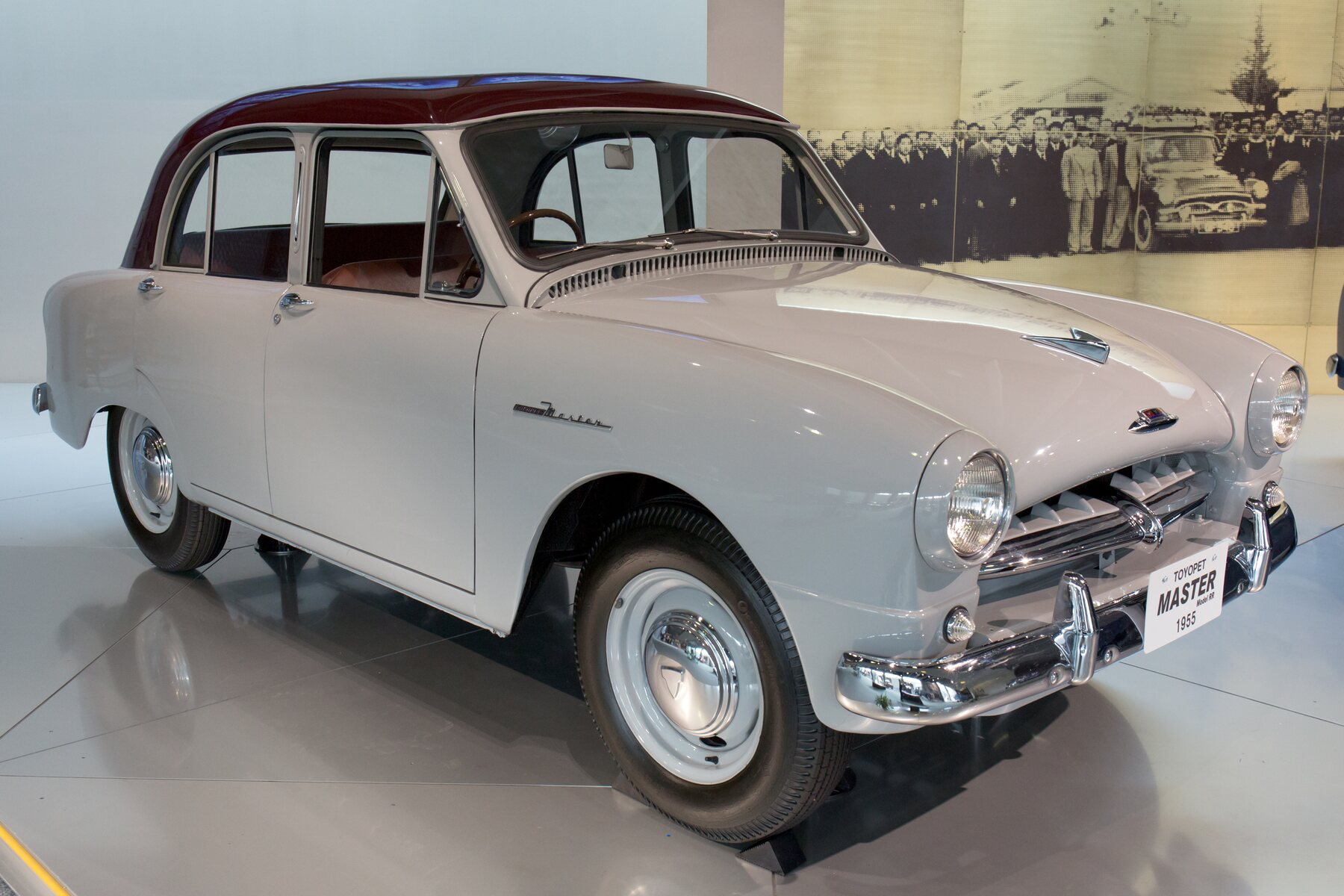
1955 Japan Toyopet Master RR · Morio · CC BY-SA 3.0
Research pending
A matching completed auction sale has not been verified for this exact year, body, trim, engine, transmission and market.
Joyride shows this gap instead of substituting an asking price, unsold bid or mismatched special vehicle.
More than a set of wheels.
Toyota began the RR program in October 1953 as the successor to the Kanto Auto Works-built RHK. Its first prototype was complete in March 1954, mass production began that September, and the Master launched beside the new Crown on January 7, 1955. Toyota made the chassis at Koromo and sent it to Kanto Auto Works for the body. The Crown proved durable enough for taxi work too, so the separate Master sedan was discontinued in November 1956.
Look a little closer.
Toyota's 1955 comparison table gave the Master six seats, a 100 km/h maximum speed, and a 12-volt electrical system—twice the voltage listed for the older RH Super.
Photos show an example of the model or generation. The pictured vehicle’s year, equipment, or modifications can differ from the specification described here.
Built for the taxi shift
Toyota gave the Master a reverse-Elliot I-beam front axle because taxi operators needed a structure that could tolerate heavy wear. The choice also helped cabin packaging. It was deliberately different from the Crown's wishbone independent front suspension, even though both cars shared the R engine and many chassis parts.
Source: Toyota 75 Years — Development of the Model RR Toyopet Master ↗Why the Master sedan disappeared
Toyota originally aimed the Master at businesses and the Crown at private owners. Once operators learned that the Crown's independent suspension could survive commercial work, taxi demand shifted toward the Crown. Toyota ended Master sedan production in November 1956, while the related Masterline work vehicles continued for a time.
Source: Toyota 75 Years — Production Increase for the Toyopet Crown ↗A taxi cabin between two eras
Toyota’s 1955 comparison lists a 370 mm standard floor height for the six-seat Master: 50 mm higher than the Crown, but 40 mm lower than the older RH Super. Those figures describe floor height, not measured headroom or seat height. They put the Master’s practical cabin in context without assuming that its shared engine made it the same car as the Crown.
Source: Toyota 75 Years · 1955 comparative specifications ↗Where these facts come from
- Toyota 75 Years — Toyopet Master vehicle lineage
- Toyota 75 Years — Development of the Model RR Toyopet Master
- Toyota 75 Years — Production Increase for the Toyopet Crown
Selected facts checked for this edition. Some source pages link to broader model families. Last reviewed October 5, 2026.