
BMW Isetta 250 Standard
A tiny front-door car that gave motorcycle riders a roof and helped BMW through the 1950s.
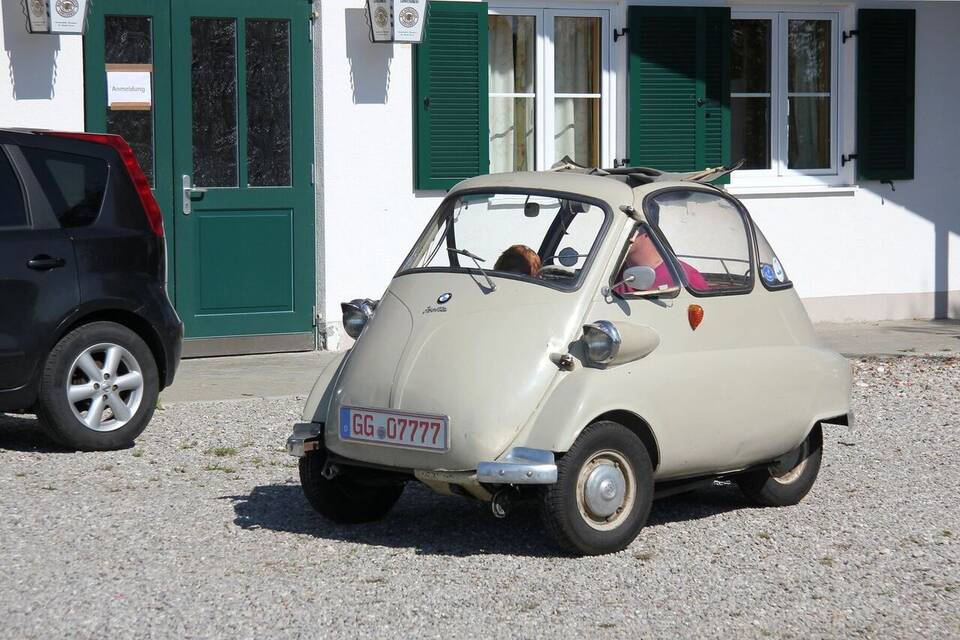
1955 BMW Isetta with its fabric roof open. · Lothar Spurzem · CC BY-SA 2.0 Germany
Research pending
A matching completed auction sale has not been verified for this exact year, body, trim, engine, transmission and market.
Joyride shows this gap instead of substituting an asking price, unsold bid or mismatched special vehicle.
More than a set of wheels.
The Isetta began as an Italian Iso design. BMW licensed it, replaced the original two-stroke engine with a four-stroke unit from the BMW R25/3 motorcycle and started production in spring 1955. This profile covers the early 250 Standard, not the later 300 or Export model.
Look a little closer.
More than 10,000 Isettas were sold in the first year, and BMW eventually built about 161,000 Isettas of all versions from 1955 to 1962.
Photos show an example of the model or generation. The pictured vehicle’s year, equipment, or modifications can differ from the specification described here.
An Italian idea, re-engineered in Munich
BMW kept the unusual bubble-car idea but changed its heart. The company installed the 250 cc four-stroke engine from its R25/3 motorcycle in place of Iso’s two-stroke design. That made the German Isetta a distinct version, not simply a badge swap.
Source: BMW Group Classic · Isetta 250 Standard ↗A small car with a big job
Post-war buyers wanted weather protection but often could not stretch to a conventional car. The Isetta bridged the gap between a motorcycle and a family saloon. Its strong first-year sales helped make it one of the best-known symbols of West Germany’s recovery.
Source: BMW Group Classic · Isetta model series ↗Where these facts come from
Selected facts checked for this edition. Some source pages link to broader model families. Last reviewed September 29, 2026.