
BMW 1500 Neue Klasse
The BMW 1500 mixed a roomy four-door cabin with an eager overhead-cam engine and sophisticated independent suspension, creating the template for the modern BMW sport sedan.
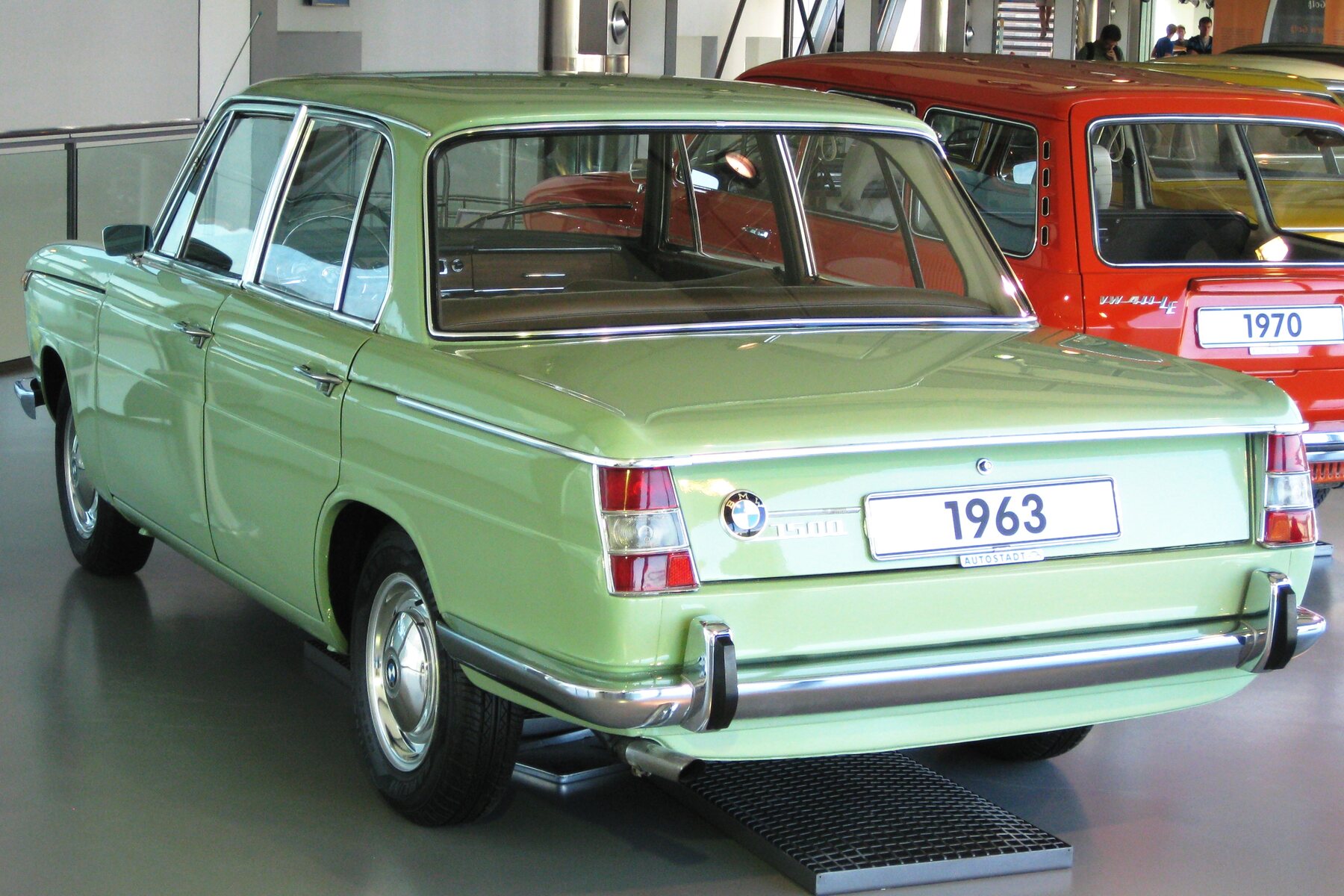
1961 Germany BMW 1500 Neue Klasse · Charles01 · CC BY-SA 3.0
Research pending
A matching completed auction sale has not been verified for this exact year, body, trim, engine, transmission and market.
Joyride shows this gap instead of substituting an asking price, unsold bid or mismatched special vehicle.
More than a set of wheels.
BMW unveiled the 1500 at the 1961 Frankfurt IAA as the first member of what became the Neue Klasse. It filled the gap between BMW's tiny and large cars with a modern five-seat saloon that could also feel lively. The production car followed in 1962, and the 1500's sales and engineering helped restore the company's fortunes. Larger 1600, 1800 and 2000 relatives followed, carrying its basic idea forward.
Look a little closer.
BMW did not originally launch 'Neue Klasse' as a numbered series name—it was a marketing description that stuck and eventually became the whole family's identity.
Photos show an example of the model or generation. The pictured vehicle’s year, equipment, or modifications can differ from the specification described here.
One car filled a dangerous gap
BMW had small economy cars and expensive large models but lacked a modern middle-class saloon. The production 1500's five-seat body, 80 bhp engine and DM 9,485 price created that missing bridge. These are production-car figures, not the 1961 show's preliminary specification.
Source: BMW Group Classic · BMW 1500 ↗The suspension wrote a long-running recipe
BMW used MacPherson struts at the front and rubber-mounted semi-trailing arms at the rear. That combination allowed independent wheel movement and was tuned for nearly neutral behavior in bends, while keeping the ride firm rather than harsh. The arrangement became part of the engineering character associated with later BMW saloons.
Source: BMW PressClub · History of BMW 5 Series ↗Instruments sheltered from reflections
BMW's history describes the early production car's instruments recessed into a dark, padded dashboard to reduce windscreen reflections, plus a padded two-spoke steering-wheel centre. Seat-belt mounting points were provided; that does not establish that every car was delivered with belts fitted. These are production-era details, not proof of the 1961 prototypes' exact cabin equipment.
Source: BMW PressClub · 50 years of BMW New Class, page 8 ↗Where these facts come from
- BMW Group Classic · BMW 1500
- BMW PressClub · The fresh face of BMW: 50 years of BMW New Class
- BMW PressClub · 50 years of BMW New Class, full historical press kit (2011)
- BMW PressClub · History of BMW 5 Series
Selected facts checked for this edition. Some source pages link to broader model families. Last reviewed October 2, 2026.