
Bugatti EB110 GT
A carbon monocoque, quad-turbo V12 and permanent all-wheel drive made the EB110 GT a technology map for later hypercars. It premiered on Ettore Bugatti's 110th birthday and was built not in France, but in a purpose-made factory near Modena.
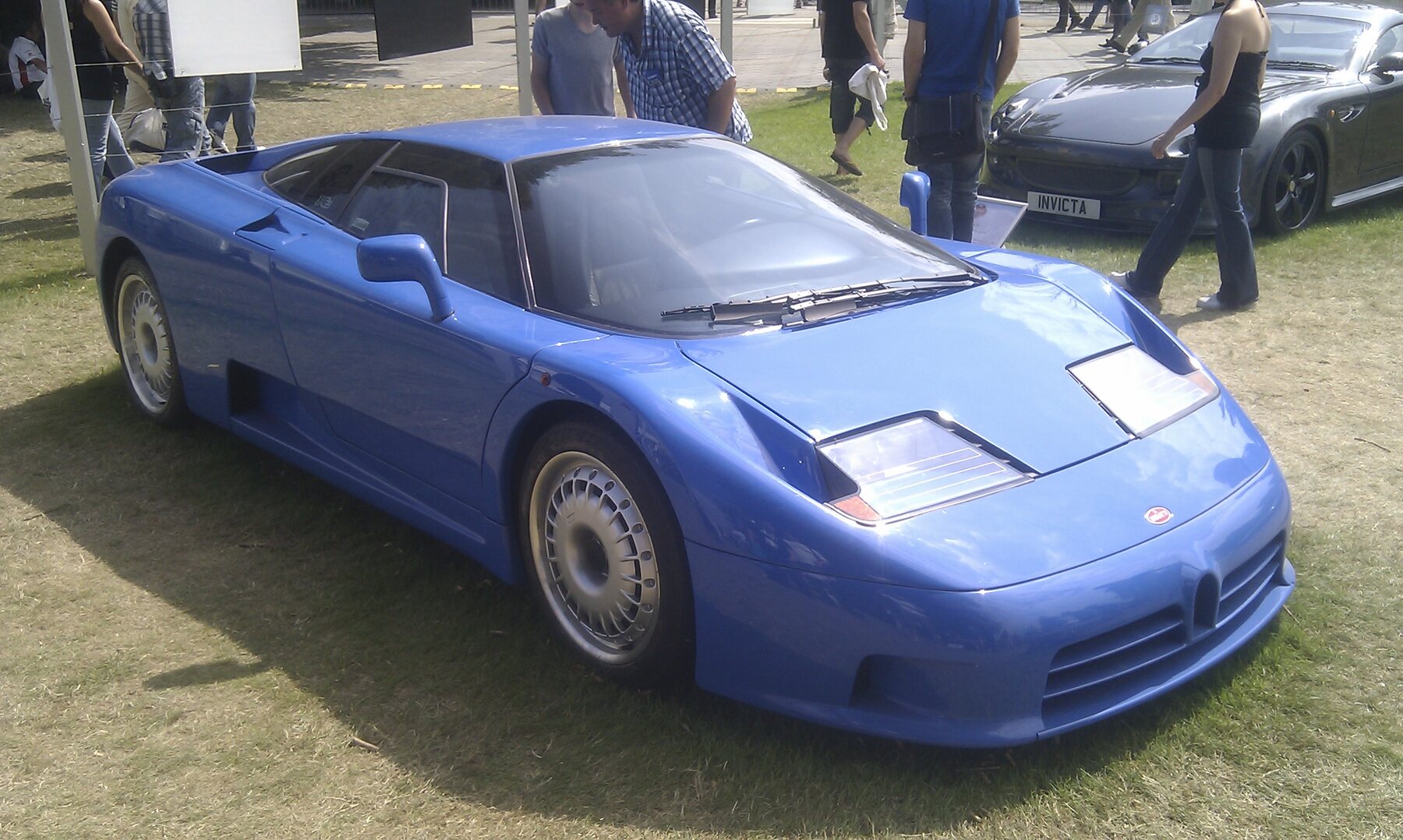
1991 Italy Bugatti EB110 GT · Louis Rix · CC BY 2.0
Research pending
A matching completed auction sale has not been verified for this exact year, body, trim, engine, transmission and market.
Joyride shows this gap instead of substituting an asking price, unsold bid or mismatched special vehicle.
More than a set of wheels.
Italian entrepreneur Romano Artioli acquired the Bugatti trademark in 1987 and assembled engineers, suppliers and craftspeople around a new factory at Campogalliano. The EB110 premiered in Paris on 15 September 1991, exactly 110 years after Ettore Bugatti's birth. Its carbon monocoque, developed with Aerospatiale, carried a newly designed high-revving V12, four small turbochargers and permanent all-wheel drive. The GT combined this machinery with leather, air conditioning and electric seats; the later SS traded some comfort for more power and less weight. A collapsing supercar market and the company's wider debts ended Campogalliano production in 1995.
Look a little closer.
Its V12 used four turbochargers, five valves per cylinder and sixty valves altogether.
Photos show an example of the model or generation. The pictured vehicle’s year, equipment, or modifications can differ from the specification described here.
Four small turbos instead of one giant shove
A turbo makes power from exhaust energy, but a very large turbo can take time to speed up. Bugatti divided the job among four smaller units—one of the design choices that helped a highly boosted V12 respond across a wider rev range. Intercoolers then cooled the compressed air so it stayed dense and knock-resistant.
Source: 30 Years of the Bugatti EB 110 ↗Why the carbon tub changed the whole car
The 125 kg monocoque was not simply a light body panel. It was the central safety and stiffness structure to which suspension and powertrain systems attached. High stiffness lets engineers tune suspension movement more precisely; low structural mass leaves more of the weight budget for four-wheel drive, luxury equipment and crash protection.
Source: 30 Years of the Bugatti EB 110 ↗Where these facts come from
- 30 Years of the Bugatti EB 110
- Loris Bicocchi—Bugatti's high-speed expert
- Bugatti EB110 vs. Chiron
- Bugatti Speedline
Selected facts checked for this edition. Some source pages link to broader model families. Last reviewed October 2, 2026.