
Tata Ace
A tiny four-wheel truck designed to squeeze through Indian lanes while carrying a proper working load.
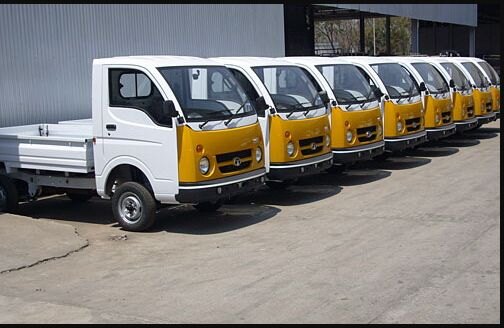
Tata Ace mini-trucks at a factory outlet · Deepak · Public domain
Research pending
A matching completed auction sale has not been verified for this exact year, body, trim, engine, transmission and market.
Joyride shows this gap instead of substituting an asking price, unsold bid or mismatched special vehicle.
More than a set of wheels.
Tata Motors launched the Ace in India in May 2005 to bridge the gap between three-wheel cargo carriers and larger trucks. The simple cab-over mini-truck used a small two-cylinder diesel and was aimed at last-mile jobs in towns and rural areas. Tata says the Ace created India's mini-truck category and became a livelihood tool for millions of owners. Its importance was not speed; it was putting four-wheel stability, a steel cabin and useful cargo ability into a very compact package.
Look a little closer.
Owners nicknamed the Ace Chotta Haathi—little elephant—because it was small but strong enough to earn its keep.
Photos show an example of the model or generation. The pictured vehicle’s year, equipment, or modifications can differ from the specification described here.
A new space between a three-wheeler and a truck
Tata did not simply shrink an existing large truck. Its own history says the Ace was created for a market gap between three-wheelers and bigger commercial vehicles. The compact four-wheeler could turn in 4.3 metres yet offered a proper cabin and a sub-one-ton cargo role.
Source: Tata Group · How the Tata Ace delivers India's needs ↗Safety and comfort were part of the work tool
The early Ace used an all-steel cabin, standard seat belts, front discs and rear drums. Tata also listed roof-crush, rear-wall and frontal-crash compliance. Those details mattered because drivers were spending whole workdays in a vehicle meant to replace more exposed cargo three-wheelers.
Source: Tata Motors · 2007 export launch description of the original Ace ↗Where these facts come from
- Tata Motors · Ace reaches two-million milestone
- Tata Motors · 2007 original-Ace export launch
- Tata Group · How the Tata Ace delivers India's needs
- Tata Motors 2005 SEC filing · Ace launch and capacity
Selected facts checked for this edition. Some source pages link to broader model families. Last reviewed September 30, 2026.