
Toyota Mirai
The first Mirai carried compressed hydrogen but drove like an electric car, making its own electricity while moving.
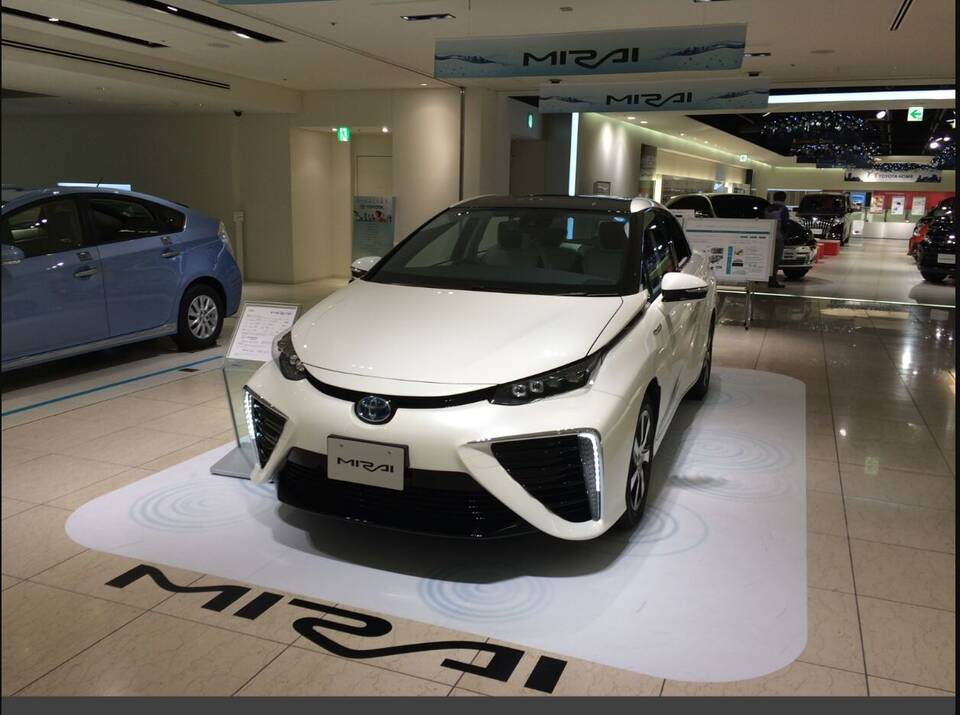
Toyota Mirai photographed in Japan in November 2014 · Turbo-myu-z · CC BY-SA 4.0
Research pending
A matching completed auction sale has not been verified for this exact year, body, trim, engine, transmission and market.
Joyride shows this gap instead of substituting an asking price, unsold bid or mismatched special vehicle.
More than a set of wheels.
Toyota announced the Mirai in November 2014 and began Japanese sales on December 15. Its name means future in Japanese. Rather than storing all its driving energy in a large battery, the sedan combined hydrogen, oxygen from the air and a small nickel-metal-hydride battery in Toyota's Fuel Cell System.
Look a little closer.
Toyota shaped the body around the idea of drawing in air and releasing water, right down to a droplet-like side profile.
Photos show an example of the model or generation. The pictured vehicle’s year, equipment, or modifications can differ from the specification described here.
A humidifier-less stack used its own water
Fuel-cell membranes need careful moisture control. Toyota circulated water created during electricity generation inside the stack, eliminating the external humidifier used by its earlier fuel-cell vehicles. That helped make the system smaller and simpler enough for a production sedan.
Source: Toyota · 2014 Mirai Japan launch ↗High voltage made smaller parts possible
The FC boost converter raised electricity from the stack to 650 volts. A higher system voltage let Toyota reduce both motor size and the number of fuel cells while keeping strong output. Two hydrogen tanks were mounted outside the cabin and monitored by sensors and shut-off valves.
Source: Toyota · 2014 Mirai Japan launch ↗Where these facts come from
- Toyota · 2014 Mirai Japan launch
- Toyota Certified Used Cars · December 2014 Mirai
- Toyota · behind the scenes of Mirai production
Selected facts checked for this edition. Some source pages link to broader model families. Last reviewed September 30, 2026.