
Royal Enfield Himalayan 411
The first Himalayan paired a low-revving 411 cc single with long suspension, a 21-inch front wheel and built-in touring utility for Indian roads and mountain tracks.
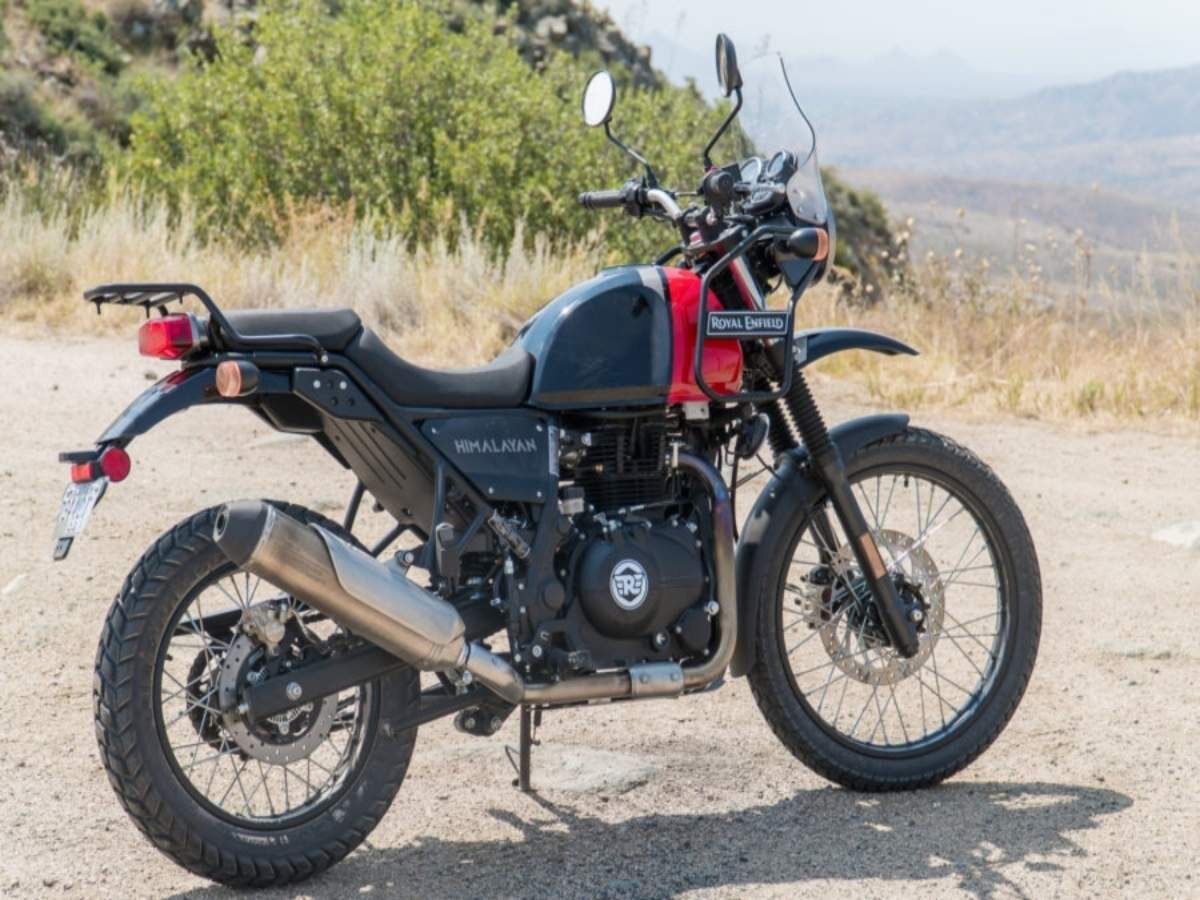
2021 Royal Enfield Himalayan 411 representative · Tritinum · CC BY-SA 4.0
Research pending
A matching completed auction sale has not been verified for this exact year, body, trim, engine, transmission and market.
Joyride shows this gap instead of substituting an asking price, unsold bid or mismatched special vehicle.
More than a set of wheels.
Royal Enfield launched the Himalayan in India on 16 March 2016, with bookings opening the next day. This profile is locked to the original carbureted Bharat Stage III motorcycle. Royal Enfield described it as a ground-up, more accessible answer to large adventure tourers: Harris Performance helped develop the split-cradle frame, while long suspension, 220 mm of ground clearance, an 800 mm saddle, a 15-litre tank and integrated luggage points made travel ability part of the basic design. Later fuel-injected BS-IV, ABS-equipped, Scram 411 and Himalayan 450 versions are outside this profile.
Look a little closer.
Its dashboard included a digital compass, a playful travel detail on a deliberately simple machine.
Photos show an example of the model or generation. The pictured vehicle’s year, equipment, or modifications can differ from the specification described here.
Why modest horsepower was the point
The 24.5 bhp figure looks small beside a high-performance road bike, but the engine had a different job. Its 32 N·m torque band sits around 4,000–4,500 rpm, well below the 6,500 rpm power peak, and Royal Enfield explicitly emphasized smooth low-speed progress, hill climbing and easy traffic use. The 86 mm stroke, broad low-rpm pull and five-speed gearbox favor predictable work over a dramatic high-rpm rush. That matters on a broken climb, where steady response and fewer frantic shifts can be more useful than a large peak-power number.
Source: Royal Enfield Himalayan launch release ↗Adventure design is a stack of compromises
A 21-inch front wheel rolls across holes and stones more easily than a small road wheel, but it also raises the bike. Suspension travel of 200 mm front and 180 mm rear gives the wheels room to move, while 220 mm of ground clearance helps the motorcycle pass over uneven ground. Royal Enfield held the saddle to 800 mm to balance clearance against a rider's ability to reach the surface. The 15-litre tank and luggage mounts extend a trip but also add weight. The original Himalayan's idea was accessible compromise: enough wheel, travel, clearance, fuel and carrying hardware to travel without maximizing any one feature.
Source: Royal Enfield Himalayan Domestic Owner's Manual ↗Where these facts come from
- Royal Enfield Himalayan launch release · 16 March 2016
- Royal Enfield Himalayan Domestic Owner's Manual · November 2016
- Royal Enfield Himalayan makes Indonesia debut · 2016 GIIAS
- Royal Enfield Himalayan BS-III Vehicle Service Manual · factory manual mirror
Selected facts checked for this edition. Some source pages link to broader model families. Last reviewed October 4, 2026.