
Hyundai NEXO Modern
NEXO carries hydrogen in three strong tanks, makes electricity on board and sends only water from the car's fuel-cell reaction.
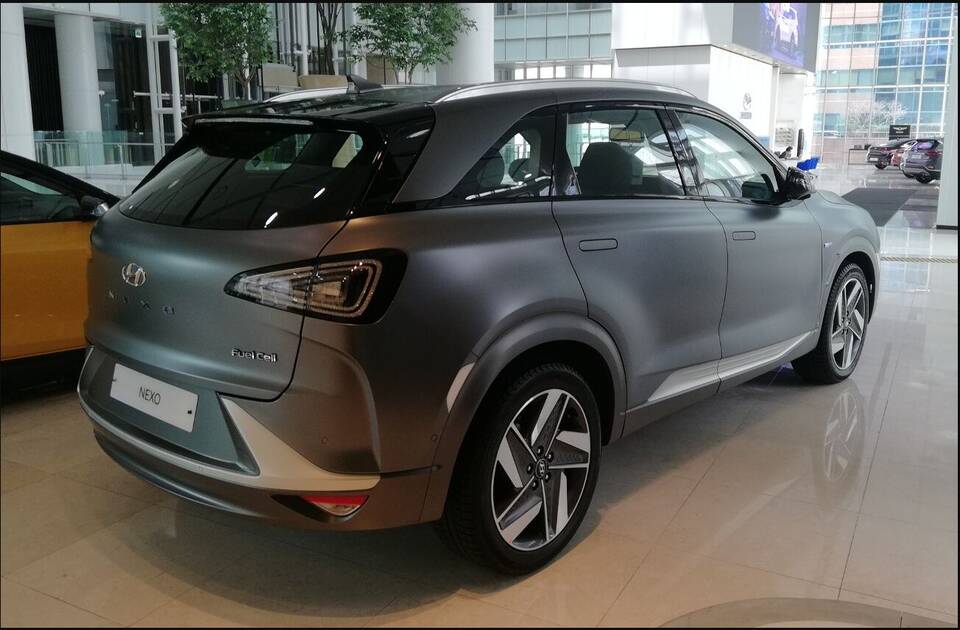
Hyundai NEXO photographed in Seoul in March 2018 · Navigator84 · CC BY-SA 4.0
Research pending
A matching completed auction sale has not been verified for this exact year, body, trim, engine, transmission and market.
Joyride shows this gap instead of substituting an asking price, unsold bid or mismatched special vehicle.
More than a set of wheels.
Hyundai launched NEXO in South Korea in March 2018 as its first passenger vehicle designed from the start around a fuel-cell system. This profile follows the lighter Modern grade on 17-inch tyres, because its certified range, mass and top speed differ from the 19-inch Premium.
Look a little closer.
The car's three-stage intake filtration system also removes fine particles from the air used by the fuel cell.
Photos show an example of the model or generation. The pictured vehicle’s year, equipment, or modifications can differ from the specification described here.
Three smaller tanks protected passenger space
Hyundai divided 6.33 kg of hydrogen capacity among three equal 52.2-litre tanks rather than using one enormous cylinder. The layout helped keep a broad luggage area while the tanks underwent impact, rupture and flame tests for safety.
Source: Hyundai Korea · NEXO highlights ↗The wheel choice changed measured performance
Hyundai certified the 17-inch Modern at 609 km and 1,820 kg, while the 19-inch Premium was 1,885 kg and 593 km. That is why this profile does not mix the two grades, even though their motor and hydrogen capacities are the same.
Source: Hyundai Korea · NEXO specifications ↗Where these facts come from
- Hyundai Korea · 2018 NEXO history
- Hyundai Korea · NEXO specifications
- Hyundai Europe · 2018 NEXO technical specifications
- Hyundai Korea · NEXO highlights
Selected facts checked for this edition. Some source pages link to broader model families. Last reviewed September 30, 2026.