
Hyundai Ioniq Electric
Hyundai built one slippery hatchback body for three kinds of electrified driving, and the Electric version used no petrol engine at all.
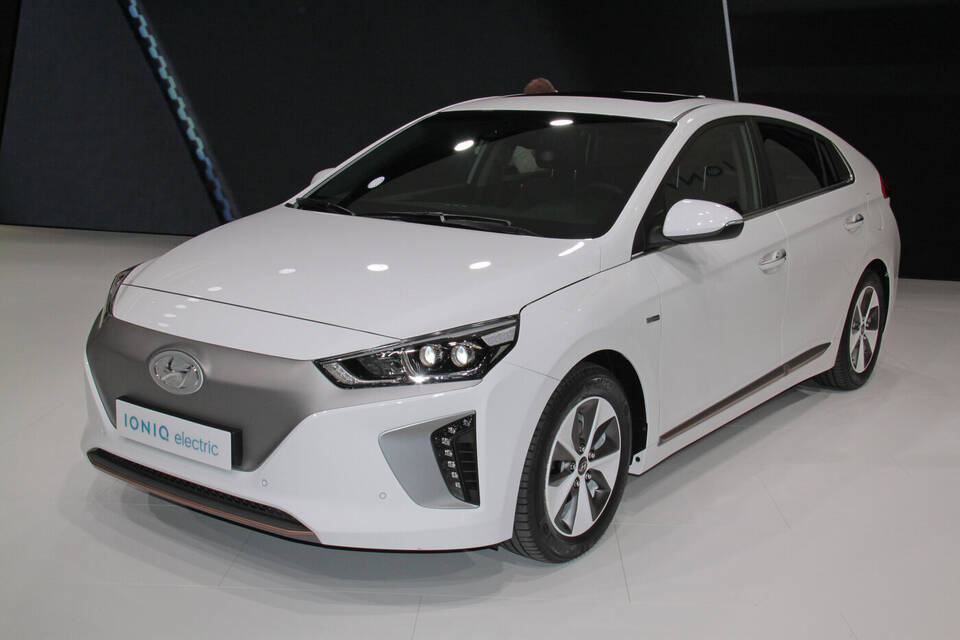
2016 Hyundai Ioniq Electric at the Geneva Motor Show · Pablo Montoya · CC BY-SA 4.0
Research pending
A matching completed auction sale has not been verified for this exact year, body, trim, engine, transmission and market.
Joyride shows this gap instead of substituting an asking price, unsold bid or mismatched special vehicle.
More than a set of wheels.
Hyundai revealed the battery-electric Ioniq in March 2016 as part of the first car family offered with hybrid, plug-in hybrid and fully electric powertrains in one body. The launch EV used a 28 kWh lithium-ion-polymer battery; it must not be confused with the later 38.3 kWh update or with either petrol-electric Ioniq.
Look a little closer.
Its drag coefficient was just 0.24, helping the modest 28 kWh battery carry the car farther by slipping through the air efficiently.
Photos show an example of the model or generation. The pictured vehicle’s year, equipment, or modifications can differ from the specification described here.
Three electrified choices, one planned body
Hyundai designed the Ioniq as a dedicated electrified model rather than converting an ordinary petrol hatchback. Hybrid, plug-in hybrid and battery-electric versions shared the aerodynamic shape but used different rear suspension, luggage space and power systems.
Source: Hyundai Worldwide · Ioniq vehicle history ↗Keep the original battery separate from the update
The 2016 technical sheet lists 28 kWh, 120 PS and a 280 km European target. Later Ioniq Electric cars gained a 38.3 kWh battery and different motor, charging and range figures, so those numbers do not belong to this launch profile.
Source: Hyundai News · 2016 Ioniq technical specifications ↗Where these facts come from
- Hyundai News · 2016 Ioniq technical specifications
- Hyundai Worldwide · Ioniq vehicle history
- Yonhap News · 2016 Ioniq Electric Korean launch
Selected facts checked for this edition. Some source pages link to broader model families. Last reviewed September 30, 2026.