
BMW 328 Roadster
A light, un-supercharged roadster beat more powerful rivals by making its engine, shape, weight and chassis work as one system.
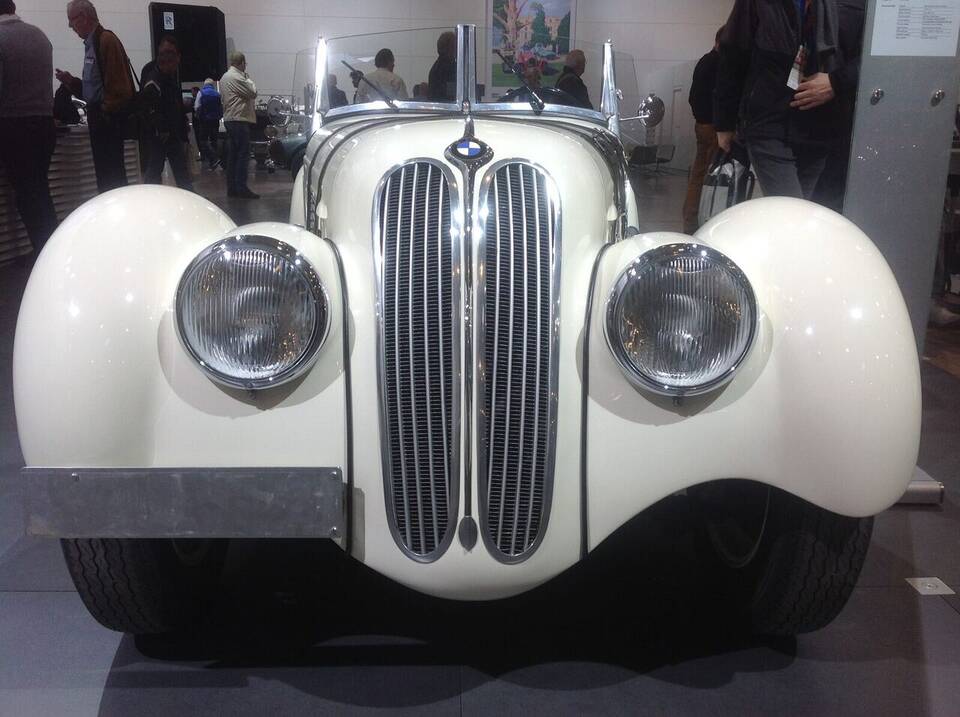
BMW_328_(1936-40)_(26412737135).jpg · Andrew Bone from Weymouth, England · CC BY 2.0
Research pending
A matching completed auction sale has not been verified for this exact year, body, trim, engine, transmission and market.
Joyride shows this gap instead of substituting an asking price, unsold bid or mismatched special vehicle.
More than a set of wheels.
BMW revealed the 328 in the hardest possible way: Ernst Jakob Henne drove the new roadster in the Eifelrennen at the Nürburgring on 14 June 1936 and won its class in rain and fog. The 1936 cars were works competition machines; the customer-series road car did not begin production until spring 1937. Its 1,971 cc six-cylinder engine, low weight and carefully tuned chassis helped make the 328 a dominant two-litre sports car, while its everyday usability let private customers drive essentially the same idea on public roads.
Look a little closer.
The doors had no outside handles; a driver reached inside the open roadster to release them.
Photos show an example of the model or generation. The pictured vehicle’s year, equipment, or modifications can differ from the specification described here.
A launch staged as a race
BMW did not unveil the 328 on a quiet motor-show stand. The public first saw it competing at the Nürburgring on 14 June 1936. Henne's victory made the engineering argument immediately: the new car could use balance and efficiency to overcome stronger supercharged rivals.
Source: BMW Group PressClub · The BMW 328 turns 75 ↗Power was only one part of speed
The 328's aluminium-alloy cylinder head used an ingenious pushrod-and-rocker layout to operate its valves from a side camshaft. BMW's own history stresses that the roadster's success came from combining that engine with light construction, aerodynamic lines, weight distribution and a carefully tuned chassis—not from chasing the largest engine.
Source: BMW Group Classic · BMW 328 engineering ↗Where these facts come from
- BMW Group PressClub · The BMW 328 turns 75
- BMW Group Classic · BMW 328 model
- BMW Group Classic · BMW 328 engineering
- BMW Group Classic · BMW 328 Roadster body
Selected facts checked for this edition. Some source pages link to broader model families. Last reviewed 2026-10-01.