
BMW R 5
Two cylinders poke out sideways, while a slim welded frame and a foot gear lever make this 1936 BMW feel like a step toward the modern motorcycle.
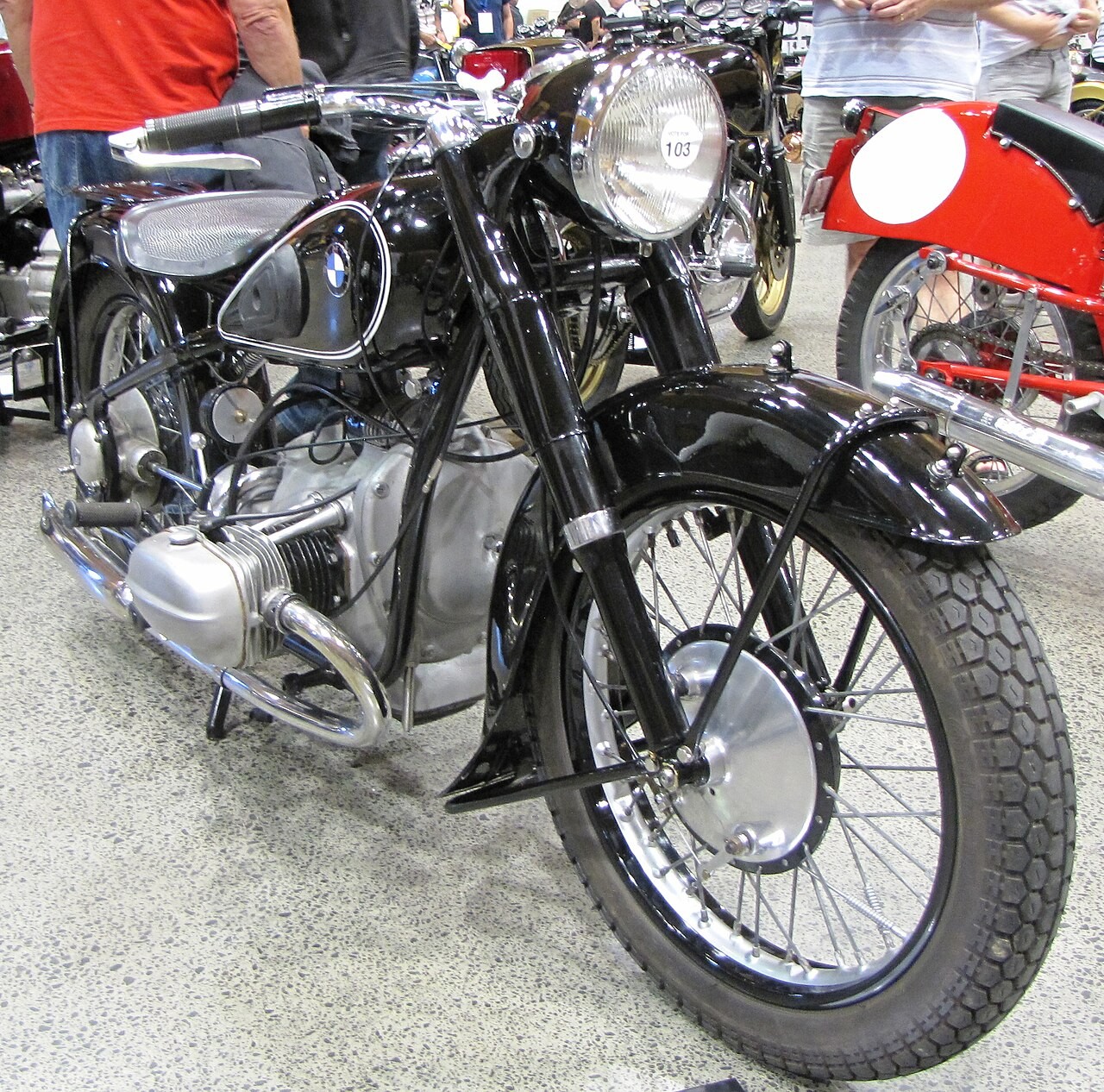
1936 BMW R5 motorcycle.JPG · Gadfium · CC0
Research pending
A matching completed auction sale has not been verified for this exact year, body, trim, engine, transmission and market.
Joyride shows this gap instead of substituting an asking price, unsold bid or mismatched special vehicle.
More than a set of wheels.
BMW returned to the 500 cc sports class with the R 5 in 1936. Rudolf Schleicher’s design paired a new twin-cylinder engine with a lighter tubular chassis. Its importance reached beyond speed: the combination of frame, fork and controls helped shape BMW motorcycles for decades.
Look a little closer.
The rider used small footrests instead of the broad footboards familiar on many older motorcycles.
Photos show an example of the model or generation. The pictured vehicle’s year, equipment, or modifications can differ from the specification described here.
A skeleton made from oval tubes
The R 5 frame used oval tubing joined by electrical welding. Tubes can put material where it supports the motorcycle without forming a heavy solid structure. This was an important departure for BMW, and the company’s historical timeline singles out the 1936 frame as a manufacturing milestone.
Source: BMW PressClub · 80 years of BMW Motorcycles ↗Controls become part of the sporting design
A foot-operated gear change let the rider change ratios with a foot. Adjustable fork damping gave the front suspension another job besides moving up and down: controlling how quickly that movement happened. Together with the new footrests, these details made the R 5 a coordinated redesign, rather than merely an older motorcycle with a stronger engine.
Source: BMW Motorrad · 1930s ↗Where these facts come from
Selected facts checked for this edition. Some source pages link to broader model families. Last reviewed 2026-10-02.