
BMW K 100
BMW’s first four-cylinder motorcycle hid its biggest surprise in plain sight: the engine lay on its side.
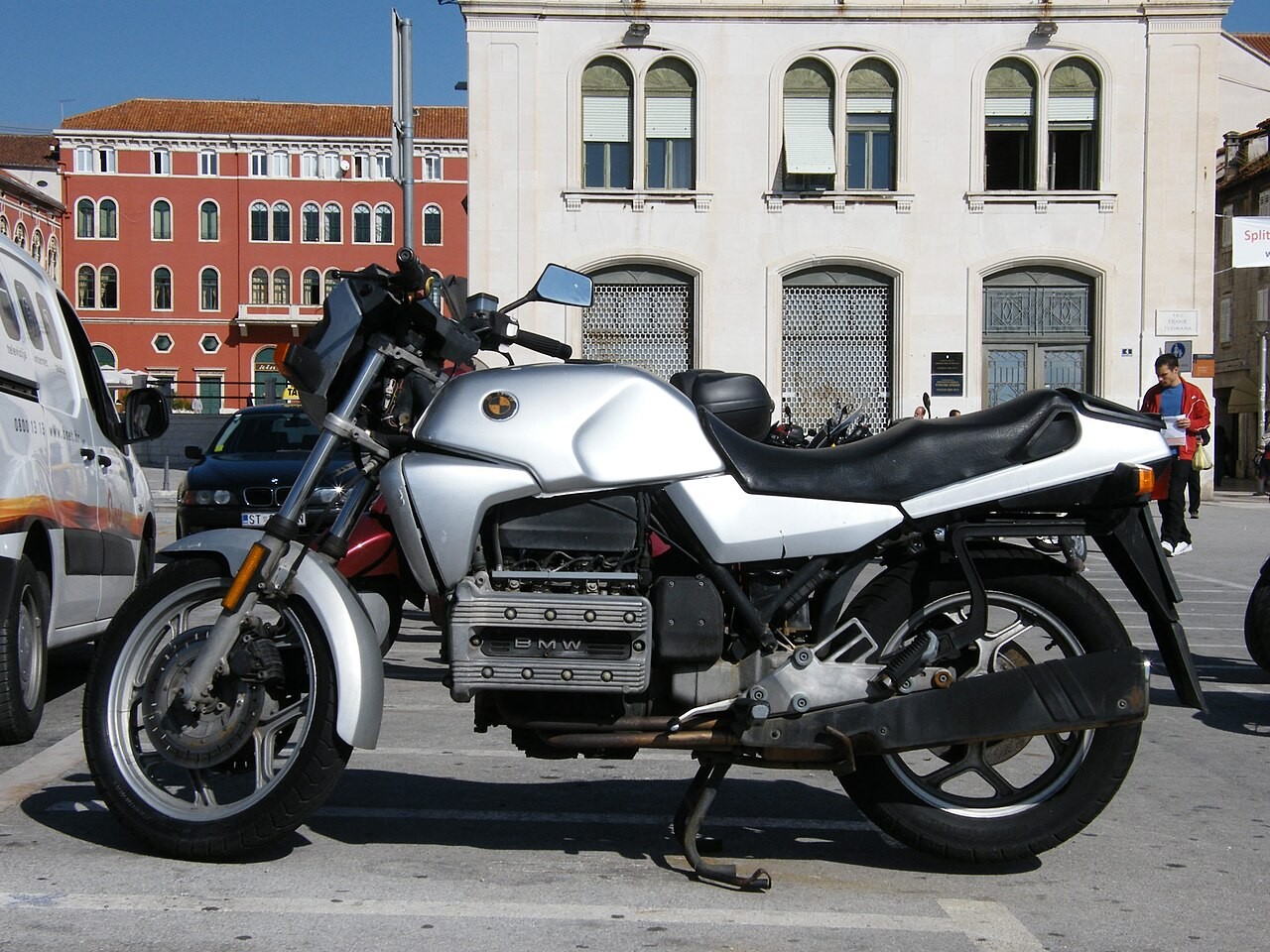
BMW K100 PL.JPG · Beemwej · CC BY-SA 3.0
Research pending
A matching completed auction sale has not been verified for this exact year, body, trim, engine, transmission and market.
Joyride shows this gap instead of substituting an asking price, unsold bid or mismatched special vehicle.
More than a set of wheels.
In 1983 BMW added a new engine family alongside its long-established boxers. The base K 100 exposed its machinery, while other K models wore fairings for different jobs. The new layout was a major change in BMW motorcycle engineering, but it retained shaft drive and an integrated approach to the powertrain.
Look a little closer.
The unfaired K 100 and the faired K 100 RS are different models, even though they share the same basic four-cylinder idea.
Photos show an example of the model or generation. The pictured vehicle’s year, equipment, or modifications can differ from the specification described here.
A four-cylinder engine that lies down
An inline four normally makes people imagine a tall row across a motorcycle. BMW arranged this one along the bike and turned it on its side. The resulting low engine position helped lower the centre of gravity. The unfamiliar appearance therefore followed a practical handling decision, rather than a styling trick.
Source: BMW Classic · The BMW K 100 from 1983 ↗The drivetrain becomes one connected assembly
BMW grouped the engine, directly attached gearbox and single-sided rear arm with its driveshaft into what it called the Compact Drive System. Thinking about these parts together simplified the motorcycle’s underlying layout. The base K 100 left the assembly visible; fairings and touring equipment defined other branches of the K family.
Source: BMW Group Classic · BMW K 100 ↗Where these facts come from
- BMW Group Classic · BMW K 100
- BMW Classic · The BMW K 100 from 1983
- BMW PressClub · 80 years of BMW Motorcycles
Selected facts checked for this edition. Some source pages link to broader model families. Last reviewed 2026-10-02.