
BMW R 32
BMW’s first complete motorcycle set a pattern the company still uses: a boxer engine, a separate gearbox and a shaft to the rear wheel.
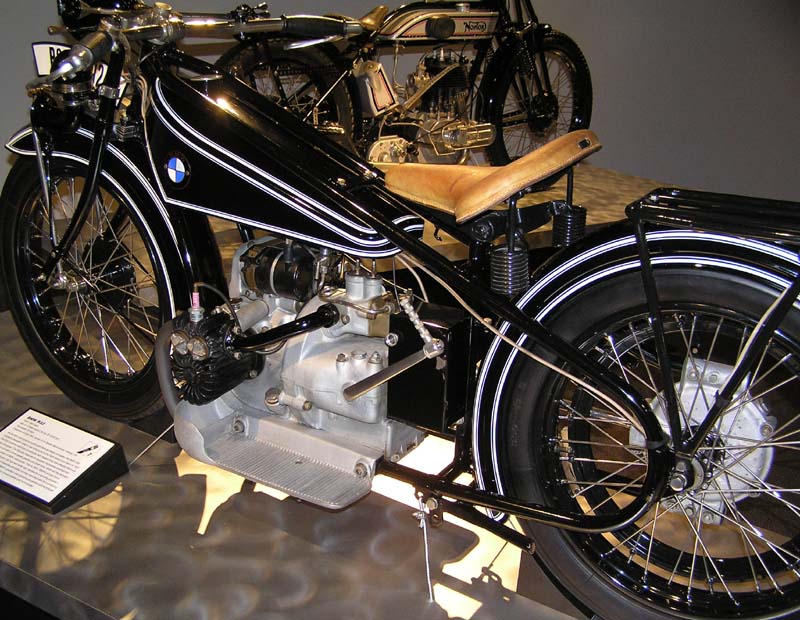
1923 BMW R32 at The Art of the Motorcycle, Memphis · Daniel Hartwig · CC BY 2.0
Research pending
A matching completed auction sale has not been verified for this exact year, body, trim, engine, transmission and market.
Joyride shows this gap instead of substituting an asking price, unsold bid or mismatched special vehicle.
More than a set of wheels.
BMW presented the R 32 at the Berlin Motor Show in 1923. Max Friz designed it as a complete motorcycle rather than simply fitting a BMW engine into somebody else’s frame. BMW built 3,090 examples through 1926, establishing a two-cylinder layout that became part of the brand’s identity.
Look a little closer.
The original first series had no front brake; later R 32s added a drum, making exact production stage important.
Photos show an example of the model or generation. The pictured vehicle’s year, equipment, or modifications can differ from the specification described here.
A layout built around cooling and service
Turning the boxer engine so its cylinders projected into the airflow helped both sides cool evenly. BMW also enclosed parts that needed attention and chose a driveshaft that was easier to keep clean than an open chain or belt.
Source: BMW Group Classic · BMW R 32 ↗The first chapter of BMW Motorrad
BMW had already supplied boxer engines to other motorcycle makers. The R 32 was the moment it combined its own engine, frame and transmission into the first motorcycle sold as a BMW.
Source: BMW Group · 90 years of BMW Motorrad ↗Where these facts come from
- BMW Group Classic · BMW R 32
- BMW Group · 90 years of BMW Motorrad
- Vintage BMW Motorcycle Owners · R 32 documentation
Selected facts checked for this edition. Some source pages link to broader model families. Last reviewed September 30, 2026.