
BMW Z1
BMW Technik turned a materials laboratory into a roadster whose doors disappeared into the sills while the car was moving.
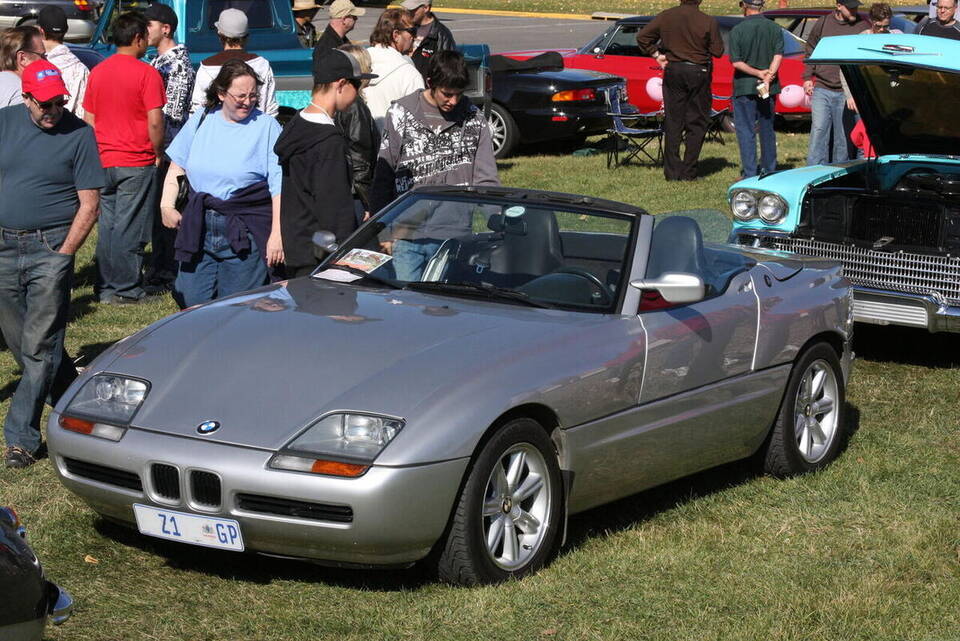
BMW-Z1.jpg · dave_7 · CC BY 2.0
Research pending
A matching completed auction sale has not been verified for this exact year, body, trim, engine, transmission and market.
Joyride shows this gap instead of substituting an asking price, unsold bid or mismatched special vehicle.
More than a set of wheels.
BMW Technik began the Z1 as a fast-moving pilot project for new materials, structures and development methods. Public reaction pushed the study toward limited production: the roadster appeared at Frankfurt in 1987, entered small-series production in late 1988 and reached customers in January 1989. Beneath the experimental skin were familiar BMW strengths—a 2.5-litre straight-six, rear-wheel drive and five-speed manual—but the bonded floor, bolt-on plastic panels, sliding doors and newly designed multi-link rear axle made the Z1 a rolling test laboratory.
Look a little closer.
The electric doors slide downward into the side sills, and BMW said the car could legally be driven with them lowered.
Photos show an example of the model or generation. The pictured vehicle’s year, equipment, or modifications can differ from the specification described here.
A body designed to be changed
The galvanized steel structure could drive before its colourful outer skin was added. Most exterior panels were plastic and bolted on; BMW said a complete colour change was theoretically possible with a screwdriver in about an hour. Different panels even needed clear coats with different flexibility.
Source: BMW Group PressClub · 25 years of the BMW Z1 ↗The letter Z reached beyond the name
The new rear suspension was called the Z-axle, short in German for a centrally guided spherical double-wishbone design. Its name was not simply borrowed from the car; the geometry helped deliver directional stability, anti-squat and anti-dive control.
Source: BMW Group Classic · BMW Z1 ↗Where these facts come from
- BMW Group Classic · BMW Z1
- BMW Group Classic · BMW Z1 model series
- BMW Group PressClub · 25 years of the BMW Z1
- BMW Group PressClub · 75 years of BMW Roadsters
Selected facts checked for this edition. Some source pages link to broader model families. Last reviewed 2026-10-01.