
Citroën B10 Conduite Intérieure
Citroën introduced the B10 in 1924 as Europe's pioneering mass-produced all-steel car body, using Budd patents.
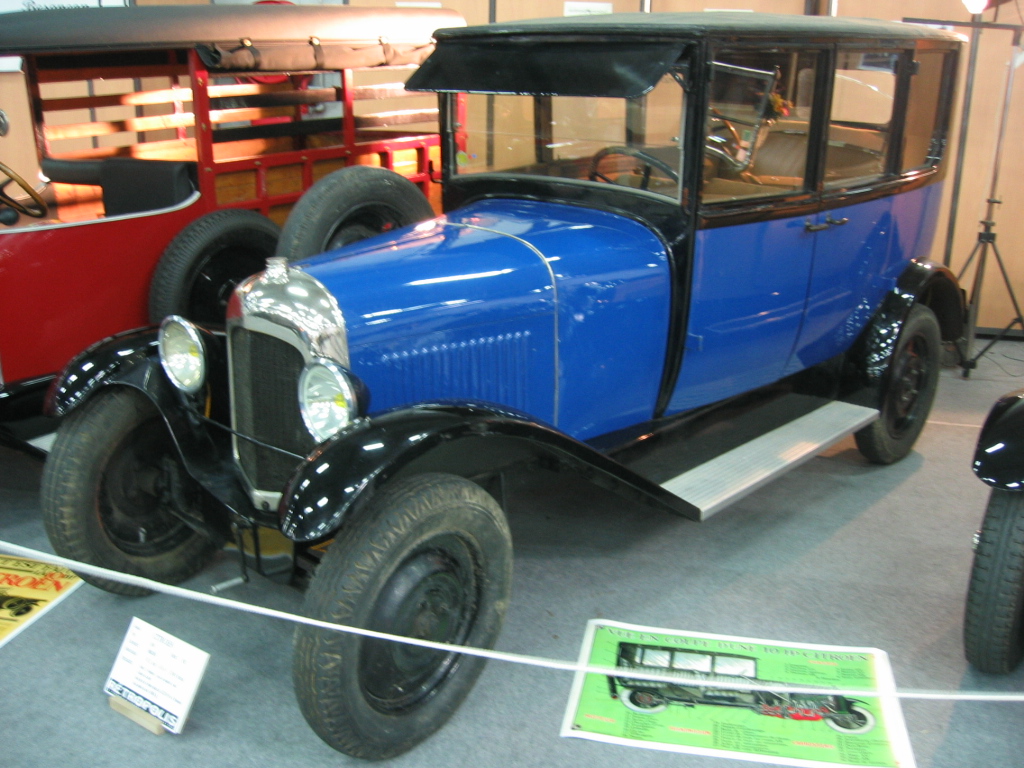
B10 Conduite Intérieure · Arnaud 25 · Public domain
Research pending
A matching completed auction sale has not been verified for this exact year, body, trim, engine, transmission and market.
Joyride shows this gap instead of substituting an asking price, unsold bid or mismatched special vehicle.
More than a set of wheels.
Citroën introduced the B10 in 1924 as Europe's pioneering mass-produced all-steel car body, using Budd patents. The honest 1924 identity is the closed Conduite Intérieure. Contemporary-model chronology says the open 10 HP Torpédo remained a timber-framed B2 during 1924 and became an all-steel B10 only in spring 1925.
Look a little closer.
Its headline innovation was not speed but a repeatable pressed-and-welded all-steel body built on a separate chassis.
Photos show an example of the model or generation. The pictured vehicle’s year, equipment, or modifications can differ from the specification described here.
Why all steel changed the factory
Stamped steel made repeatable shapes and a stiffer enclosed cabin possible at mass-production scale. The B10's great story is not speed but changing a car body from hand-framed coachwork into something closer to a giant pressed-and-welded industrial product.
Source: Citroën Origins B10 ↗The Torpédo date cannot be wished away
Body chronology is part of vehicle identity. The 1924 all-steel B10 evidence is for the closed Conduite Intérieure, while the open 10 HP Torpédo still wore the B2 name and wooden framing. A 1925 Torpédo should be a separate future profile.
Source: Citroën Origins B10 ↗Where these facts come from
- Citroën Origins B10
- Stellantis/Citroën history of comfort
- Citroënët 10 HP Type B2 and B10
- Citroën Type B10 chronology
Selected facts checked for this edition. Some source pages link to broader model families. Last reviewed 2026-10-05.