
Cizeta V16T
Sixteen cylinders sat sideways behind two seats, making this tiny Modena company's supercar as wide in ambition as it was in bodywork.
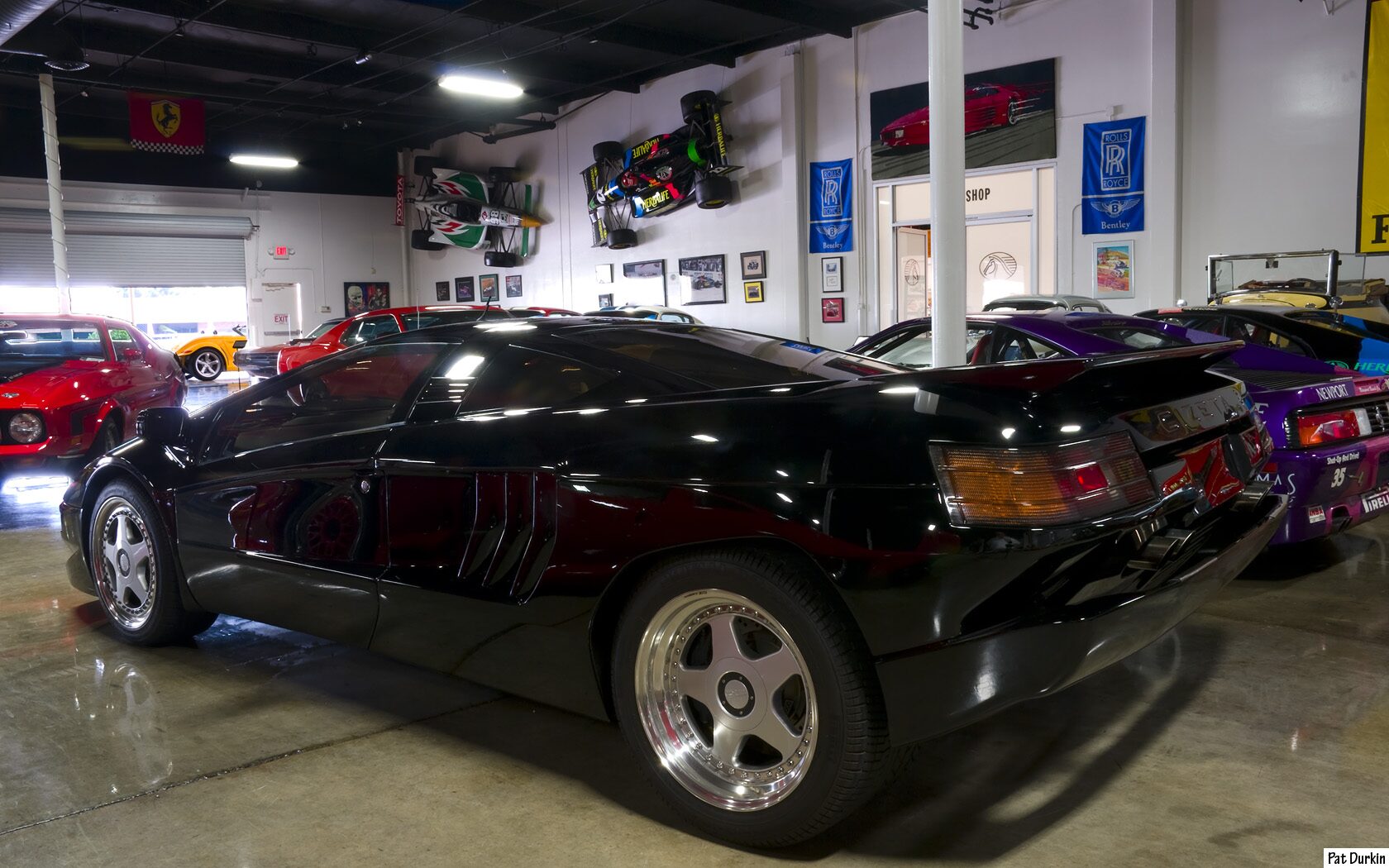
1991 Italy Cizeta V16T · Pat Durkin · CC BY-SA 2.0
Research pending
A matching completed auction sale has not been verified for this exact year, body, trim, engine, transmission and market.
Joyride shows this gap instead of substituting an asking price, unsold bid or mismatched special vehicle.
More than a set of wheels.
Claudio Zampolli, a former Lamborghini test and development engineer, formed Cizeta with financial partner Giorgio Moroder. Their dramatic 1988 Los Angeles unveiling showed a mock-up, not a running production car. A black production V16T appeared at Geneva in 1991 and went to a customer in Singapore. Moroder had departed by the time customer production began, so the road cars carried the shorter Cizeta V16T identity.
Look a little closer.
The letter T in V16T refers to the transverse, or sideways, engine placement rather than to a turbocharger.
Photos show an example of the model or generation. The pictured vehicle’s year, equipment, or modifications can differ from the specification described here.
The 1988 star was not yet a working car
Photographs from the Los Angeles unveiling can make the V16T look like a 1988 production model. Cizeta USA's account says that display was a mock-up accompanied by design sketches. The first production car instead appeared at Geneva in 1991. Separating those moments keeps a show debut from being mistaken for the start of customer manufacture.
Source: Cizeta USA · Supercar history and technical specifications ↗A sideways engine created a different kind of width
The V16 was installed across the chassis, while its ZF gearbox ran lengthwise from the centre of the engine. That packaging explains both the T in the name and the unusually broad rear track. It also let the two crankshafts feed a central gear train rather than requiring an extremely long engine-and-gearbox stack behind the cabin.
Source: Cizeta USA · Supercar history and technical specifications ↗Where these facts come from
- Cizeta USA · Supercar history and technical specifications
- Cizeta Automobili Italy · Il progetto: la storia
- ACI L'Automobile archive · Cizeta V16T, esemplare 6 di 9
- Ultimatecarpage · Cizeta V16T production chronology
Selected facts checked for this edition. Some source pages link to broader model families. Last reviewed 2026-10-02.