
Datsun Sedan A110
Nissan's first all-new postwar passenger car traded wood-framed panels for a modern all-steel body.
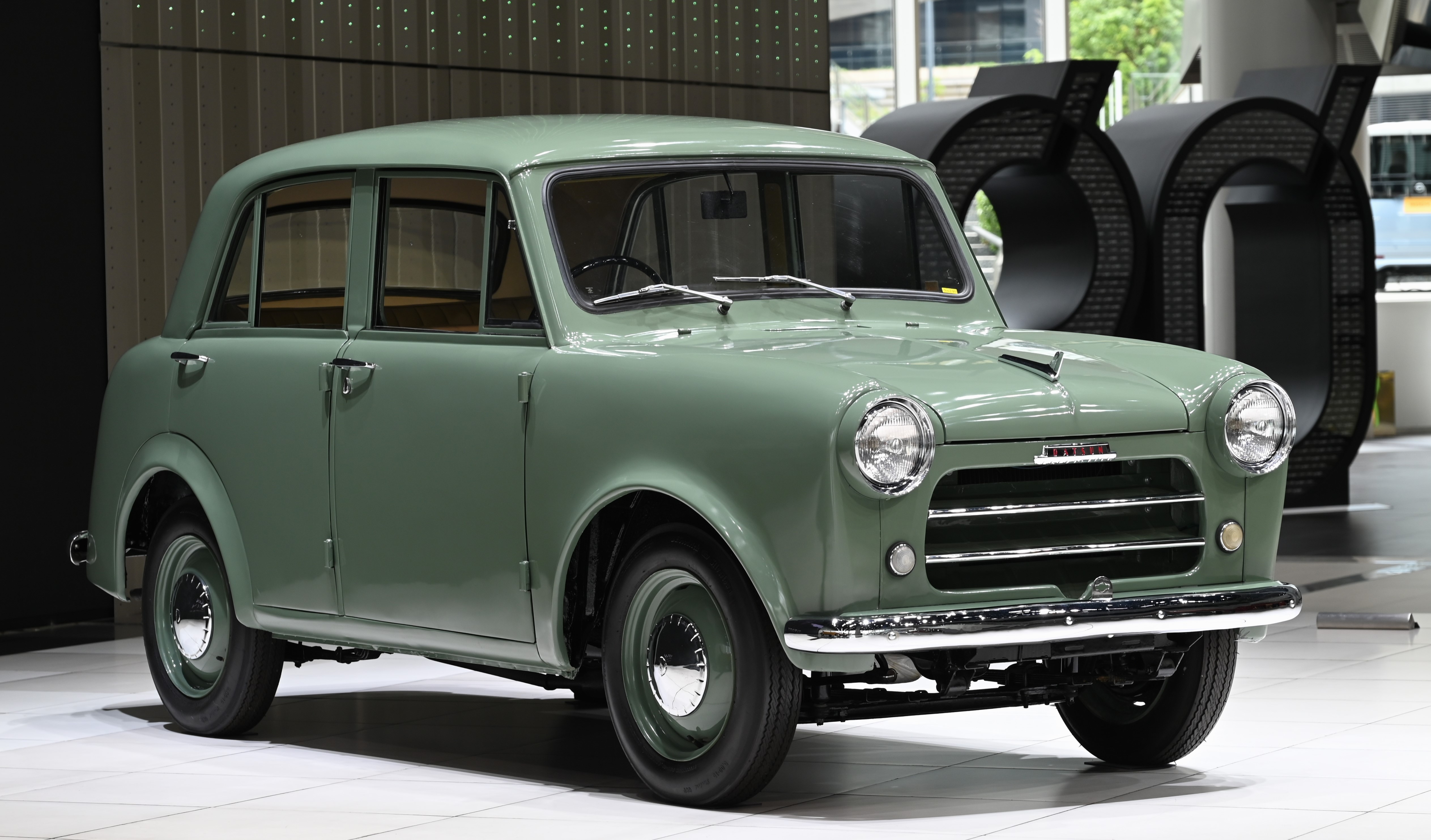
1955 Japan Datsun Sedan A110 · TTTNIS · CC0
Research pending
A matching completed auction sale has not been verified for this exact year, body, trim, engine, transmission and market.
Joyride shows this gap instead of substituting an asking price, unsold bid or mismatched special vehicle.
More than a set of wheels.
The Datsun Sedan 110 arrived in January 1955 as Nissan's first all-new passenger car after World War II. Its body used pressed metal exterior panels without wooden structural pieces, giving it a much more modern shape than prewar Datsuns. The engine still followed an older side-valve pattern, but a four-speed floor-shift gearbox and 79 km/h manufacturer-listed maximum speed made this a practical four-seat step toward the later Bluebird line.
Look a little closer.
The next 112 version wore a grille that Nissan compares to a harmonica—but this profile is the original 110/A110.
Photos show an example of the model or generation. The pictured vehicle’s year, equipment, or modifications can differ from the specification described here.
What 'all-new' meant in 1955
Nissan describes the 110 as its first all-new postwar passenger car. Its significance was not a giant engine; it was the move to a fully pressed metal body with no wooden body parts. That made the little sedan a manufacturing and design milestone on the road from prewar Datsuns to the Bluebird.
Source: Nissan Heritage Collection · Datsun Sedan A110 ↗A family that changed quickly
The original 110 used a floor shifter. Nissan's own record says the 112 brought a harmonica-like grille, and the 113 later moved the shifter to the steering column. The 1957 Datsun 1000 and 1959 Bluebird continued the family story, so a later restored sedan must not silently supply this 1955 car's exact details.
Source: Nissan company history · 1950s ↗Where these facts come from
Selected facts checked for this edition. Some source pages link to broader model families. Last reviewed October 2, 2026.