
Fiat Barchetta 1.8 16V
A tiny Italian two-seat roadster that mixed old sports-car shapes with a modern variable-timing four-cylinder and front-wheel drive.
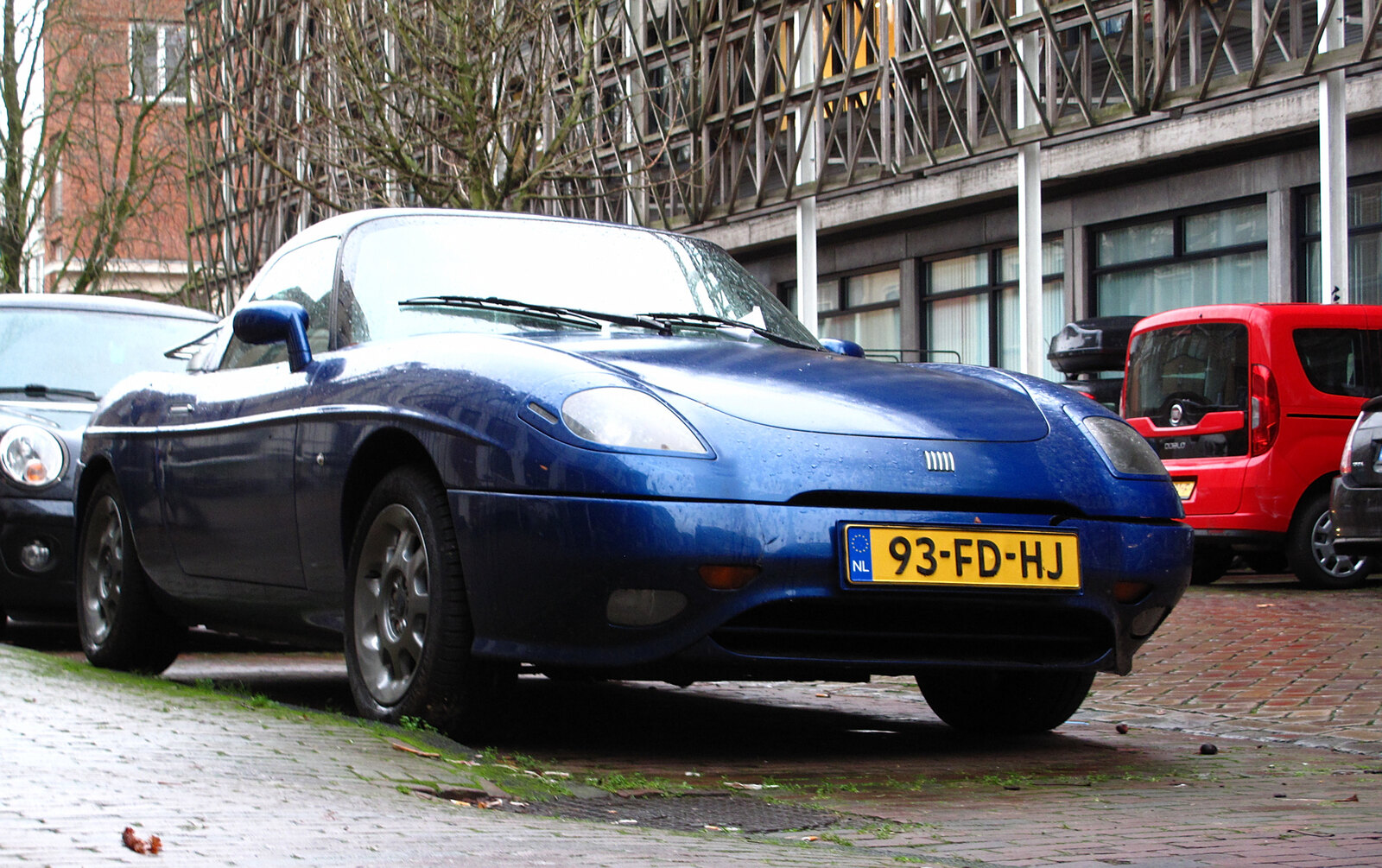
1995 Fiat Barchetta 1.8 16v (50811594582).jpg · Rutger van der Maar · CC BY 2.0
Research pending
A matching completed auction sale has not been verified for this exact year, body, trim, engine, transmission and market.
Joyride shows this gap instead of substituting an asking price, unsold bid or mismatched special vehicle.
More than a set of wheels.
Fiat returned to the open two-seat sports-car field with the Barchetta in 1995. Fiat Heritage records a February press presentation at Jerez and a March public debut in Geneva. Its rounded in-house design nodded to the Ferrari 166 MM and Cisitalia, while its reinforced open body, Punto-related mechanical layout and new Pratola Serra engine made it thoroughly modern. A network of specialist Italian factories welded, painted and assembled the car around Turin.
Look a little closer.
Barchetta means “little boat” in Italian, and Fiat used the word as a description of a snug open car rather than just a model name.
Photos show an example of the model or generation. The pictured vehicle’s year, equipment, or modifications can differ from the specification described here.
Built like a travelling Italian workshop
The body panels were formed and welded by ILCAS in Sparone, assembly took place at Maggiora’s former Lancia plant in Chivasso, Bertone painted the bodies in Grugliasco, and Fiat supplied the engine and transmission from separate plants. That dispersed process gave a small-volume roadster its own production story.
Source: Stellantis Heritage · Fiat barchetta ↗Old shapes, new structural work
With no fixed roof to brace the shell, Fiat added side members and boxed cross-members in the floor and strengthened the windscreen frame. The result kept the low, clean roadster outline while giving the body the stiffness and rollover structure needed for a modern production car.
Source: Stellantis Heritage · Fiat barchetta ↗Where these facts come from
- Stellantis Heritage · Fiat barchetta
- Fiat/Stellantis Media · Barchetta Limited Edition technical specification
- Fiat/Stellantis Media · Restyled Barchetta sportscar in UK
Selected facts checked for this edition. Some source pages link to broader model families. Last reviewed October 2, 2026.