
Fiat Cinquecento 900
Fiat's Polish-built city car moved its engine and driven wheels to the front, turning a very short body into practical everyday space.
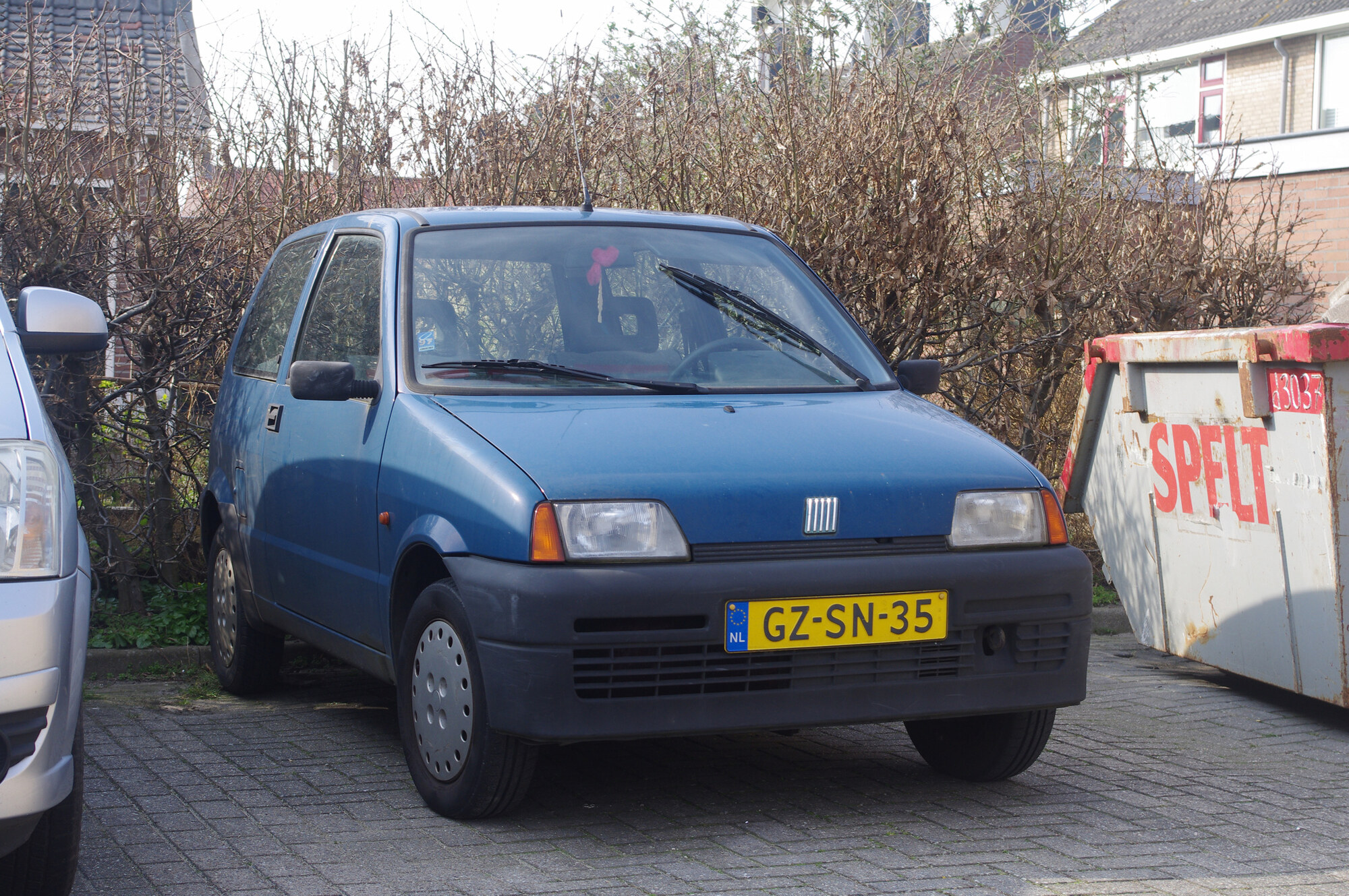
1991 Europe Fiat Cinquecento 900 (representative 1993 car) · Rutger van der Maar · CC BY 2.0
Research pending
A matching completed auction sale has not been verified for this exact year, body, trim, engine, transmission and market.
Joyride shows this gap instead of substituting an asking price, unsold bid or mismatched special vehicle.
More than a set of wheels.
Fiat began Cinquecento production at Tychy in 1991 and presented the car in December as the modern successor to the rear-engined 126. The Type 170 was a clean-sheet packaging change: a boxy three-door hatchback with the engine across the nose and the front wheels doing the pulling. The launch range included a 704 cc twin-cylinder ED and the stronger 903 cc '900' four-cylinder. This profile isolates that carburetted 903 cc European variant, whose long-lived Fiat 100-series engine was paired with five gears. Closely related 899 cc injected cars are often also called 900, so displacement and fuelling have to stay explicit.
Look a little closer.
Cinquecento means 'five hundred' in Italian, but this 900's name points back to Fiat's small-car tradition rather than describing its 903 cc engine size.
Photos show an example of the model or generation. The pictured vehicle’s year, equipment, or modifications can differ from the specification described here.
A Polish factory built Fiat's European city car
The Cinquecento was assembled at Tychy, where it replaced the older 126 in the plant's programme. That makes its identity deliberately cross-border: designed and marketed by Fiat for Europe, but industrialised in Poland during the transition from FSM to Fiat Auto Poland.
Source: Stellantis Media · 12-millionth Tychy car ↗Why '900' can mean two different engines
The first 900 used a 903 cc, 30 kW carburettor engine. A later emissions and tax step brought a 899 cc injected engine rated about 29 kW, yet both are commonly described as 0.9 or 900. Recording 903 cc, carburettor and engine family prevents a later injected car from being mistaken for this launch specification.
Source: Automobile-Catalog · 1991 Cinquecento 900 ↗Where these facts come from
- Stellantis Media · Tychy plant history
- Quattroruote · Fiat Cinquecento 900
- Automobile-Catalog · 1991 Cinquecento 900
- Stellantis Media · 125 years of Fiat parade
Selected facts checked for this edition. Some source pages link to broader model families. Last reviewed October 2, 2026.