
Ford F-100 pickup
The first truck to wear Ford's F-100 badge paired a work-ready ladder frame with a wider, more comfortable cab.
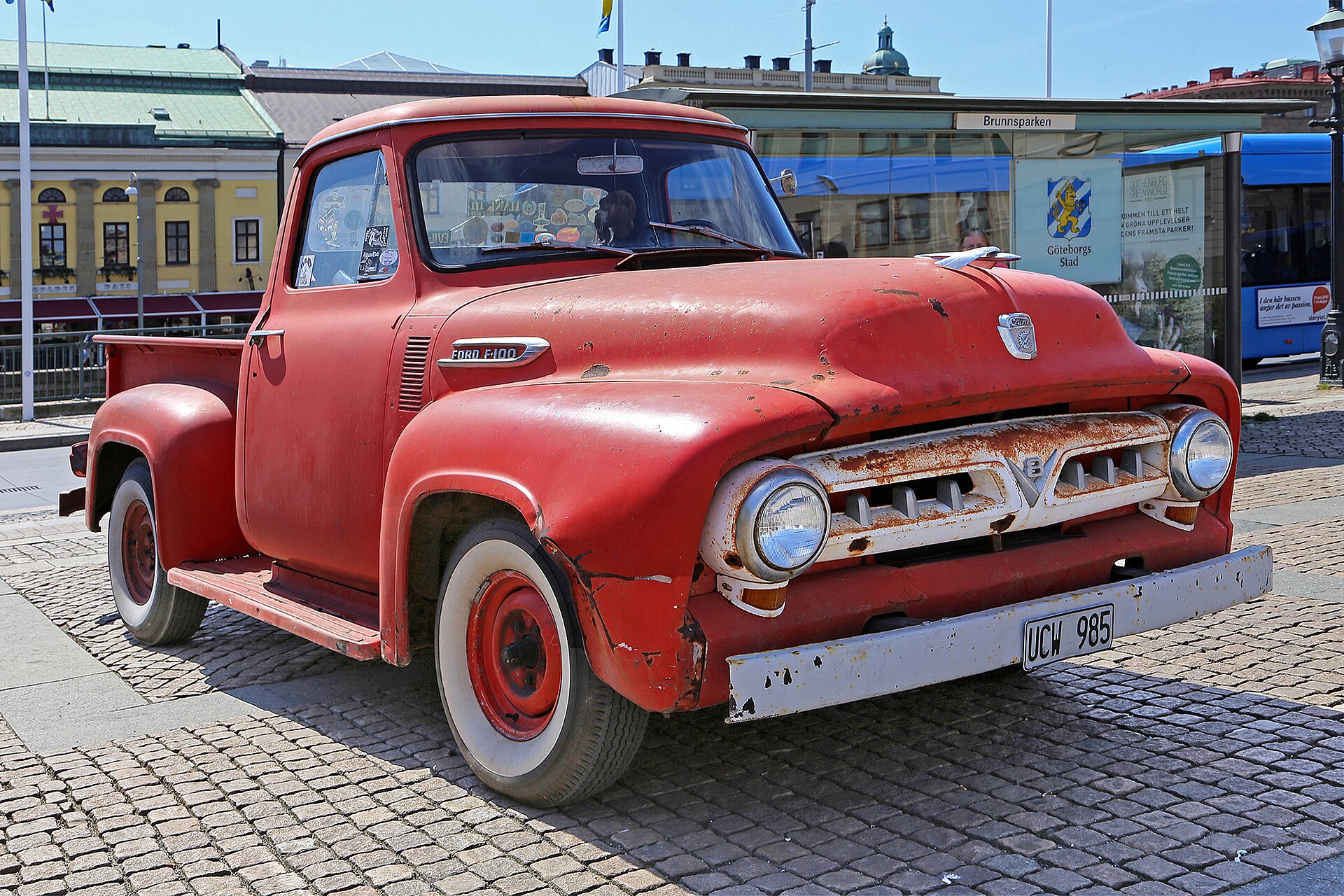
1953 Ford F-100 pickup · W. Bulach · CC BY-SA 4.0
Research pending
A matching completed auction sale has not been verified for this exact year, body, trim, engine, transmission and market.
Joyride shows this gap instead of substituting an asking price, unsold bid or mismatched special vehicle.
More than a set of wheels.
Ford replaced the F-1 name with F-100 for 1953 and launched a redesigned light truck with a 110-inch wheelbase. Buyers could choose a new overhead-valve six or Ford's familiar flathead V8, making 1953 both a beginning and an ending: the first F-100 and the final model year for the flathead V8 in this truck line. The pickup's rounded hood and separate rear fenders became a lasting custom-truck shape.
Look a little closer.
This was the very first year the familiar F-100 badge appeared on Ford's half-ton pickup.
Photos show an example of the model or generation. The pictured vehicle’s year, equipment, or modifications can differ from the specification described here.
A new name for the half-ton Ford
Ford's earlier light pickup was called F-1. For 1953, the new F-100 name arrived with an all-new cab and a 1953-1956 generation. That naming change eventually became part of the language of American trucks, but this first example was still a compact work machine by modern pickup standards.
Source: Ford F-100 reference · 1953 model-year review ↗Two very different ways to make power
The 215-cubic-inch six used overhead valves, while the 239-cubic-inch V8 kept the older flathead arrangement. Their rated outputs were close, but their layouts, sound and service routines were different. Ford buyers were choosing between newer cylinder-head thinking and a familiar V8 design at the end of its truck run.
Source: Ford F-100 reference · engines and transmissions ↗Where these facts come from
- Ford F-100 reference · 1953 model-year specifications
- Ford Heritage Vault · manufacturer archive
- Conceptcarz · 1953 F-100 dimensions
Selected facts checked for this edition. Some source pages link to broader model families. Last reviewed 2026-10-02.