
FSO Polonez 1500
The first Polonez wrapped familiar rear-wheel-drive FSO mechanics in a modern five-door body with a huge hatch. Its cabin and crush-zone thinking were a major step forward for Poland's main family car.
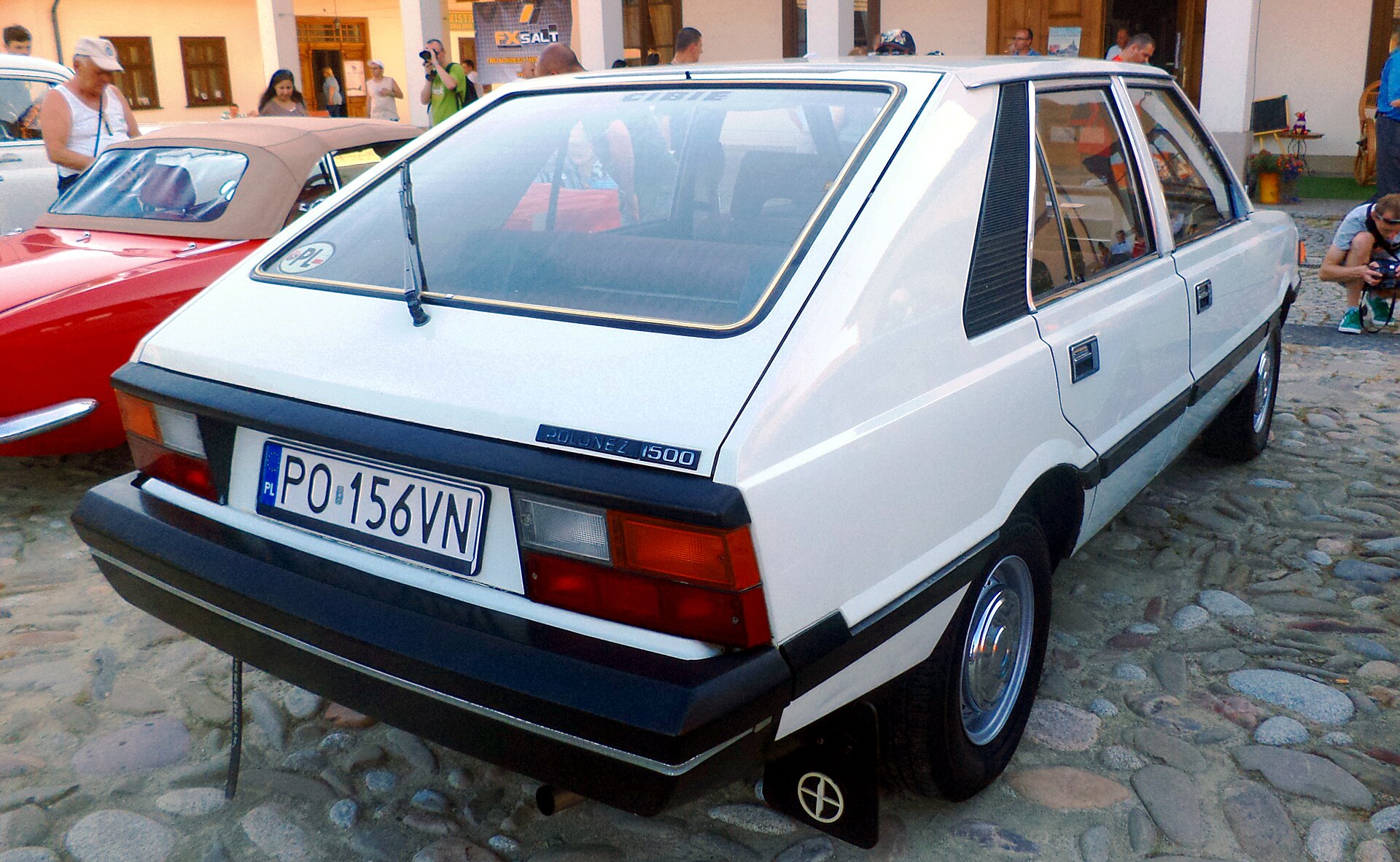
1978 Poland FSO Polonez 1500 · Pitak · CC BY-SA 3.0
Research pending
A matching completed auction sale has not been verified for this exact year, body, trim, engine, transmission and market.
Joyride shows this gap instead of substituting an asking price, unsold bid or mismatched special vehicle.
More than a set of wheels.
FSO began series production around the May Day period and officially presented the Polonez on May 3, 1978. A contemporary Motor magazine feature described it as a close Polish-Italian development that retained the Polski Fiat 125p wheelbase and much of its running gear but gained a fastback body, a hatch, more thoughtful controls and ECE-minded crash protection. The 1500 was the stronger of the two launch engines.
Look a little closer.
The rear hatch lifted its parcel shelf automatically and was held up by two gas springs, so a driver could open the cargo area with one hand.
Photos show an example of the model or generation. The pictured vehicle’s year, equipment, or modifications can differ from the specification described here.
New body, proven mechanical bones
The Polonez kept the Polski Fiat 125p's 2,509 mm wheelbase, unequal-length front wishbones and leaf-sprung live rear axle. FSO used that known foundation to industrialize a much newer hatchback body without replacing every machine underneath—an engineering compromise that reduced risk while moving packaging and safety forward.
Source: Motor no. 21/1978 — Polonez presentation and technical data ↗Safety shaped the hatchback
The contemporary account emphasizes a stiff passenger cell, controlled-crush structures front and rear, door reinforcements, energy-absorbing bumpers and a rear-hinged bonnet intended not to spear the cabin in a collision. Those details show the fastback was not merely a styling exercise; it was designed around newer European safety expectations.
Source: Motor no. 21/1978 — passive safety section ↗Where these facts come from
- Motor no. 21/1978 — contemporary presentation, road impressions and data
- FSO 1979 Polonez Repair Manual — Internet Archive
- Polskie Radio — Polonez history
Selected facts checked for this edition. Some source pages link to broader model families. Last reviewed October 1, 2026.