
Mazda Savanna RX-7 GT
The first RX-7 tucked a small rotary engine behind the front axle, giving a practical little coupé the balance of a purpose-built sports car.
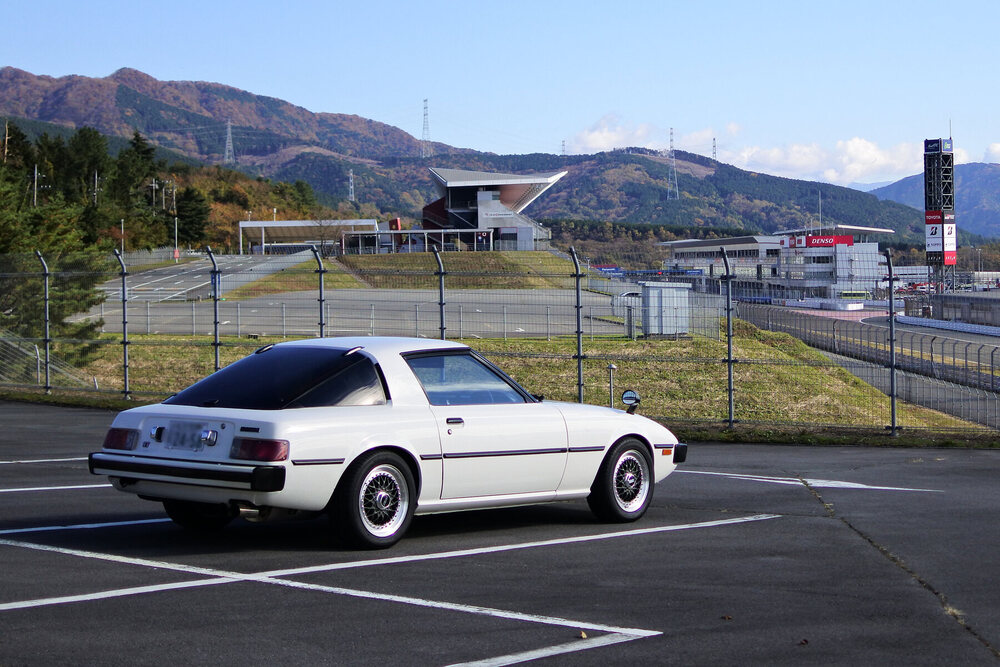
1978 Mazda RX-7 SA22C · Cafegarage · CC BY-SA 4.0
Research pending
A matching completed auction sale has not been verified for this exact year, body, trim, engine, transmission and market.
Joyride shows this gap instead of substituting an asking price, unsold bid or mismatched special vehicle.
More than a set of wheels.
Mazda launched the SA22C Savanna RX-7 in Japan in March 1978. This page follows the Japanese GT with its five-speed gearbox and 130 PS gross 12A engine, not the lower-output U.S. version sold later.
Look a little closer.
Pop-up headlights helped the nose stay low and smooth; Mazda measured a drag coefficient of 0.36, slippery for its time.
Photos show an example of the model or generation. The pictured vehicle’s year, equipment, or modifications can differ from the specification described here.
Balance built into the layout
With two occupants, Mazda measured 50.7 percent of the weight at the front and 49.3 percent at the rear. That near-even split, plus rear drive, helped the RX-7 change direction eagerly without needing a huge engine.
Source: Mazda · First-generation RX-7 development history ↗A sports car that still carried things
The hatchback roof and small rear seats made the RX-7 more useful than a pure two-seat racer. Mazda paired that practicality with strut front suspension and a carefully located rigid rear axle using a Watt linkage.
Source: Mazda · 1920–1979 corporate history ↗Where these facts come from
- Mazda · 1920–1979 corporate history
- Mazda · First-generation RX-7 development history
- Mazda 100th Anniversary · Savanna RX-7
Selected facts checked for this edition. Some source pages link to broader model families. Last reviewed September 30, 2026.