
McLaren MP4-12C
McLaren's first modern series-production road car wrapped a 600 PS twin-turbo V8 and hydraulically linked suspension around a one-piece carbon-fibre passenger cell.
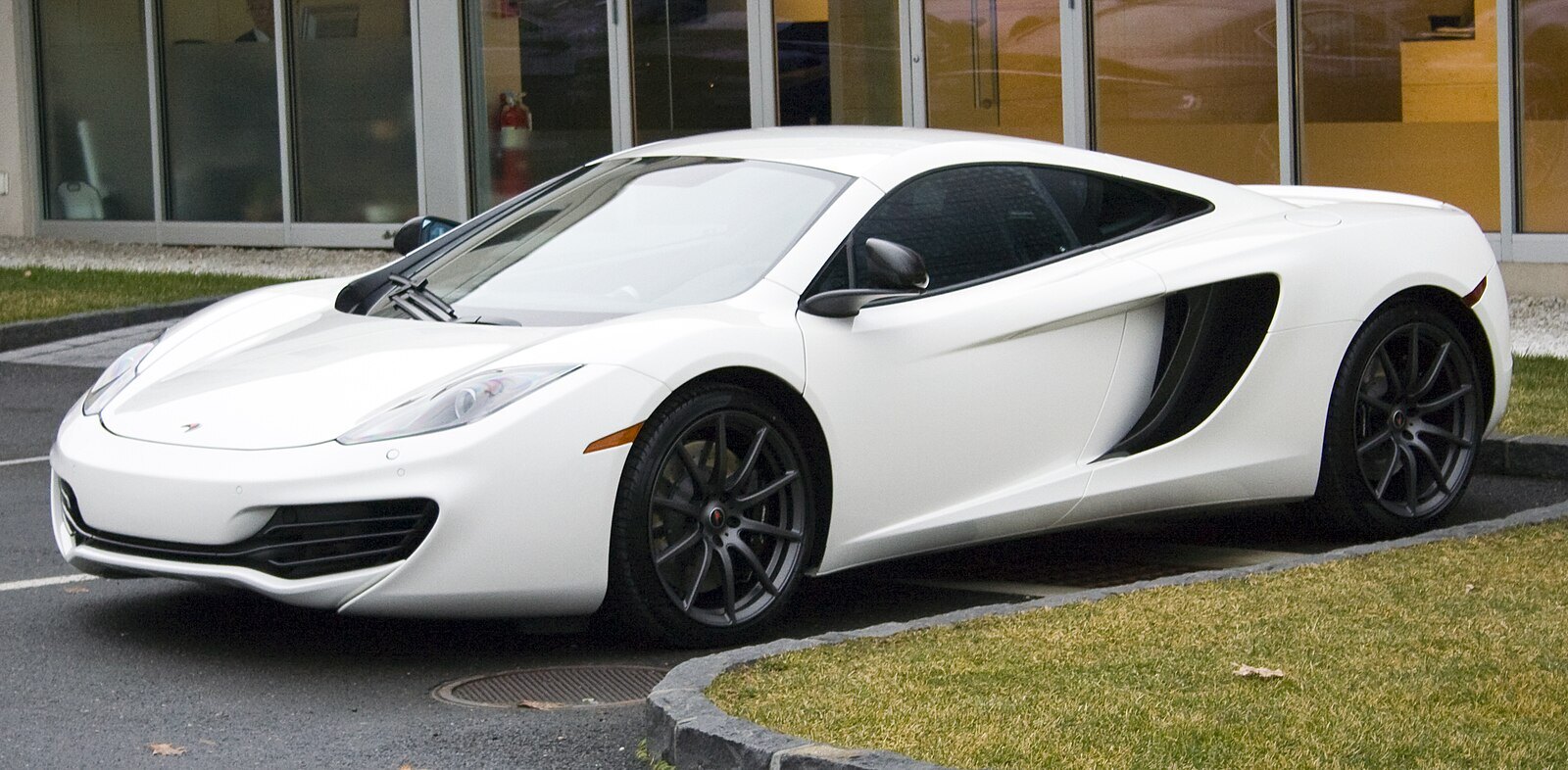
McLaren MP4.12C.jpg · Mr.choppers · CC BY-SA 3.0
Research pending
A matching completed auction sale has not been verified for this exact year, body, trim, engine, transmission and market.
Joyride shows this gap instead of substituting an asking price, unsold bid or mismatched special vehicle.
More than a set of wheels.
The MP4-12C was the first series-production road car from the newly established McLaren Automotive and the starting point for its modern road-car range. Its name linked the MP4 racing-car family, its target Vehicle Performance Index of 12 and carbon construction. The car paired a one-piece carbon-fibre MonoCell with McLaren's own twin-turbo V8 and hydraulic chassis control. This profile preserves the original 600 PS 2011 European specification rather than mixing in the 625 PS update introduced for the 2013 model year.
Look a little closer.
McLaren says building each carbon-fibre chassis for the F1 took about 4,000 hours; the 12C's one-piece MonoCell took about four hours.
Photos show an example of the model or generation. The pictured vehicle’s year, equipment, or modifications can differ from the specification described here.
A carbon tub designed for series production
McLaren had used carbon structures in racing and in the low-volume F1 road car, but the 12C's one-piece MonoCell compressed tub production to about four hours. Aluminium crash structures bolt to it, separating the durable occupant cell from repairable front and rear sections.
Source: McLaren retrospective · the 2010s ↗Hydraulics replace ordinary anti-roll bars
ProActive Chassis Control linked the dampers hydraulically, allowing the car to resist body roll in corners without relying on conventional stiff anti-roll bars. The goal was to combine a compliant road ride with tight body control rather than make every mode simply harder.
Source: McLaren legacy · 12C ↗Where these facts come from
- McLaren legacy · 12C
- McLaren 12C technical specification PDF
- Mirrored McLaren 2011 performance release
- McLaren retrospective · the 2010s
Selected facts checked for this edition. Some source pages link to broader model families. Last reviewed October 2, 2026.