
Mitsubishi Lancer 1600 GSR
The first Lancer 1600 GSR mixed a simple lightweight road-car layout with the torque and durability that quickly made it a rally winner.
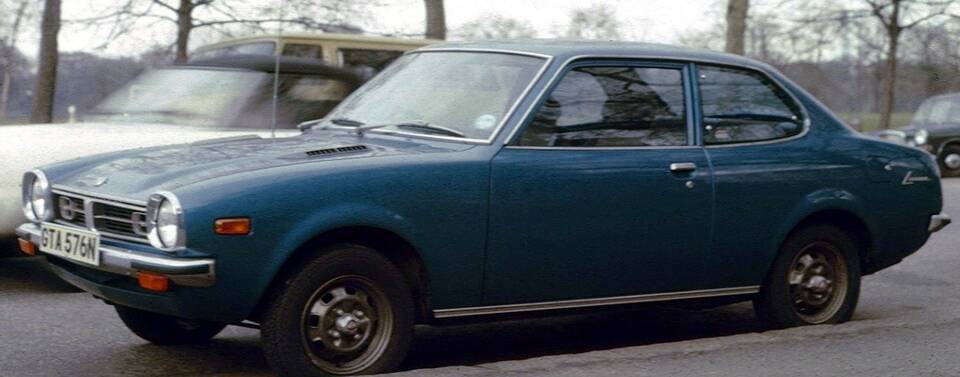
Mitsubishi Lancer 1973 - 79 Hyde Park in Fall.jpg · Charles01 · Public domain (PD-self)
Research pending
A matching completed auction sale has not been verified for this exact year, body, trim, engine, transmission and market.
Joyride shows this gap instead of substituting an asking price, unsold bid or mismatched special vehicle.
More than a set of wheels.
Mitsubishi launched the first Lancer family in February 1973 and added the 1600 GSR in August. The GSR placed a twin-carburettor 1.6-litre 4G32 “Saturn” engine and five-speed gearbox in an 825 kg two-door sedan. Its road specification produced 110 PS—not the roughly 160 PS quoted for later works rally tune. In its first Southern Cross Rally that year, the Lancer 1600 GSR swept the top four places. Joginder Singh then drove one to overall victory on the 1974 Safari Rally, demonstrating how manageable size, mid-range torque and a strong body could beat more powerful machines over punishing roads.
Look a little closer.
The name “Lancer” refers to a cavalry soldier carrying a lance—and the little sedan charged past much bigger rally cars.
Photos show an example of the model or generation. The pictured vehicle’s year, equipment, or modifications can differ from the specification described here.
Road car and works rally car are not the same specification
The showroom GSR used 110 PS, twin carburettors and a five-speed manual. Competition preparation later lifted output toward 160 PS and added rally equipment. This profile uses the road car's numbers while treating the famous rally machines as derived competition versions.
Source: Web Motor Magazine · 1973 Lancer 1600 GSR ↗Rallying as a development loop
Mitsubishi's motorsport archive explains that international rallies exposed cars to tarmac, gravel, snow and long high-speed punishment. Engineers used those events to test stability and durability, fed lessons into road cars, then brought market feedback into the next rally car.
Source: Mitsubishi Motors · Why enter rally competition? ↗Where these facts come from
- Mitsubishi Motors · Car History
- Mitsubishi Motors · Why enter rally competition?
- Web Motor Magazine · 1973 Lancer 1600 GSR
- Kuruma Stories · 1973 Lancer 1600 GSR
Selected facts checked for this edition. Some source pages link to broader model families. Last reviewed October 1, 2026.