
Morris Oxford ‘Bullnose’
Morris’s first car was a tiny two-seater assembled from specialist-made parts, with a round radiator that gave the Bullnose its unforgettable nickname.
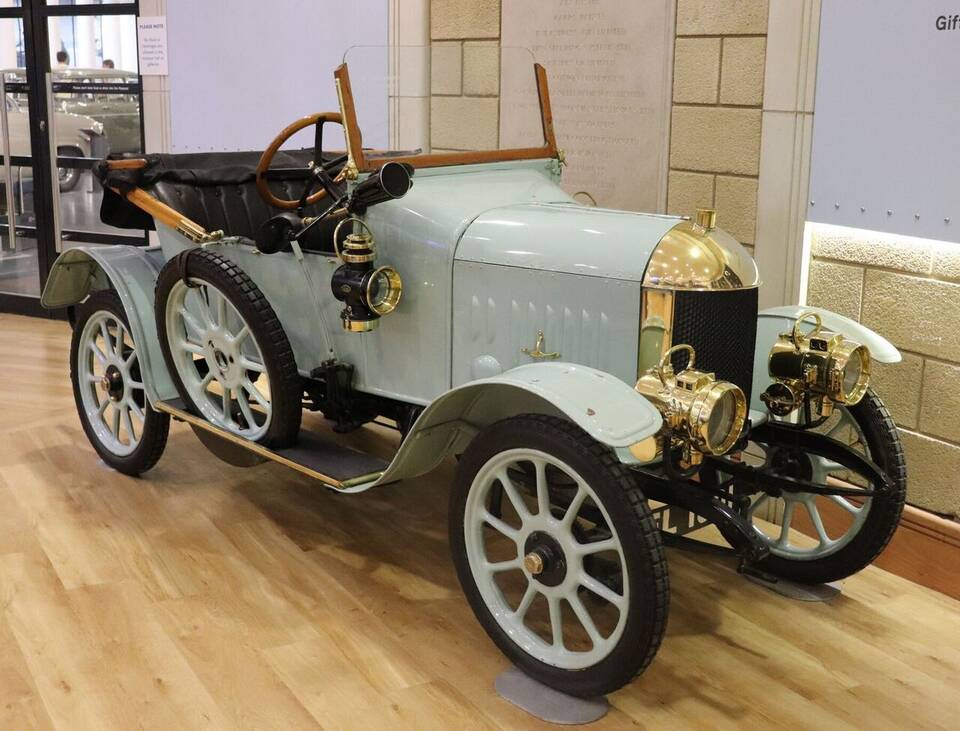
1913 Morris Oxford 10HP ‘Bullnose’ Front · Vauxford · CC BY-SA 4.0
Research pending
A matching completed auction sale has not been verified for this exact year, body, trim, engine, transmission and market.
Joyride shows this gap instead of substituting an asking price, unsold bid or mismatched special vehicle.
More than a set of wheels.
The Oxford went on sale in 1913 as the first Morris car. William Morris bought its engine, gearbox and many other pieces from established suppliers, then assembled them at Cowley. This page follows the short two-seat tourer, not the longer de luxe Oxford shown later in 1913 or the larger Cowley that arrived in 1915.
Look a little closer.
The little Oxford was named for its home city, and its rounded radiator looked enough like a nose that ‘Bullnose’ became the name everyone remembered.
Photos show an example of the model or generation. The pictured vehicle’s year, equipment, or modifications can differ from the specification described here.
A car assembled from a team of suppliers
Morris did not yet make every major part himself. The engine, gearbox and carburettor came from White & Poppe, while other specialists supplied the axle and body. The clever part was organizing those pieces into an affordable complete car.
Source: British Motor Museum · 1913 Oxford Bullnose ↗Two seats because the chassis was tiny
The original Oxford’s wheelbase was too short and light for a normal four-seat body. Morris solved that problem later with the bigger Cowley, but the first Oxford stayed a compact two-seat tourer.
Source: Shuttleworth Collection · Morris Oxford Bullnose ↗Where these facts come from
- British Motor Museum · 1913 Oxford Bullnose
- Shuttleworth Collection · Morris Oxford Bullnose
- Christie’s · 1913 Bullnose Morris Oxford specification
Selected facts checked for this edition. Some source pages link to broader model families. Last reviewed September 30, 2026.