
Saab 99 EMS
The EMS paired Saab’s practical two-door 99 shell with electronic fuel injection, firmer handling and four-wheel disc brakes.
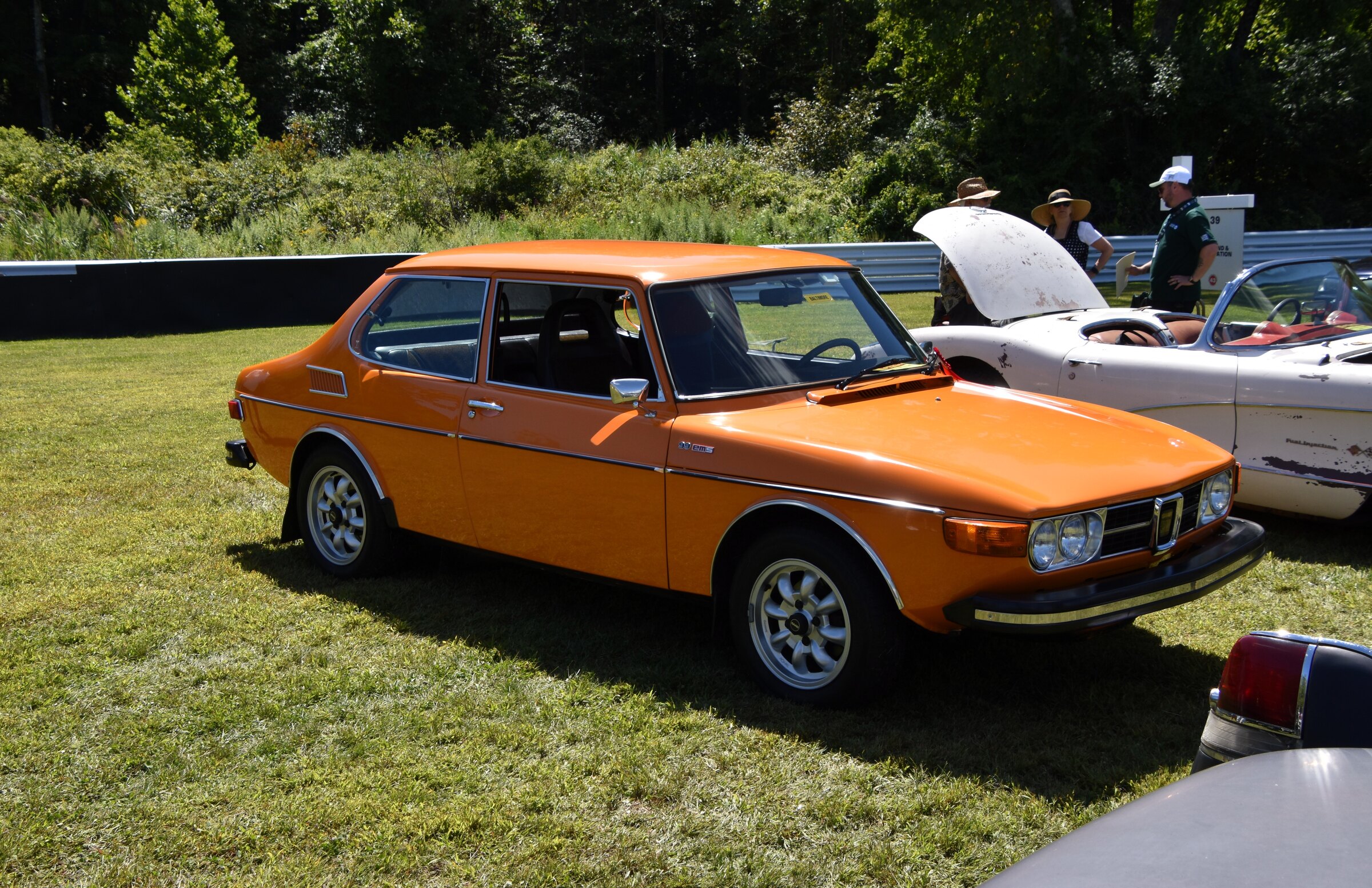
1974 Saab 99 EMS two-door · Charles from Port Chester, New York · CC0 1.0
Research pending
A matching completed auction sale has not been verified for this exact year, body, trim, engine, transmission and market.
Joyride shows this gap instead of substituting an asking price, unsold bid or mismatched special vehicle.
More than a set of wheels.
Saab first showed the EMS in early 1972. Its period 1973 brochure retained the distinctive two-door sporting specification while adding safety and comfort changes such as door beams, revised front spring mounting and impact-absorbing headlining.
Look a little closer.
Its compact gearbox sits beneath the engine, helping Saab fit front-wheel drive into a short, strong nose.
Photos show an example of the model or generation. The pictured vehicle’s year, equipment, or modifications can differ from the specification described here.
Why electronic injection mattered
A carburettor mainly uses airflow and pressure differences to draw fuel into an engine. Saab's Bosch system used sensors and electrically controlled injectors, letting the EMS meter fuel deliberately while showcasing its new Swedish-built two-litre engine.
Source: www.auto-brochures.com ↗Performance and protection in one shell
The EMS story is not only about speed. Door beams, energy-absorbing headlining, four-wheel discs and front-wheel drive show Saab developing performance, cabin safety and winter-friendly traction together.
Source: www.saabmuseum.com ↗Where these facts come from
Selected facts checked for this edition. Some source pages link to broader model families. Last reviewed October 4, 2026.