
Spyker 60-HP Four-Wheel Drive Racing Car
One giant Dutch racer put six cylinders, four driven wheels and brakes on every wheel into the same machine before most roads were paved.
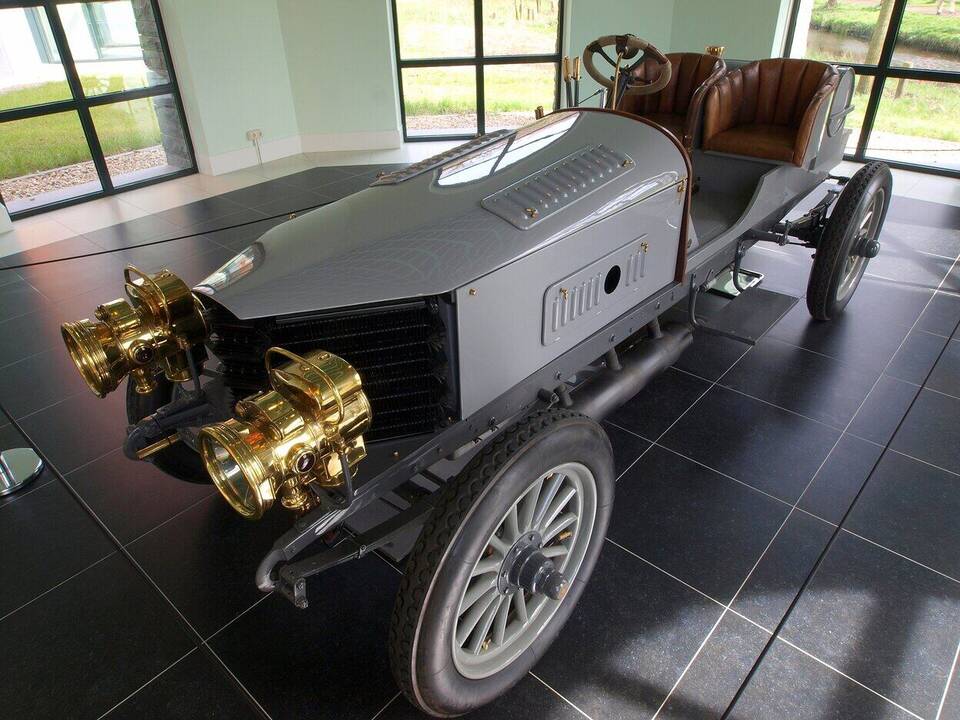
1903 Spyker 60-HP four-wheel-drive racing car · Alf van Beem · CC0 1.0
Research pending
A matching completed auction sale has not been verified for this exact year, body, trim, engine, transmission and market.
Joyride shows this gap instead of substituting an asking price, unsold bid or mismatched special vehicle.
More than a set of wheels.
Jacobus Spijker wanted a special car for the 1903 Paris–Madrid race. Young Belgian engineer Joseph Valentin Laviolette designed a six-cylinder engine and a transmission that sent power to both axles. The car missed the race, but its December 1903 Paris unveiling still made it a landmark. The survivor later wore an altered body until the Louwman Museum completed a five-year restoration to its 1904 show form.
Look a little closer.
The 60-HP raced only rarely: the museum records third place at Blackpool in 1904 and a win at Birmingham in 1906.
Photos show an example of the model or generation. The pictured vehicle’s year, equipment, or modifications can differ from the specification described here.
Three firsts in one car
The Louwman Museum identifies the 60-HP as the first car with a six-cylinder engine, the first petrol car with four-wheel drive and the first car with a braking system connected to all four wheels. Each idea would matter enormously later, but here they arrived together on one experimental racer.
Source: Louwman Museum · Spyker 60-HP collection record ↗A race car that missed its intended race
The Paris–Madrid event happened before the Spyker was ready. It finally appeared in Paris in December 1903, then at London's Crystal Palace two months later. That makes 1903 the presentation year, while the museum notes that construction probably began or finished in 1902.
Source: Louwman Museum · Spyker masterpiece story ↗Where these facts come from
- Louwman Museum · Spyker 60-HP collection record
- Louwman Museum · Spyker masterpiece story
- Louwman Museum · Spyker technical record (Dutch)
Selected facts checked for this edition. Some source pages link to broader model families. Last reviewed September 30, 2026.