
Brush Model D Runabout
A tiny wooden-framed runabout showed that an early car could be light, simple and surprisingly adventurous.
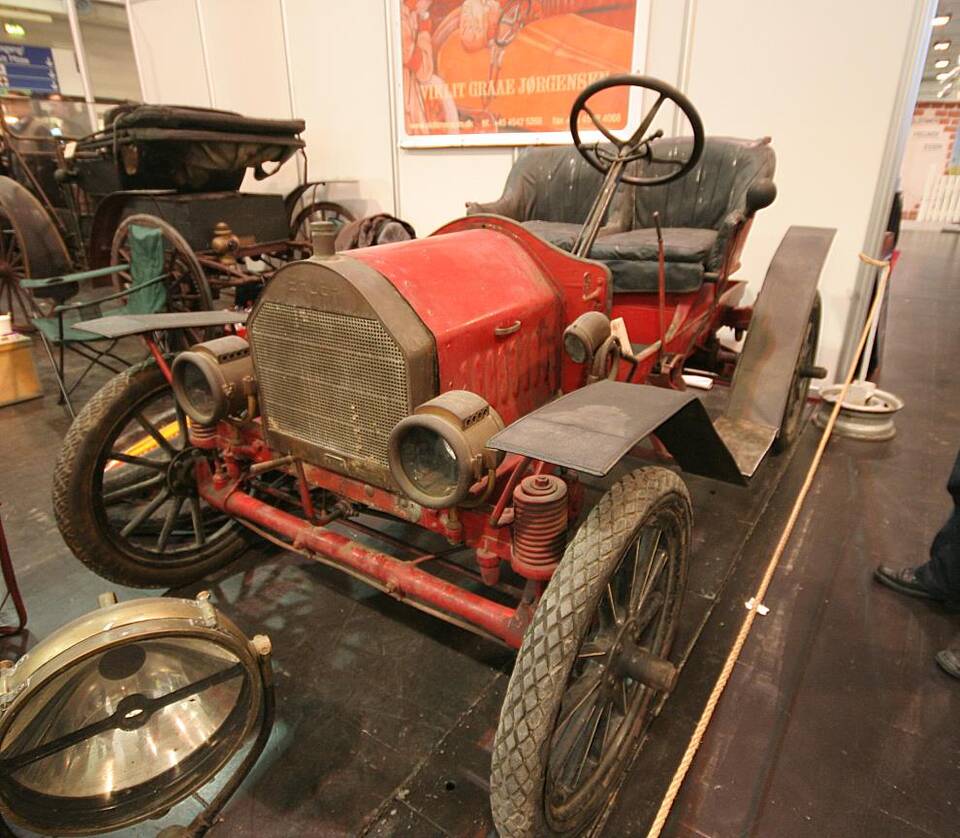
1910 single-cylinder Brush runabout · Th-Photos · CC BY-SA 3.0
Research pending
A matching completed auction sale has not been verified for this exact year, body, trim, engine, transmission and market.
Joyride shows this gap instead of substituting an asking price, unsold bid or mismatched special vehicle.
More than a set of wheels.
Alanson P. Brush founded his Detroit company in 1907 and built small, single-cylinder runabouts for people who could not afford a grand touring car. This page follows the 1910 Model D two-seater documented by the AACA Museum and a surviving 1910 Brush catalog. Brush joined the United States Motor Company in 1910, and the original marque's short life ended soon afterward.
Look a little closer.
A Brush runabout completed the 2,636-mile Glidden Tour in 1909 and climbed Pikes Peak—big trips for such a little machine.
Photos show an example of the model or generation. The pictured vehicle’s year, equipment, or modifications can differ from the specification described here.
Wood where later cars used steel
Brush used maple, hickory and oak in the frame and axles. Coil springs at all four corners let the light chassis flex and ride over rough early roads. It sounds old-fashioned now, but the design used familiar carriage-building skills and kept the car simple.
Source: AACA Museum · The Nimble and Popular Brush Runabout ↗An affordable family of Model Ds
The New York Public Library's catalog guide records several 1910 Model D body numbers, all with a single-cylinder 10-horsepower engine. Prices varied by body, including open runabouts and a much dearer enclosed coupe. That makes the model name a family, not one single body specification.
Source: New York Public Library · 1910 Brush catalog listing ↗Controls instead of a modern instrument cluster
A surviving 1910 Brush shows how different early driving could be. The driver monitored oil flow through a glass tube and adjusted a needle valve or feed control; a squeeze bulb sounded the horn. These exposed controls are the useful instrument story for this car, rather than a later-style dashboard full of gauges. Their exact placement and trim can vary across surviving Model D bodies.
Source: Martin Auto Museum · 1910 Brush Runabout ↗Where these facts come from
- AACA Museum · The Nimble and Popular Brush Runabout
- New York Public Library · 1910 Brush catalog listing
- Martin Auto Museum · 1910 Brush Runabout
Selected facts checked for this edition. Some source pages link to broader model families. Last reviewed September 30, 2026.