
Mercedes-Benz SSK 27/170/225 hp
The SSK shortened a giant supercharged sports car so it could dart around hillclimb bends.
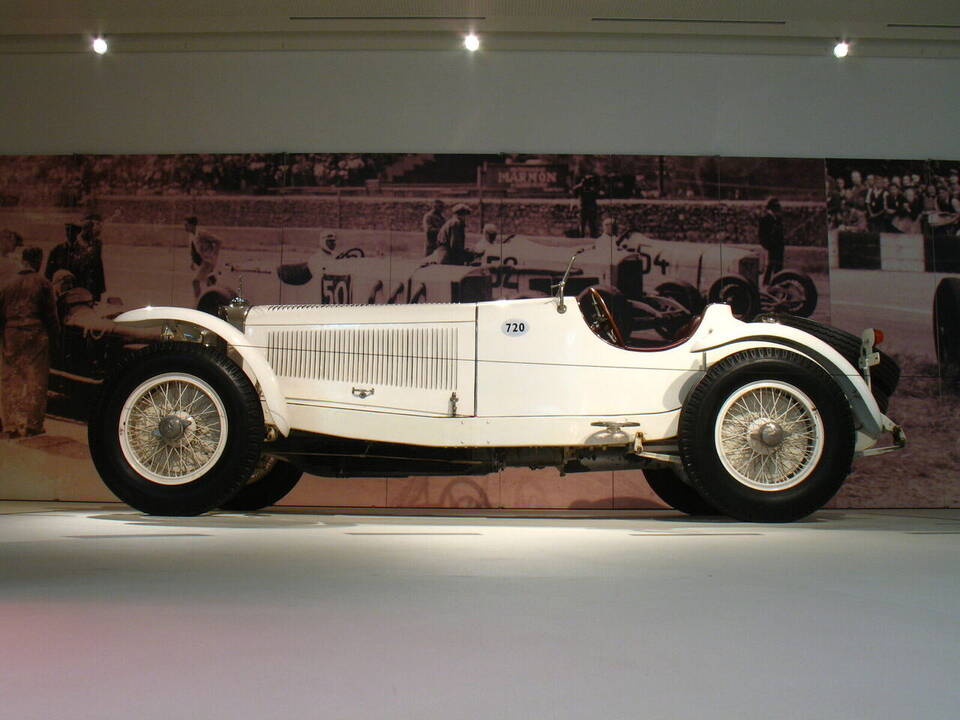
Mercedes-Benz_SSK_(1928).jpg · Brischri · CC BY-SA 3.0
Research pending
A matching completed auction sale has not been verified for this exact year, body, trim, engine, transmission and market.
Joyride shows this gap instead of substituting an asking price, unsold bid or mismatched special vehicle.
More than a set of wheels.
Mercedes-Benz shortened the Type S chassis by 450 mm to create a more agile car for hillclimbs, naming it Super-Sport-Kurz—Super Sport Short. Rudolf Caracciola won the Gabelbach hillclimb on the new SSK's first competition outing on 29 July 1928 and followed with further victories that summer. This profile is the 27/170/225 hp W 06 III, not every car that carried an SSK badge and not the later lightweight SSKL.
Look a little closer.
Its initials spell out Super-Sport-Kurz: the last word means “short,” because its wheelbase was 450 mm shorter than the Type S.
Photos show an example of the model or generation. The pictured vehicle’s year, equipment, or modifications can differ from the specification described here.
Shorter was the whole point
The long-wheelbase S and SS were stable at speed but less nimble in hillclimbs. Cutting the wheelbase to 2,950 mm made direction changes quicker, while detachable wings, lamps, running boards and hood let the car move between sports-car and racing classes.
Source: Mercedes-Benz Public Archive · SSK history ↗A road car built from a race tool
The SSK was conceived for competition, yet Mercedes-Benz also sold sports two-seaters and some buyers commissioned convertible bodies. Across all SSK and SSKL engine forms, the archive records just 33 units—one reason surviving cars require exact chassis and engine identification.
Source: Mercedes-Benz Public Archive · S, SS, SSK and SSKL history ↗Where these facts come from
- Mercedes-Benz Public Archive · SSK 27/170/225 hp technical record
- Mercedes-Benz Public Archive · SSK history
- Mercedes-Benz Public Archive · Gabelbach first outing
Selected facts checked for this edition. Some source pages link to broader model families. Last reviewed 2026-10-01.