
Fiat 600 Berlina
This rounded four-seat Fiat placed its engine at the very back so a tiny body could carry a family and their bags.
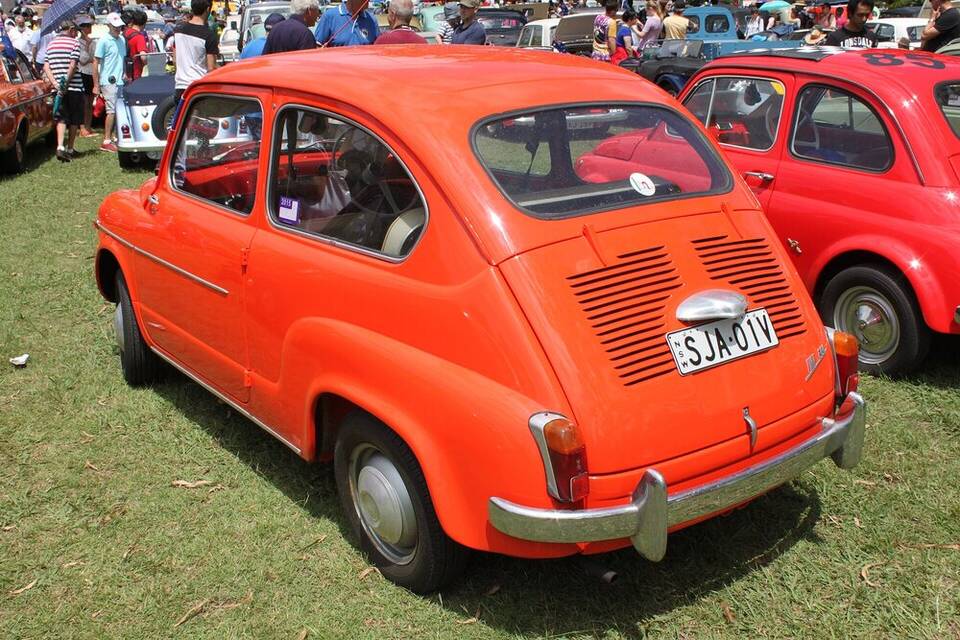
1955 Fiat 600 (25198154060).jpg · Jeremy · CC BY 2.0
Research pending
A matching completed auction sale has not been verified for this exact year, body, trim, engine, transmission and market.
Joyride shows this gap instead of substituting an asking price, unsold bid or mismatched special vehicle.
More than a set of wheels.
Dante Giacosa's team designed the 600 to help put postwar Italy on wheels. Fiat unveiled it at Geneva in March 1955 as a replacement for the 500 C Topolino: it had two more seats, cost less and reached 95 km/h. Demand was immediate and Mirafiori's waiting list could stretch beyond a year. The 600's basic idea travelled widely, and Fiat-branded production in Italy, Chile and Argentina eventually totalled 4,939,642 cars.
Look a little closer.
Folding the rear bench turned the space behind the front seats into a much larger luggage area.
Photos show an example of the model or generation. The pictured vehicle’s year, equipment, or modifications can differ from the specification described here.
Why Fiat put everything at the rear
A conventional front engine and rear drive would have needed a long propeller shaft through the cabin. Placing engine, gearbox and drive together at the back saved material and space, helping Fiat fit four seats into a compact monocoque while keeping manufacturing cost down.
Source: Stellantis Heritage · Fiat 600 ↗Suspension made for imperfect roads
All four wheels moved independently. The rear used coil springs and oscillating drive shafts; the front transverse leaf spring doubled as a stabiliser, and hydraulic dampers controlled motion. Fiat says this economical layout helped the little 600 track rough, sometimes unpaved roads while retaining strong cornering behaviour.
Source: Stellantis Media · 70 years of the Fiat 600 ↗Where these facts come from
- Stellantis Heritage · Fiat 600
- Stellantis Media · 70 years of the Fiat 600
- Stellantis Media · Dante Giacosa Memorial and Fiat 600
Selected facts checked for this edition. Some source pages link to broader model families. Last reviewed October 1, 2026.