
Yamaha SR400
Yamaha turned its XT500 big-single idea into a slim Japanese road motorcycle whose kick-start ritual and distinct engine pulse defined the SR for decades.
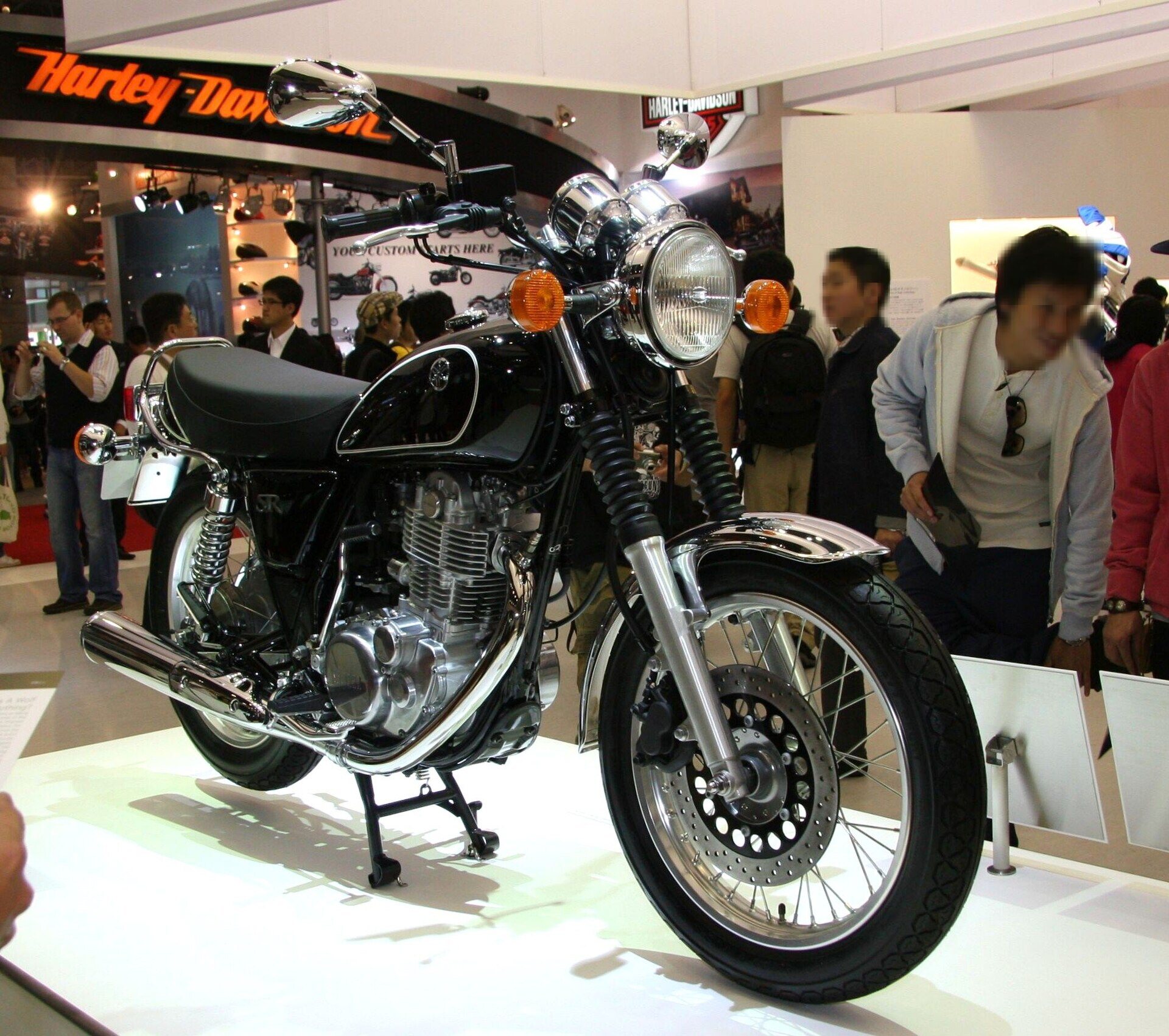
2009 Yamaha SR400 representative · TTTNIS · Public domain
Research pending
A matching completed auction sale has not been verified for this exact year, body, trim, engine, transmission and market.
Joyride shows this gap instead of substituting an asking price, unsold bid or mismatched special vehicle.
More than a set of wheels.
The Japan-market SR400 type 2H6 arrived in March 1978. Yamaha adapted the XT500 engine concept for road use and created the 399 cc version for Japan's licence system by shortening the stroke. The first release combined kick-only starting, CDI ignition, a kick-position indicator, a front disc brake, a rear drum and oil carried in the upper frame tube. This exact profile excludes the 499 cc SR500, the 1979 cast-wheel SR400SP, later front-drum and 18-inch-front versions, fuel-injected revivals and the Final Edition. Yamaha's 43-year and roughly 120,000-unit Japan totals describe the whole domestic SR400 family, not 1978 production alone.
Look a little closer.
The frame itself doubled as the engine-oil tank, so part of the chassis was also part of the lubrication system.
Photos show an example of the model or generation. The pictured vehicle’s year, equipment, or modifications can differ from the specification described here.
A trail-bike ancestor, not a trail bike in disguise
Yamaha says the XT500 supplied the engine base, but detail specifications were changed for road use. The Japan-market 400 kept an 87 mm bore and used a much shorter 67.2 mm stroke than the 500's 84 mm. Its low handlebar, flatter cowled seat and front disc gave it a road-sport posture, while the 19-inch front wheel preserved some visual kinship with the trail-derived idea. ‘Derived from’ therefore means shared engineering ancestry, not an identical engine, chassis setup or job.
Source: Yamaha Motor · Forty Years of Admiration for the Big Single ↗Kick-starting was part engineering, part ritual
A large single can push back strongly while the piston compresses its charge. With no electric motor, the rider needs a repeatable method. Yamaha's kick indicator helped locate the right crank position; the rider then reset the lever and made a full stroke. Another choice was less visible: the upper frame backbone served as the oil reservoir, saving a separate tank and helping keep the motorcycle narrow. The rider prepares the piston by foot, while the chassis itself carries the engine's oil.
Source: Yamaha Motor · 1998 SR400/500 20th Anniversary release and model history ↗Where these facts come from
- Yamaha Motor History · Wonderful Time Spent Together Before a Fond Farewell
- Yamaha Motor · Forty Years of Admiration for the Big Single
- Yamaha Motor · 1998 SR400/500 20th Anniversary release and model history
- Yamaha News Japan No. 175 · January 1978
- Young Machine · First-generation SR400/500 archive retrospective
- Y's Gear / Yamaha · 1978–1992 SR400/500 service-manual catalog
- Yamaha Communication Plaza · 1978 SR500 collection page
Selected facts checked for this edition. Some source pages link to broader model families. Last reviewed October 4, 2026.