
Renault Type AG1 Taxi
A tough little working taxi helped replace horse-drawn cabs in Paris—and later became one of the best-known machines of the First World War.
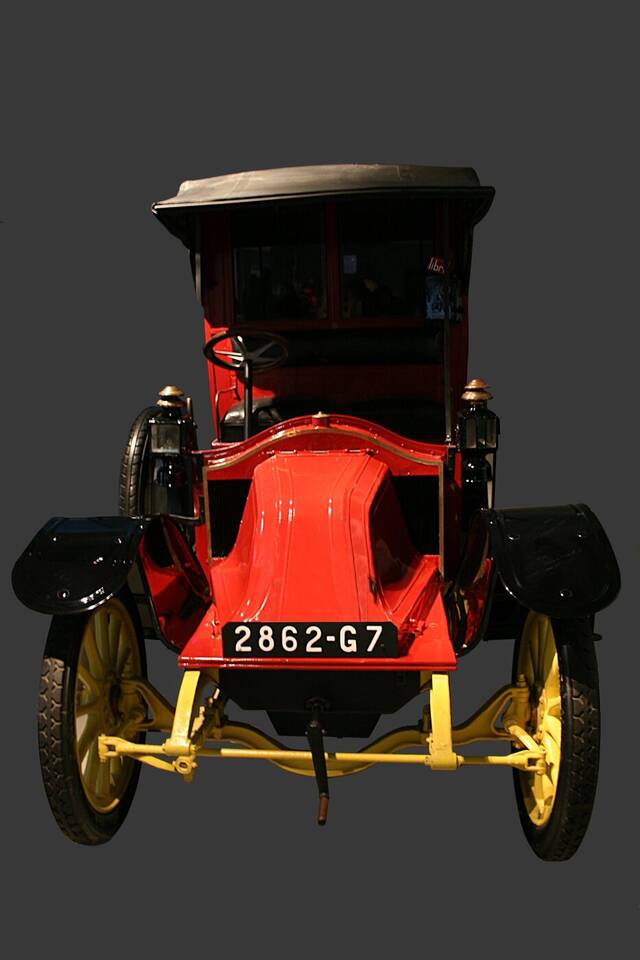
0 Taxi de la Marne - Musée de l'Armée à Paris 2.JPG · Jean-Pol GRANDMONT · CC BY 4.0
Research pending
A matching completed auction sale has not been verified for this exact year, body, trim, engine, transmission and market.
Joyride shows this gap instead of substituting an asking price, unsold bid or mismatched special vehicle.
More than a set of wheels.
Renault designed the Type AG1 around taxi work: cobbled roads demanded durability, shared drivers needed easy maintenance, and the removable fuel tank let each driver account for petrol. Renault’s heritage museum says the type rose with the city’s motor-taxi trade and that the company also supplied 1,100 taxis for London from 1907. The model’s later fame came in September 1914, when Paris taxis were requisitioned to carry soldiers toward the Marne. This profile uses 1909 because Renault and the Musée de la Grande Guerre identify that reference year for the AG1 taxi, while the preserved Musée de l’Armée car documents the wartime chapter; it does not claim that all AG1s or all Paris taxis joined the convoy.
Look a little closer.
Drivers could remove the fuel tank like a large can, so a shared taxi’s next driver could manage a separate supply of petrol.
Photos show an example of the model or generation. The pictured vehicle’s year, equipment, or modifications can differ from the specification described here.
A working tool before it became a symbol
The taxi body and removable tank were practical answers to a real city job. Its later symbolism should not hide that the AG1 first succeeded because it could survive rough streets, be maintained easily and carry passengers all day.
Source: The Originals Renault Museum · Type AG1 Taxi ↗One preserved taxi has a documented journey
The Musée de l’Armée records that its plate 2862-G7 taxi carried soldiers toward the River Ourcq on 5 September 1914 and was restored to its period appearance in 2005. That object-level record is stronger than treating every surviving AG1 as a proven convoy participant.
Source: Musée de l’Armée · Marne taxi ↗Where these facts come from
- The Originals Renault Museum · Type AG1 Taxi
- Musée de l’Armée · Marne taxi
- Musée de la Grande Guerre · Renault Taxi
Selected facts checked for this edition. Some source pages link to broader model families. Last reviewed October 1, 2026.